
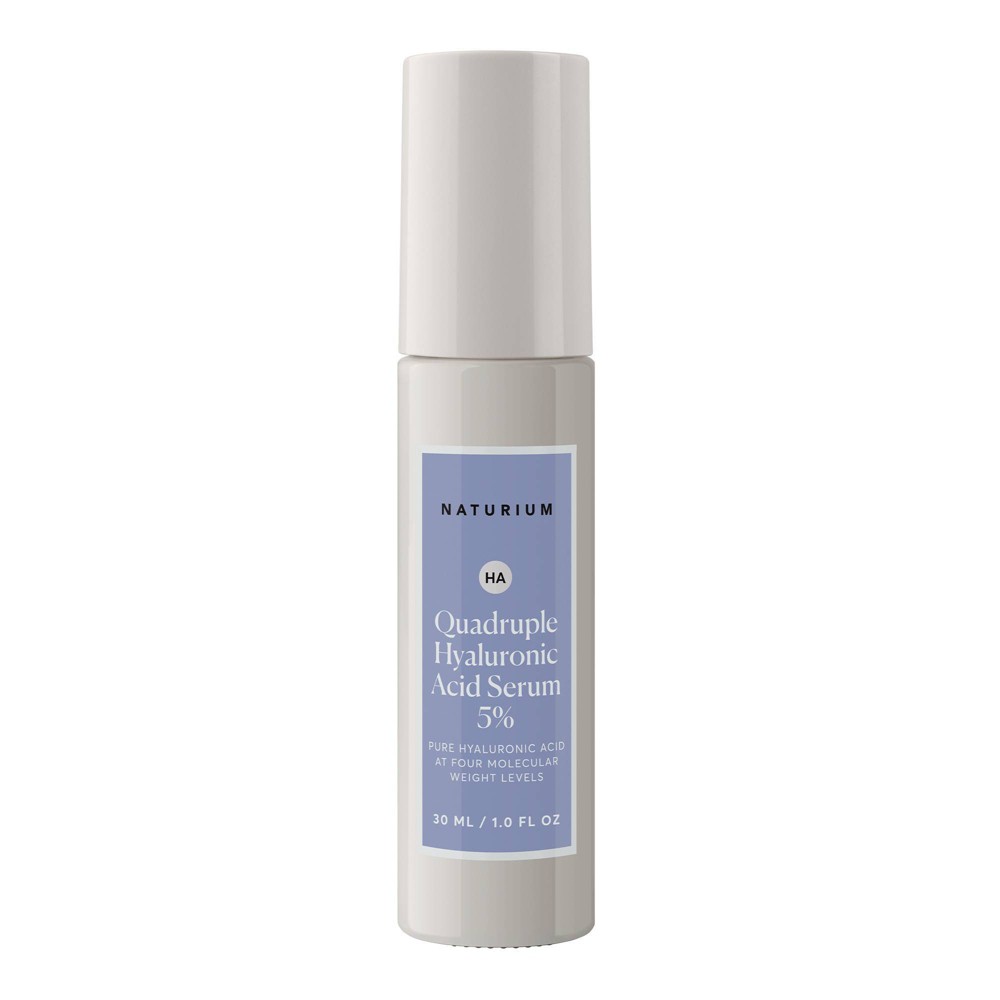
Naturium Quadruple Hyaluronic Acid Serum 5% - 1 fl oz: Moisturizing, Smoothing, Vegan, Paraben-Free
Analysis updated August 2026 · How Scout scores
At a glance
Summary
This serum contains several beneficial ingredients like glycerin, hydrolyzed hyaluronic acid, and sodium hyaluronate, which are excellent for hydration and skin plumping. However, the presence of phenoxyethanol, a preservative that can cause irritation in some individuals, slightly detracts from its overall safety profile. The product is moderately processed, which also influences its rating.
Key ingredients 23
Hydrolyzed Hyaluronic AcidVery Good
Hydrolyzed Hyaluronic Acid is a smaller molecule form of hyaluronic acid that penetrates deeper into the skin. It provides intense hydration and helps to plump the skin, reducing the appearance of fine lines. It is highly effective in maintaining skin moisture.
Risks
There are no significant risks associated with hydrolyzed hyaluronic acid.
Benefits
It offers deep hydration and helps to improve skin elasticity and smoothness.
Tetrahexyldecyl AscorbateVery Good
Tetrahexyldecyl Ascorbate is a stable, oil-soluble form of Vitamin C that penetrates the skin effectively. It provides antioxidant protection, brightens the skin, and stimulates collagen production. It is highly valued for its anti-aging benefits.
Risks
There are minimal risks, though it may cause irritation in very sensitive skin.
Benefits
It brightens the skin and helps to reduce signs of aging.
GlycerinGood
Glycerin is a humectant that attracts moisture to the skin, helping to maintain hydration. It is well-tolerated by most skin types and enhances the skin's natural barrier function. It is a staple in skincare for its moisturizing properties.
Risks
There are minimal risks associated with glycerin, though it may cause irritation in very sensitive skin.
Benefits
Glycerin helps to keep the skin hydrated and soft, improving overall skin texture.
PropanediolGood
Propanediol is a glycol that acts as a solvent and humectant in skincare products. It enhances the absorption of other ingredients and provides a smooth application. It is considered a safer alternative to propylene glycol.
Risks
Propanediol is generally safe, but in rare cases, it may cause mild irritation.
Benefits
It improves skin hydration and enhances the penetration of active ingredients.
Sodium HyaluronateGood
Sodium Hyaluronate is the sodium salt of hyaluronic acid, known for its ability to hold up to 1000 times its weight in water. It provides excellent hydration and helps to maintain skin moisture levels. It is a key ingredient for plumping and smoothing the skin.
Risks
There are no significant risks associated with sodium hyaluronate.
Benefits
It deeply hydrates the skin and helps to reduce the appearance of wrinkles.
Apricot Kernel Oil Polyglyceryl-6 EstersGood
This ingredient is an emulsifier derived from apricot kernel oil, which helps to blend oil and water components in formulations. It is gentle on the skin and provides moisturizing benefits. It is considered a natural and skin-friendly emulsifier.
Risks
There are minimal risks, though it may cause irritation in very sensitive individuals.
Benefits
It helps to stabilize formulations and provides additional moisture to the skin.
MagnololGood
Magnolol is a compound derived from magnolia bark with antioxidant and anti-inflammatory properties. It helps to protect the skin from environmental stressors and reduce redness. It is beneficial for soothing and calming the skin.
Risks
There are minimal risks, though it may cause irritation in very sensitive skin.
Benefits
It provides antioxidant protection and helps to soothe irritated skin.
KaempferolGood
Kaempferol is a flavonoid with antioxidant properties that helps to protect the skin from oxidative stress. It supports skin health by reducing inflammation and promoting collagen production. It is beneficial for maintaining youthful skin.
Risks
There are minimal risks, though it may cause irritation in very sensitive skin.
Benefits
It provides antioxidant protection and supports skin elasticity.
GlycolipidsGood
Glycolipids are natural compounds that help to maintain the skin's barrier function and hydration levels. They support the skin's natural repair processes and improve texture. They are beneficial for enhancing skin resilience.
Risks
There are minimal risks, though they may cause irritation in very sensitive skin.
Benefits
They help to strengthen the skin barrier and improve hydration.
Glycine Soja (Soybean) SterolsGood
Soybean sterols are plant-derived compounds that help to moisturize and condition the skin. They support the skin's natural barrier and improve elasticity. They are beneficial for maintaining smooth and supple skin.
Risks
There are minimal risks, though they may cause irritation in very sensitive skin.
Benefits
They enhance skin moisture and improve elasticity.
Tocopheryl AcetateGood
Tocopheryl Acetate is a form of Vitamin E that provides antioxidant protection and helps to moisturize the skin. It supports skin healing and reduces the appearance of scars. It is widely used for its skin-conditioning properties.
Risks
There are minimal risks, though it may cause irritation in very sensitive skin.
Benefits
It provides antioxidant protection and helps to moisturize the skin.
AquaNeutral
Aqua, or water, is a common solvent used in cosmetic formulations. It serves as a base for the product, helping to dissolve other ingredients. It does not provide direct benefits or risks.
Risks
There are no inherent risks associated with water in cosmetic formulations.
Benefits
Water helps to hydrate the skin by serving as a vehicle for other moisturizing ingredients.
Polyglyceryl-6 OleateNeutral
Polyglyceryl-6 Oleate is an emulsifier that helps to mix oil and water in cosmetic formulations. It is derived from natural sources and is considered safe for use. It does not provide direct skin benefits.
Risks
There are no significant risks associated with this ingredient.
Benefits
It helps to create stable emulsions in skincare products.
Caprylyl GlycolNeutral
Standard formulation ingredient — neither beneficial nor harmful at typical use.
Risks
There are minimal risks, though it may cause irritation in very sensitive skin.
Benefits
It enhances skin hydration and helps to preserve the product.
Polyglyceryl-10 OleateNeutral
Polyglyceryl-10 Oleate is an emulsifier used to blend oil and water components in formulations. It is derived from natural sources and is considered safe for use. It does not provide direct skin benefits.
Risks
There are no significant risks associated with this ingredient.
Benefits
It helps to create stable emulsions in skincare products.
Sorbitan PalmateNeutral
Sorbitan Palmate is an emulsifier used to stabilize formulations by blending oil and water components. It is derived from natural sources and is considered safe for use. It does not provide direct skin benefits.
Risks
There are no significant risks associated with this ingredient.
Benefits
It helps to create stable emulsions in skincare products.
Sodium HydroxideNeutral
Sodium Hydroxide is used to adjust the pH of cosmetic formulations. It is effective in small amounts but can be irritating in higher concentrations. It does not provide direct skin benefits.
Risks
In high concentrations, it can be irritating to the skin.
Benefits
It helps to maintain the desired pH level of the product.
Glyceryl PolyacrylateNeutral
Glyceryl Polyacrylate is a thickening agent that helps to improve the texture and stability of cosmetic formulations. It is widely used for its ability to create a smooth, gel-like consistency. It does not provide direct skin benefits.
Risks
There are no significant risks associated with this ingredient.
Benefits
It improves the texture and stability of skincare products.
Xanthan GumNeutral
Xanthan Gum is a natural thickening agent used to stabilize and improve the texture of cosmetic formulations. It is derived from fermentation and is considered safe for use. It does not provide direct skin benefits.
Risks
There are no significant risks associated with this ingredient.
Benefits
It helps to create stable and smooth formulations.
Hexylene GlycolNeutral
Hexylene Glycol is a solvent and viscosity agent used to improve the texture of cosmetic formulations. It is effective in small amounts and is considered safe for use. It does not provide direct skin benefits.
Risks
There are minimal risks, though it may cause irritation in very sensitive skin.
Benefits
It helps to improve the texture and spreadability of products.
Acrylates/C10-30 Alkyl Acrylate CrosspolymerBad
Processed additive flagged under Scout's ingredient doctrine.
Risks
There are no significant risks associated with this ingredient.
Benefits
It improves the texture and stability of skincare products.
PhenoxyethanolBad
Phenoxyethanol is a preservative used to prevent microbial growth in cosmetic products. While effective, it can cause irritation and allergic reactions in some individuals. It is often criticized for its potential to cause skin sensitivity.
Risks
It may cause irritation and allergic reactions, particularly in sensitive individuals.
Benefits
It helps to preserve the product by preventing microbial contamination.
Potassium SorbateBad
Synthetic preservative — flagged in daily-use products.
Risks
There are minimal risks, though it may cause irritation in very sensitive skin.
Benefits
It helps to preserve the product by preventing microbial growth.
Get the full breakdown in the Scout appTake Scout shopping
Scan any product to see lab results, healthy alternatives, and your personalized analysis.
Download on theApp Store GET IT ONGoogle PlayAmazon pricing & content
Amazon price as of . Product prices and availability are accurate as of the date/time indicated and are subject to change. Any price and availability information displayed on Amazon.com at the time of purchase will apply to the purchase of this product.
CERTAIN CONTENT THAT APPEARS ON THIS SITE COMES FROM AMAZON. THIS CONTENT IS PROVIDED “AS IS” AND IS SUBJECT TO CHANGE OR REMOVAL AT ANY TIME.