
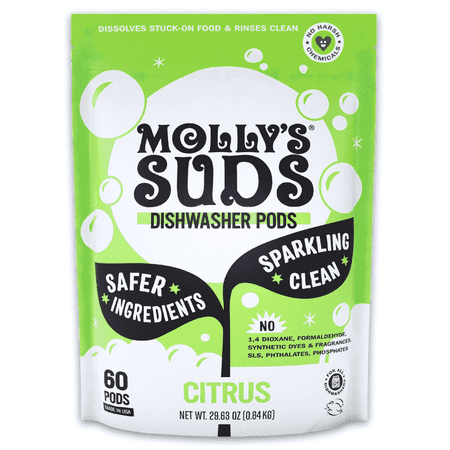

Molly s Suds Dishwasher Detergent Pods | Cuts Grease & Rinses Clean (Residue-Free) | 60 Auto-Release Tabs (Citrus)
At a glance
Summary
This dishwasher detergent features a formulation with plant-derived surfactants like alkyl polyglucoside, which are mild and biodegradable, enhancing its environmental friendliness. It includes effective cleaning agents such as sodium percarbonate and enzymes like protease and amylase, which improve stain removal without harsh chemicals. The absence of harmful substances like SLS or synthetic fragrances contributes to its high safety and eco-friendly profile.
Key ingredients 13
ProteaseVery Good
Protease is an enzyme that breaks down protein-based stains, enhancing cleaning performance. It is biodegradable and considered safe for use in detergents. It is effective in removing tough stains like egg or blood.
Risks
Generally considered safe with minimal risks.
Benefits
Effectively breaks down protein stains, enhancing cleaning power.
AmylaseVery Good
Amylase is an enzyme that breaks down starches, improving the removal of food residues. It is biodegradable and safe for use in cleaning products. It enhances the overall cleaning performance of detergents.
Risks
Generally considered safe with minimal risks.
Benefits
Breaks down starches, improving the removal of food residues.
Alkyl PolyglucosideGood
Alkyl polyglucoside is a plant-derived surfactant known for its mildness and biodegradability. It is effective in cleaning without being harsh on surfaces or skin. It is considered environmentally friendly.
Risks
Generally considered safe with minimal risks.
Benefits
Provides effective cleaning while being gentle and biodegradable.
Sodium Citrate Di-hydrateGood
Sodium citrate di-hydrate is used as a water softener and pH adjuster in detergents. It is safe and non-toxic, making it a preferred choice in eco-friendly formulations. It enhances the cleaning power of detergents.
Risks
Minimal risks associated with normal use.
Benefits
Softens water and enhances cleaning performance.
Sodium PercarbonateGood
Sodium percarbonate is an oxygen-based bleaching agent that is effective in stain removal. It breaks down into water, oxygen, and soda ash, making it environmentally friendly. It is a safer alternative to chlorine bleach.
Risks
Can cause irritation to eyes and skin upon direct contact.
Benefits
Provides effective stain removal and is environmentally friendly.
Sodium CarbonateNeutral
Sodium carbonate is a common cleaning agent used to soften water and enhance detergent performance. It is generally considered safe for use in cleaning products. It does not pose significant health risks when used as directed.
Risks
Inhalation of dust may cause respiratory irritation.
Benefits
Helps to soften water, improving the effectiveness of detergents.
Sodium SulfateNeutral
Sodium sulfate is used as a filler in detergents to help distribute active ingredients. It is considered safe and non-toxic in cleaning applications. It does not have significant environmental or health concerns.
Risks
Excessive exposure may cause mild irritation to skin or eyes.
Benefits
Acts as a filler to help distribute detergent ingredients evenly.
Sodium SilicateNeutral
Sodium silicate is used in detergents as a corrosion inhibitor and to maintain alkalinity. It is generally safe for use in cleaning products. It does not pose significant health risks when used appropriately.
Risks
Can cause skin and eye irritation upon direct contact.
Benefits
Prevents corrosion of metal parts in dishwashers and maintains alkalinity.
TAEDNeutral
TAED (tetraacetylethylenediamine) is used as a bleach activator in detergents. It enhances the effectiveness of oxygen-based bleaches at lower temperatures. It is considered safe for use in cleaning products.
Risks
Generally considered safe with minimal risks.
Benefits
Enhances the performance of oxygen-based bleaches.
Itaconic Acid/Sulfonate CopolymerNeutral
This copolymer is used to prevent redeposition of soil on dishes during washing. It is considered safe for use in cleaning products. It does not pose significant health or environmental risks.
Risks
Generally considered safe with minimal risks.
Benefits
Prevents redeposition of soil, improving cleaning efficiency.
100% Natural FragranceNeutral
Natural fragrances are used to provide a pleasant scent to cleaning products. They are derived from natural sources and are generally considered safer than synthetic fragrances. However, they can still cause allergic reactions in sensitive individuals.
Risks
May cause allergic reactions in sensitive individuals.
Benefits
Provides a pleasant scent without synthetic chemicals.
PVOHNeutral
PVOH (polyvinyl alcohol) is used as a water-soluble film for detergent pods. It is considered safe and non-toxic in the concentrations used in cleaning products. It dissolves in water, releasing the detergent effectively.
Risks
Generally considered safe with minimal risks.
Benefits
Provides a water-soluble film for effective detergent release.
Propylene GlycolBad
Processed additive flagged under Scout's ingredient doctrine.
Risks
May cause mild irritation to skin or eyes in sensitive individuals.
Benefits
Acts as a solvent and stabilizer, enhancing product stability.
Get the full breakdown in the Scout appTake Scout shopping
Scan any product to see lab results, healthy alternatives, and your personalized analysis.
Download on theApp Store GET IT ONGoogle PlayAmazon pricing & content
Amazon price as of . Product prices and availability are accurate as of the date/time indicated and are subject to change. Any price and availability information displayed on Amazon.com at the time of purchase will apply to the purchase of this product.
CERTAIN CONTENT THAT APPEARS ON THIS SITE COMES FROM AMAZON. THIS CONTENT IS PROVIDED “AS IS” AND IS SUBJECT TO CHANGE OR REMOVAL AT ANY TIME.