
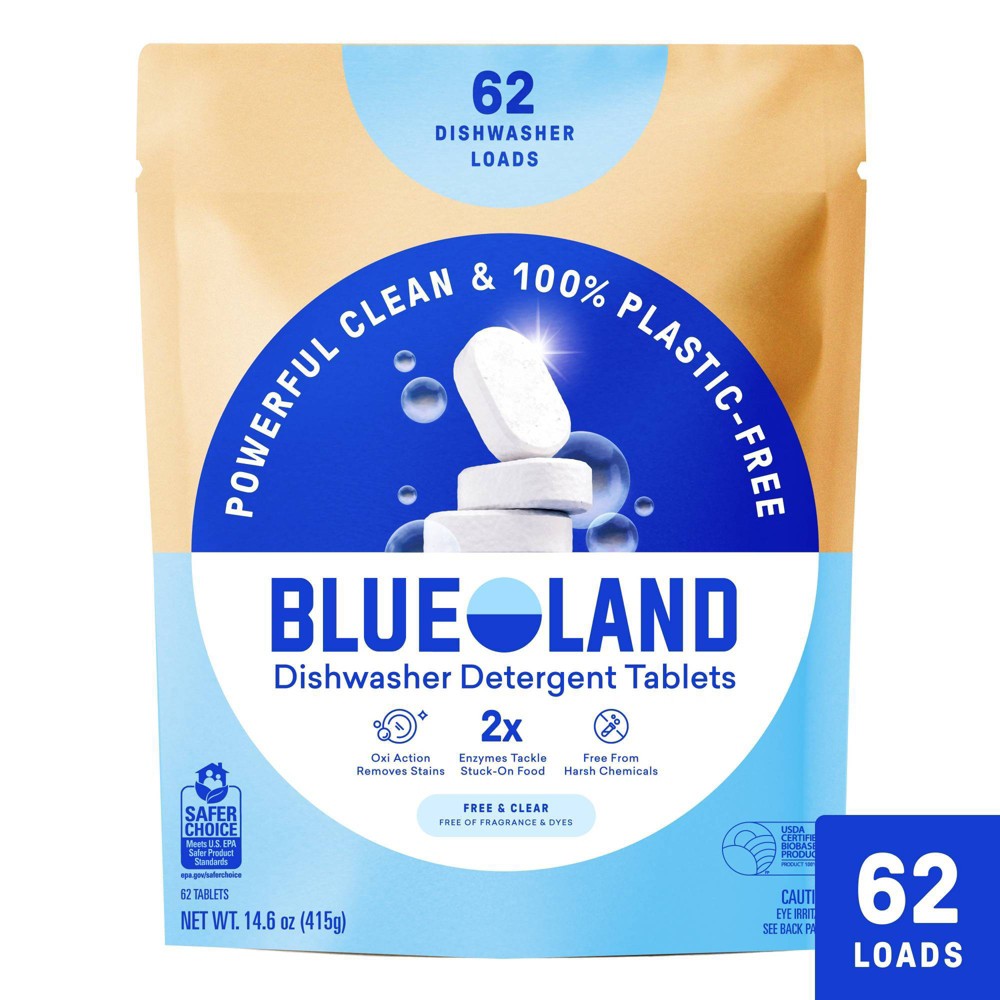


Blueland Fragrance Free Dishwasher Detergent Tablets - 62ct: Bleach-Free, Hypoallergenic, Vegan
At a glance
Summary
This dishwasher detergent is formulated with environmentally friendly and biodegradable ingredients, such as citric acid and plant-derived surfactants like lauryl/myristyl glucoside. It is free from harsh chemicals like SLS, bleach, and synthetic fragrances, making it safe for indoor use and reducing environmental impact. The inclusion of enzymes like subtilisin and amylase enhances cleaning performance without compromising safety.
Key ingredients 10
SubtilisinGood
Subtilisin is an enzyme used in detergents to break down protein-based stains. It enhances the cleaning power of detergents by targeting specific types of stains. It is considered safe for use in cleaning products.
Risks
May cause allergic reactions in sensitive individuals.
Benefits
Effective at breaking down protein-based stains, improving cleaning performance.
Sodium Carboxymethyl InulinGood
Sodium carboxymethyl inulin is a biodegradable polymer used as a dispersing agent in detergents. It helps to prevent redeposition of dirt on surfaces. It is derived from inulin, a natural polysaccharide, and is environmentally friendly.
Benefits
Biodegradable and helps prevent redeposition of dirt.
AmylaseGood
Amylase is an enzyme that breaks down starches into sugars, enhancing the cleaning power of detergents. It is effective in removing carbohydrate-based stains. It is biodegradable and considered safe for use in cleaning products.
Risks
May cause allergic reactions in sensitive individuals.
Benefits
Effective at breaking down starch-based stains, improving cleaning performance.
Lauryl/Myristyl GlucosideGood
Lauryl/myristyl glucoside is a mild, plant-derived surfactant used in cleaning products. It is effective at removing dirt and grease without being harsh on surfaces. It is biodegradable and considered safe for the environment.
Risks
Generally considered safe with minimal risks.
Benefits
Mild and effective surfactant that is biodegradable and environmentally friendly.
Sodium CarbonateNeutral
Sodium carbonate is a common cleaning agent used to soften water and enhance the effectiveness of detergents. It is generally considered safe for use in cleaning products. It does not pose significant health risks when used as directed.
Risks
Inhalation of dust can cause respiratory irritation.
Benefits
Helps to soften water, improving the cleaning efficiency of detergents.
Citric AcidNeutral
Common acidulant and preservative — safe at typical use levels, neither beneficial nor harmful.
Risks
Can cause mild skin irritation in concentrated forms.
Benefits
Biodegradable and effective at breaking down limescale and mineral deposits.
Microcrystalline CelluloseNeutral
Microcrystalline cellulose is used as a binder and stabilizer in cleaning products. It is derived from plant fibers and is considered safe for use. It does not contribute to the cleaning action but helps maintain the product's form.
Risks
Generally considered safe with minimal risks.
Benefits
Helps maintain the form and stability of the product.
Sorbitan CaprylateNeutral
Sorbitan caprylate is an emulsifier used to stabilize formulations in cleaning products. It is derived from sorbitol and caprylic acid and is considered safe for use. It does not contribute directly to cleaning but aids in product stability.
Risks
Generally considered safe with minimal risks.
Benefits
Helps stabilize formulations, ensuring consistent product performance.
Sodium CitrateNeutral
Standard formulation ingredient — neither beneficial nor harmful at typical use.
Risks
Generally considered safe with minimal risks.
Benefits
Biodegradable and effective at softening water, improving detergent performance.
Hydrated SilicaNeutral
Hydrated silica is used as an abrasive and thickening agent in cleaning products. It helps to remove tough stains and improve the texture of the product. It is considered safe for use in cleaning applications.
Risks
Inhalation of dust can cause respiratory irritation.
Benefits
Effective abrasive that helps remove tough stains.
Get the full breakdown in the Scout appTake Scout shopping
Scan any product to see lab results, healthy alternatives, and your personalized analysis.
Download on theApp Store GET IT ONGoogle Play