

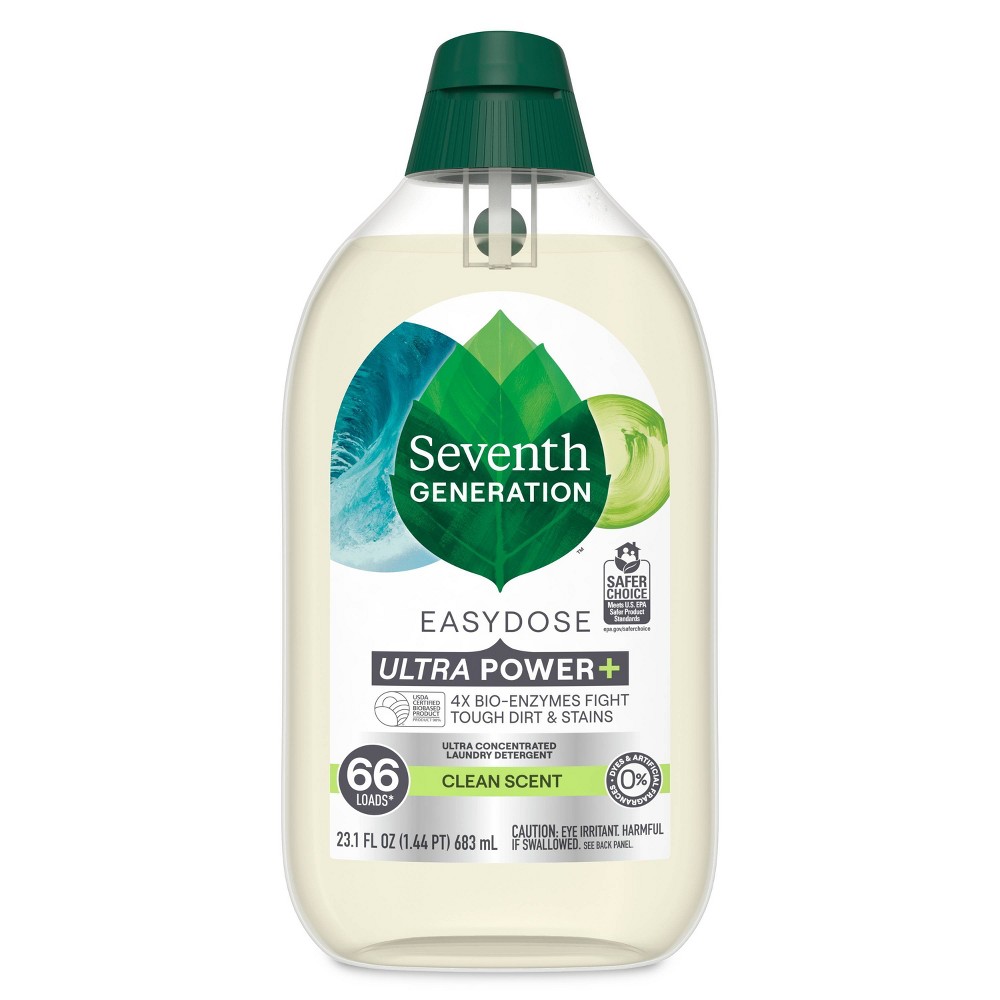
Seventh Generation Clean with Purpose Fresh Free and Clear Dishwasher Detergent 75 oz 1 Count
At a glance
Summary
This dishwasher detergent contains beneficial ingredients such as citric acid, sodium percarbonate, and enzyme blends, which are effective and environmentally friendly. The absence of harsh surfactants like SLS or SLES and synthetic fragrances contributes positively to its safety and environmental impact. However, the presence of processed ingredients like C12-16 alcohols ethoxylated propoxylated limits its score, despite the overall clean formulation.
Key ingredients 10
Protease enzyme blendVery Good
Protease enzymes are used in cleaning products to break down protein-based stains such as food residues. They are highly effective in improving the cleaning performance of detergents. They are biodegradable and considered environmentally friendly.
Risks
There are minimal risks associated with protease enzymes in cleaning products.
Benefits
They significantly enhance the cleaning power of detergents by breaking down protein-based stains.
Amylase enzyme blendVery Good
Amylase enzymes are used in cleaning products to break down starch-based stains. They improve the cleaning performance of detergents by targeting specific types of stains. They are biodegradable and considered environmentally friendly.
Risks
There are minimal risks associated with amylase enzymes in cleaning products.
Benefits
They enhance the cleaning power of detergents by breaking down starch-based stains.
Sodium percarbonateGood
Sodium percarbonate is an oxygen-based bleaching agent used in cleaning products. It releases hydrogen peroxide when dissolved in water, which helps to remove stains and disinfect surfaces. It is considered a safer alternative to chlorine bleach.
Risks
In concentrated forms, it can be irritating to the skin and eyes.
Benefits
It provides effective stain removal and disinfection without the harshness of chlorine bleach.
Sodium chlorideNeutral
Sodium chloride is commonly used as a thickening agent in cleaning products. It helps to adjust the viscosity of the formula. It is generally considered safe and non-toxic.
Risks
There are no significant risks associated with sodium chloride in cleaning products.
Benefits
It helps in maintaining the consistency of the product, ensuring even distribution during use.
Sodium sulfateNeutral
Sodium sulfate is used as a filler in powdered cleaning products. It helps to bulk up the product without affecting its cleaning properties. It is considered safe for use in household cleaning products.
Risks
There are minimal risks associated with sodium sulfate in cleaning products.
Benefits
It contributes to the overall volume of the product, making it more economical.
Sodium carbonateNeutral
Sodium carbonate, also known as washing soda, is used to soften water and enhance the cleaning power of detergents. It is effective in removing grease and stains. It is generally safe for use in cleaning products.
Risks
In high concentrations, it can be irritating to the skin and eyes.
Benefits
It improves the effectiveness of detergents by softening water and breaking down stains.
Citric acidNeutral
Common acidulant and preservative — safe at typical use levels, neither beneficial nor harmful.
Risks
There are minimal risks associated with citric acid in cleaning products.
Benefits
It effectively removes hard water stains and is biodegradable, making it environmentally friendly.
C12-16 alcohols ethoxylated propoxylatedNeutral
This ingredient is a non-ionic surfactant used to enhance the cleaning power of detergents. It helps to break down and remove grease and dirt. It is generally considered safe for use in cleaning products.
Risks
There are minimal risks associated with this surfactant in cleaning products.
Benefits
It improves the cleaning efficiency of the detergent by breaking down grease and dirt.
Sodium silicateNeutral
Sodium silicate is used in cleaning products as a corrosion inhibitor and to maintain the stability of the formula. It helps to protect metal parts of dishwashers from corrosion. It is considered safe for use in household cleaning products.
Risks
There are minimal risks associated with sodium silicate in cleaning products.
Benefits
It helps to protect metal surfaces from corrosion and maintains the stability of the product.
Sodium polyaspartateNeutral
Sodium polyaspartate is used as a water softener and anti-scaling agent in cleaning products. It helps to prevent the formation of scale and improve the effectiveness of detergents. It is considered safe for use in household cleaning products.
Risks
There are minimal risks associated with sodium polyaspartate in cleaning products.
Benefits
It prevents scale formation and enhances the cleaning power of detergents.
Processing
Unprocessed or Minimally Processed Foods
Get the full breakdown in the Scout appTake Scout shopping
Scan any product to see lab results, healthy alternatives, and your personalized analysis.
Download on theApp Store GET IT ONGoogle PlayAmazon pricing & content
Amazon price as of . Product prices and availability are accurate as of the date/time indicated and are subject to change. Any price and availability information displayed on Amazon.com at the time of purchase will apply to the purchase of this product.
CERTAIN CONTENT THAT APPEARS ON THIS SITE COMES FROM AMAZON. THIS CONTENT IS PROVIDED “AS IS” AND IS SUBJECT TO CHANGE OR REMOVAL AT ANY TIME.