
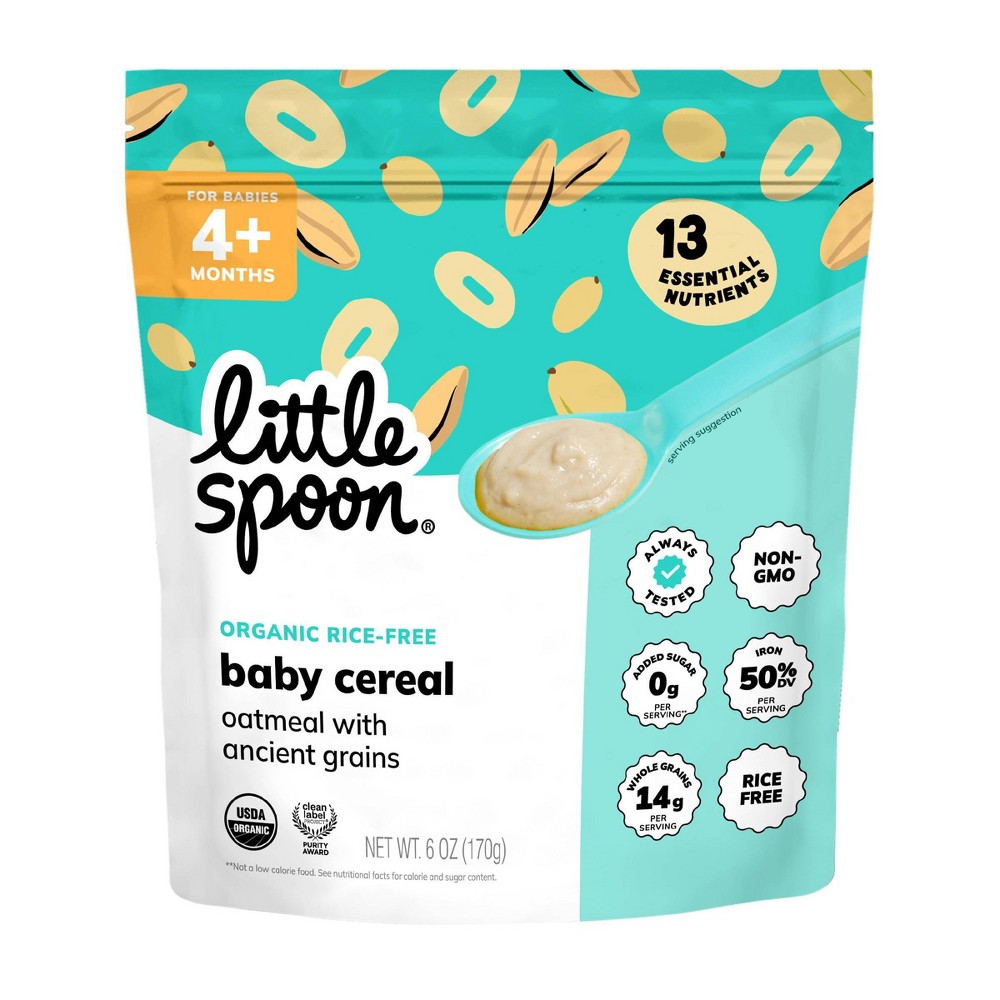
Little Spoon Organic Oatmeal Baby & Infant Cereal – 6oz

Little Spoon
85 Excellent
View on Amazon

Summary

This baby cereal is made from minimally processed whole grain flours, which are organic and retain their natural nutrients, making it a healthy choice for infants. The product has a clean label with no harmful additives or artificial ingredients, and the inclusion of essential vitamins and minerals enhances its nutritional profile. Its low processing level and organic certification contribute to its high rating.

At a glance

Beneficial ingredients 3
Harmful ingredients 0
Category Baby Foods

Key ingredients 16

Whole grain oat flour
Very Good

Whole grain oat flour is a nutritious source of complex carbohydrates and dietary fiber. It is minimally processed and retains its natural nutrients, making it suitable for infant consumption. The organic certification ensures it is free from synthetic pesticides and fertilizers.

Benefits

Provides essential nutrients like fiber and B vitamins, supporting digestive health and energy levels.

See more about Whole grain oat flour →
Whole grain barley flour
Good

Whole grain barley flour is rich in dietary fiber and essential nutrients. It is minimally processed, preserving its natural vitamins and minerals. The organic nature of the ingredient ensures it is free from harmful chemicals.

Benefits

Supports digestive health and provides a steady release of energy due to its fiber content.

Whole grain millet flour
Good

Whole grain millet flour is a gluten-free grain that is high in fiber and essential nutrients. It is minimally processed, retaining its natural nutritional profile. The organic certification indicates it is grown without synthetic additives.

Benefits

Offers a good source of magnesium and phosphorus, supporting bone health and energy metabolism.

Tricalcium phosphate
Neutral

Tricalcium phosphate is used as a calcium supplement to fortify foods. It is a common additive in baby foods to ensure adequate calcium intake. The processing of this compound is standard for food-grade applications.

Risks

Excessive intake may lead to imbalances in mineral absorption.

Benefits

Provides a source of calcium, essential for bone development and maintenance.

See more about Tricalcium phosphate →
Electrolytic iron
Neutral

Electrolytic iron is used to fortify foods with iron, an essential mineral. It is a common fortification method to prevent iron deficiency, especially in infants. The processing ensures it is safe for consumption.

Risks

Excessive iron intake can lead to gastrointestinal issues.

Benefits

Helps prevent iron deficiency anemia and supports healthy blood production.

See more about Electrolytic iron →
Vitamin A palmitate
Neutral

Vitamin A palmitate is a synthetic form of vitamin A used to fortify foods. It is added to ensure adequate vitamin A intake, which is crucial for vision and immune function. The processing is standard for vitamin fortification.

Risks

Excessive intake can lead to hypervitaminosis A.

Benefits

Supports vision health and immune function.

See more about Vitamin A palmitate →
Vitamin D (cholecalciferol)
Neutral

Vitamin D (cholecalciferol) is added to foods to support bone health and calcium absorption. It is a common fortification in baby foods to ensure adequate vitamin D levels. The processing is typical for vitamin fortification.

Risks

Excessive intake can lead to hypercalcemia.

Benefits

Essential for bone health and immune function.

Vitamin B3 (niacinamide)
Neutral

Vitamin B3 (niacinamide) is used to fortify foods with niacin, an essential B vitamin. It is important for energy metabolism and skin health. The processing is standard for vitamin fortification.

Risks

High doses may cause skin flushing and liver issues.

Benefits

Supports energy production and skin health.

Zinc oxide
Neutral

Zinc oxide is used to fortify foods with zinc, an essential mineral. It is important for immune function and enzyme activity. The processing ensures it is safe for consumption.

Risks

Excessive intake can interfere with copper absorption.

Benefits

Supports immune health and enzyme function.

See more about Zinc oxide →
Calcium D-pantothenate
Neutral

Calcium D-pantothenate is a form of vitamin B5 used to fortify foods. It is essential for energy metabolism and the synthesis of coenzyme A. The processing is typical for vitamin fortification.

Benefits

Supports energy metabolism and the synthesis of coenzyme A.

See more about Calcium D-pantothenate →
Biotin
Neutral

Biotin is a B vitamin used to fortify foods, important for energy metabolism and hair health. It is commonly added to ensure adequate intake in infants. The processing is standard for vitamin fortification.

Benefits

Supports energy metabolism and hair health.

See more about Biotin →
Vitamin B12 (cyanocobalamin)
Neutral

Vitamin B12 (cyanocobalamin) is used to fortify foods with B12, essential for nerve function and red blood cell production. It is a common fortification in baby foods to prevent deficiency. The processing is typical for vitamin fortification.

Benefits

Supports nerve function and red blood cell production.

See more about Vitamin B12 (cyanocobalamin) →
Folic acid
Neutral

Folic acid is a synthetic form of folate used to fortify foods. It is crucial for DNA synthesis and cell division, especially in infants. The processing is standard for vitamin fortification.

Risks

Excessive intake may mask vitamin B12 deficiency.

Benefits

Supports DNA synthesis and cell division.

See more about Folic acid →
Vitamin B1 (thiamine mononitrate)
Neutral

Vitamin B1 (thiamine mononitrate) is used to fortify foods with thiamine, essential for energy metabolism. It is commonly added to ensure adequate intake in infants. The processing is typical for vitamin fortification.

Benefits

Supports energy metabolism and nerve function.

Vitamin B6 (pyridoxine hydrochloride)
Neutral

Vitamin B6 (pyridoxine hydrochloride) is used to fortify foods with B6, important for protein metabolism and cognitive development. It is a common fortification in baby foods. The processing is standard for vitamin fortification.

Benefits

Supports protein metabolism and cognitive development.

Vitamin B2 (riboflavin)
Neutral

Vitamin B2 (riboflavin) is used to fortify foods with riboflavin, essential for energy production and skin health. It is commonly added to ensure adequate intake in infants. The processing is typical for vitamin fortification.

Benefits

Supports energy production and skin health.

Processing

Group 1 · Minimally processed

Unprocessed or Minimally Processed Foods

Get the full breakdown in the Scout app

Scan any product to see lab results, healthy alternatives, and your personalized analysis.

Download on theApp Store