
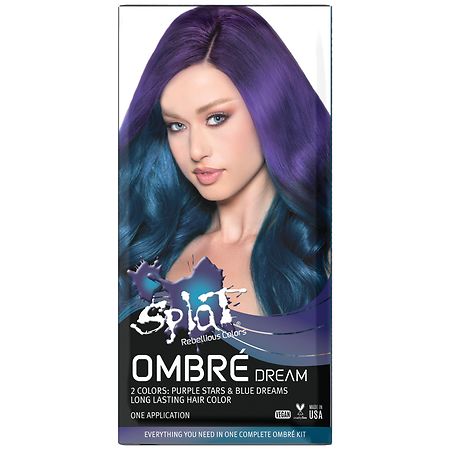

Splat Semi-Permanent Hair Color Original Kit (Ombre Dream)
Summary
This hair color product is processed and contains synthetic chemicals typical of hair dyes, which can include potential irritants and allergens. While it may not contain the most harmful substances found in some cosmetics, the presence of synthetic ingredients and the processing involved in creating the dye contribute to a moderate score. The product lacks the natural, minimally processed ingredients that would elevate its rating.
At a glance
Key ingredients 9
Water
Water is a universal solvent used to dissolve other ingredients. It helps in the application and distribution of the product. It is generally considered safe and non-irritating.
Risks
There are no significant risks associated with water in cosmetics.
Benefits
Water aids in the consistency and usability of the product.
Aqua
Aqua is simply another term for water, used interchangeably in ingredient lists. It serves the same purpose as water in dissolving and distributing other ingredients. It is safe and non-irritating.
Risks
There are no significant risks associated with aqua in cosmetics.
Benefits
Aqua helps maintain the product's consistency and ease of application.
Sodium Acryloyldimethyltaurate/VP Copolymer
This copolymer is used as a thickening agent and film-former in cosmetics. It helps stabilize emulsions and provides a smooth texture. It is generally considered safe for use in cosmetics.
Risks
There are minimal risks, but some individuals may experience mild irritation.
Benefits
It enhances the texture and stability of the product.
Benzyl Alcohol
Benzyl alcohol is used as a preservative and solvent in cosmetics. It helps prevent microbial growth and extends the shelf life of the product. It is considered safe in low concentrations.
Risks
In higher concentrations, it can cause skin irritation and allergic reactions.
Benefits
It acts as a preservative, ensuring product safety and longevity.
Glycerin
Glycerin is a humectant that attracts moisture to the skin. It helps maintain hydration and improves the skin's barrier function. It is widely used and considered safe in cosmetics.
Risks
There are minimal risks, but excessive use can lead to a sticky feeling.
Benefits
It provides moisturizing benefits and enhances skin hydration.
Xanthan Gum
Xanthan gum is used as a thickening and stabilizing agent in cosmetics. It helps improve the texture and consistency of the product. It is derived from natural sources and is generally safe.
Risks
There are minimal risks, but it can cause irritation in sensitive individuals.
Benefits
It enhances the product's texture and stability.
Dehydroacetic Acid
Dehydroacetic acid is used as a preservative in cosmetics to prevent microbial growth. It helps extend the shelf life of the product. It is considered safe in low concentrations.
Risks
In higher concentrations, it may cause skin irritation.
Benefits
It acts as a preservative, ensuring product safety and longevity.
Phenoxyethanol
Phenoxyethanol is used as a preservative in cosmetics to prevent bacterial growth. It is effective in low concentrations and helps maintain product safety. However, it is a controversial ingredient due to potential skin irritation.
Risks
It can cause skin irritation and allergic reactions in some individuals.
Benefits
It acts as a preservative, extending the product's shelf life.
Citric Acid
Citric acid is used to adjust the pH of cosmetics and as a preservative. It helps maintain the stability and effectiveness of the product. It is generally considered safe in cosmetics.
Risks
In high concentrations, it can cause skin irritation.
Benefits
It helps maintain the product's pH balance and stability.
Processing
Processed Foods
Get the full breakdown in the Scout app
Scan any product to see lab results, healthy alternatives, and your personalized analysis.
Download on theApp Store