
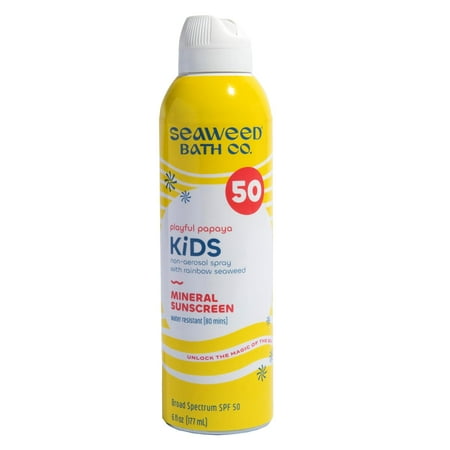

The Seaweed Bath Co. Kids Mineral Spray SPF 50 6 oz.
Analysis updated August 2026 · How Scout scores
At a glance
Summary
This product contains beneficial ingredients like Aloe Vera Leaf, Glycerin, and Alpha-Tocopherol, which are known for their moisturizing and antioxidant properties. However, it also includes propylene glycol and polyester-8, which are synthetic compounds that can be concerning for sensitive skin. The presence of these synthetic ingredients, along with the level of processing involved in creating a spray formulation, impacts the overall score.
Key ingredients 27
Aloe Vera LeafVery Good
Aloe Vera Leaf is known for its soothing and moisturizing properties. It is widely used in cosmetics for its ability to hydrate and calm the skin. It is considered very beneficial for skin health.
Risks
There are minimal risks, though some individuals may experience allergic reactions.
Benefits
Provides hydration, soothes irritation, and supports skin healing.
BananaGood
Banana is used for its moisturizing and nourishing properties. It contains vitamins and minerals beneficial for skin health. It is generally considered safe and beneficial.
Risks
There are minimal risks, though some individuals may experience allergic reactions.
Benefits
Nourishes the skin with vitamins and provides moisture.
GlycerinGood
Glycerin is a powerful humectant that attracts moisture to the skin. It is widely used in cosmetics for its hydrating properties. It is considered very beneficial for maintaining skin moisture balance.
Risks
There are minimal risks associated with glycerin.
Benefits
Deeply hydrates the skin and helps maintain moisture levels.
Alpha-TocopherolGood
Alpha-Tocopherol, a form of Vitamin E, is an antioxidant that helps protect the skin from free radical damage. It is commonly used in skincare for its protective and moisturizing properties. It is considered beneficial for skin health.
Risks
There are minimal risks, though high concentrations may cause irritation.
Benefits
Protects the skin from oxidative stress and provides moisture.
Alpha-BisabololGood
Alpha-Bisabolol is known for its soothing and anti-inflammatory properties. It is used in cosmetics to calm irritated skin and reduce redness. It is considered beneficial for sensitive skin.
Risks
There are minimal risks, though some individuals may experience allergic reactions.
Benefits
Soothes and calms the skin, reducing irritation and redness.
WaterNeutral
Water is a common solvent used in many cosmetic formulations. It helps dissolve other ingredients and provides a base for the product. It is generally considered safe and non-irritating.
Risks
There are no significant risks associated with water in cosmetic products.
Benefits
Water hydrates the skin and helps in the application of the product.
Dicaprylyl CarbonateNeutral
Dicaprylyl Carbonate is an emollient that provides a silky feel to the skin. It helps in spreading the product evenly. It is considered safe for use in cosmetics.
Risks
There are no significant risks associated with Dicaprylyl Carbonate.
Benefits
It improves the texture and spreadability of the product.
Isononyl IsononanoateNeutral
Isononyl Isononanoate is an emollient that provides a smooth application. It is used to enhance the texture of cosmetic products. It is generally regarded as safe.
Risks
There are minimal risks associated with this ingredient.
Benefits
It helps in moisturizing the skin and improving product texture.
Isocetyl Stearoyl StearateNeutral
Isocetyl Stearoyl Stearate is an emollient that provides a smooth feel to the skin. It is used to improve the texture of cosmetic products. It is considered safe for use.
Risks
There are no significant risks associated with this ingredient.
Benefits
It enhances the spreadability and feel of the product on the skin.
Methyl DehydroabietateNeutral
Methyl Dehydroabietate is used as a fragrance ingredient and fixative. It helps in stabilizing the scent of the product. It is generally considered safe for use in cosmetics.
Risks
May cause skin irritation or allergic reactions in sensitive individuals.
Benefits
Stabilizes fragrance and enhances the sensory experience of the product.
Cetearyl AlcoholNeutral
Cetearyl Alcohol is a fatty alcohol used as an emollient and thickener. It helps in stabilizing and thickening formulations. It is generally considered safe and non-irritating.
Risks
There are minimal risks associated with Cetearyl Alcohol.
Benefits
Improves product texture and provides moisturizing benefits.
BentoniteNeutral
Bentonite is a type of clay used for its absorbent properties. It helps in removing impurities and excess oil from the skin. It is generally considered safe for use in cosmetics.
Risks
May cause dryness or irritation in sensitive skin types.
Benefits
Helps in detoxifying the skin and controlling oiliness.
Citric Acid MonohydrateNeutral
Citric Acid Monohydrate is used to adjust the pH of cosmetic formulations. It can also act as a mild exfoliant. It is generally considered safe for use in cosmetics.
Risks
May cause irritation in sensitive skin types if used in high concentrations.
Benefits
Helps maintain the stability and effectiveness of the product.
Aluminum OxideNeutral
Aluminum Oxide is used as an abrasive and thickening agent in cosmetics. It helps in improving the texture and application of the product. It is generally considered safe for use.
Risks
There are minimal risks associated with Aluminum Oxide.
Benefits
Improves product texture and provides mild exfoliation.
Sodium GluconateNeutral
Sodium Gluconate is used as a chelating agent to improve the stability of cosmetic formulations. It helps in preventing the degradation of the product. It is generally considered safe for use.
Risks
There are minimal risks associated with Sodium Gluconate.
Benefits
Enhances product stability and shelf life.
Caprylhydroxamic AcidNeutral
Caprylhydroxamic Acid is used as a preservative in cosmetics. It helps in preventing the growth of bacteria and mold. It is generally considered safe for use.
Risks
There are minimal risks associated with Caprylhydroxamic Acid.
Benefits
Ensures the safety and longevity of the product by preventing microbial growth.
Hydroxyethyl EthylcelluloseNeutral
Hydroxyethyl Ethylcellulose is used as a thickening agent in cosmetics. It helps in improving the texture and consistency of the product. It is generally considered safe for use.
Risks
There are minimal risks associated with this ingredient.
Benefits
Enhances the texture and application of the product.
Caprylyl GlycolNeutral
Caprylyl Glycol is used as a skin conditioning agent and preservative. It helps in moisturizing the skin and enhancing product stability. It is generally considered safe for use.
Risks
There are minimal risks associated with Caprylyl Glycol.
Benefits
Moisturizes the skin and helps preserve the product.
Coco-GlucosideNeutral
Coco-Glucoside is a mild surfactant derived from coconut oil and glucose. It is used to cleanse the skin without stripping natural oils. It is generally considered safe and non-irritating.
Risks
There are minimal risks associated with Coco-Glucoside.
Benefits
Gently cleanses the skin while maintaining moisture balance.
Microcrystalline CelluloseNeutral
Microcrystalline Cellulose is used as a bulking agent and stabilizer in cosmetics. It helps in improving the texture and consistency of the product. It is generally considered safe for use.
Risks
There are minimal risks associated with Microcrystalline Cellulose.
Benefits
Enhances product texture and stability.
Polyhydroxystearic AcidNeutral
Polyhydroxystearic Acid is used as an emulsifier and thickener in cosmetics. It helps in stabilizing formulations and improving texture. It is generally considered safe for use.
Risks
There are minimal risks associated with this ingredient.
Benefits
Improves product stability and texture.
Polyester-8Neutral
Polyester-8 is used as a film-forming agent in sunscreens. It helps in providing water resistance and enhancing SPF. It is generally considered safe for use.
Risks
There are minimal risks associated with Polyester-8.
Benefits
Enhances the water resistance and effectiveness of sunscreen formulations.
Silicon DioxideNeutral
Silicon Dioxide is used as an anti-caking agent and absorbent in cosmetics. It helps in improving the texture and application of the product. It is generally considered safe for use.
Risks
There are minimal risks associated with Silicon Dioxide.
Benefits
Improves product texture and prevents clumping.
Sodium Stearoyl GlutamateNeutral
Sodium Stearoyl Glutamate is used as an emulsifier in cosmetics. It helps in stabilizing formulations and improving texture. It is generally considered safe for use.
Risks
There are minimal risks associated with this ingredient.
Benefits
Enhances product stability and texture.
C18-C21 AlkaneNeutral
C18-C21 Alkane is used as an emollient and solvent in cosmetics. It helps in improving the texture and spreadability of the product. It is generally considered safe for use.
Risks
There are minimal risks associated with C18-C21 Alkane.
Benefits
Improves product texture and provides a smooth application.
Butyloctyl SalicylateBad
Processed additive flagged under Scout's ingredient doctrine.
Risks
There are minimal risks associated with Butyloctyl Salicylate, though it may cause irritation in sensitive individuals.
Benefits
It enhances the effectiveness of sunscreen formulations by boosting SPF.
Propylene GlycolBad
Processed additive flagged under Scout's ingredient doctrine.
Risks
May cause skin irritation or allergic reactions in sensitive individuals.
Benefits
Helps in maintaining skin hydration and improving product consistency.
Processing
Processed Foods
Get the full breakdown in the Scout appTake Scout shopping
Scan any product to see lab results, healthy alternatives, and your personalized analysis.
Download on theApp Store GET IT ONGoogle PlayAmazon pricing & content
Amazon price as of . Product prices and availability are accurate as of the date/time indicated and are subject to change. Any price and availability information displayed on Amazon.com at the time of purchase will apply to the purchase of this product.
CERTAIN CONTENT THAT APPEARS ON THIS SITE COMES FROM AMAZON. THIS CONTENT IS PROVIDED “AS IS” AND IS SUBJECT TO CHANGE OR REMOVAL AT ANY TIME.