
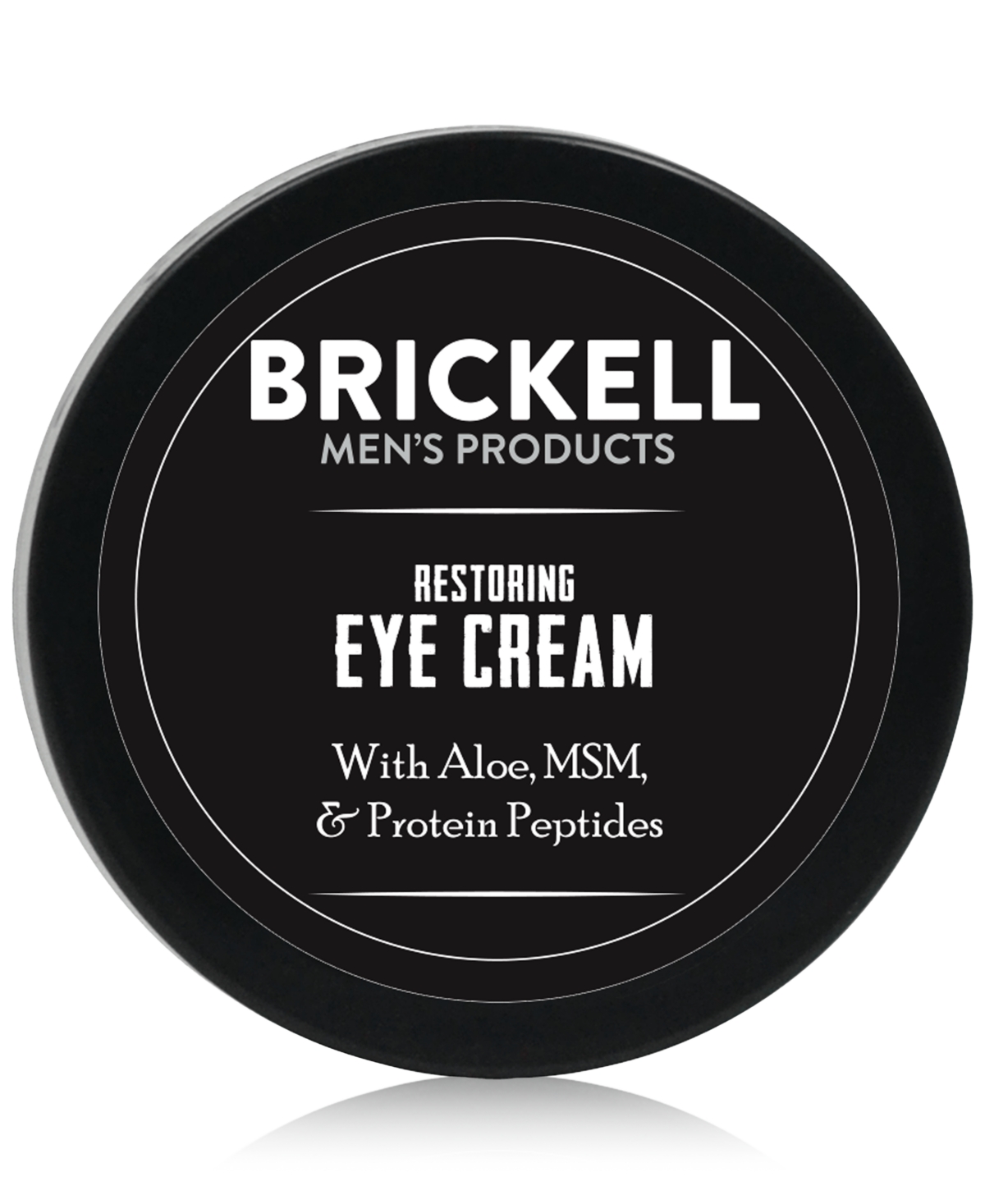
Brickell Men s Restoring Under Eye Cream Natural + Organic Anti Aging Eye Balm To Reduce Puffiness Wrinkles Dark Circles Crows Feet and Under Eye Bags 0.5 Ounce Unscented
Analysis updated July 2026 · How Scout scores
At a glance
Summary
This eye cream features a blend of beneficial ingredients such as aloe vera, sunflower oil, and plant-based hyaluronic acid, which are known for their moisturizing and soothing properties. The inclusion of natural oils and skin actives like squalane and Vitamin C enhances its appeal. However, the presence of processed components like hydrogenated vegetable oil and carbomer slightly detracts from its overall purity, capping its score despite the predominantly natural formulation.
Key ingredients 31
Barbadensis Leaf Juice (Aloe)Very Good
Aloe vera is known for its soothing and moisturizing properties. It helps to calm irritated skin and provides hydration. It is widely used in skincare for its healing benefits.
Risks
Rarely, aloe vera can cause allergic reactions in sensitive individuals.
Benefits
Aloe vera provides anti-inflammatory and moisturizing benefits, making it ideal for sensitive skin.
Helianthus Annuus (Sunflower Oil)Very Good
Sunflower oil is rich in vitamin E and fatty acids, which help to nourish and protect the skin. It is a natural emollient that helps to maintain skin barrier function. It is non-comedogenic and suitable for all skin types.
Risks
There are minimal risks, though it may cause breakouts in very oily skin types.
Benefits
Sunflower oil provides antioxidant protection and helps to retain moisture in the skin.
Cassia Angustifolia Seed Polysaccharide (Plant Based Hyaluronic Acid)Very Good
This plant-based hyaluronic acid is known for its excellent moisture-retaining properties. It helps to hydrate the skin by attracting and holding water. It is beneficial for maintaining skin elasticity and smoothness.
Risks
There are no significant risks associated with this ingredient.
Benefits
It provides intense hydration and helps to plump the skin, reducing the appearance of fine lines.
SqualaneVery Good
Squalane is a highly effective moisturizer that mimics the skin's natural oils. It helps to prevent moisture loss and improve skin elasticity. It is non-comedogenic and suitable for all skin types.
Risks
There are no significant risks associated with squalane.
Benefits
Squalane provides deep hydration and helps to maintain a healthy skin barrier.
Sodium Ascorbyl Phosphate (Vitamin C)Very Good
Sodium ascorbyl phosphate is a stable form of vitamin C that provides antioxidant protection. It helps to brighten the skin and reduce the appearance of dark spots. It is beneficial for improving skin tone and texture.
Risks
There are no significant risks associated with sodium ascorbyl phosphate.
Benefits
It provides antioxidant protection and helps to brighten and even out skin tone.
Matrixyl 3000Very Good
Matrixyl 3000 is a peptide complex that helps to stimulate collagen production. It is effective in reducing the appearance of wrinkles and improving skin elasticity. It is beneficial for anti-aging skincare.
Risks
There are no significant risks associated with Matrixyl 3000.
Benefits
It helps to reduce wrinkles and improve skin firmness and elasticity.
Palmitoyl Tripeptide-5Very Good
Palmitoyl tripeptide-5 is a peptide that helps to boost collagen production and improve skin texture. It is effective in reducing the appearance of fine lines and wrinkles. It is beneficial for anti-aging skincare.
Risks
There are no significant risks associated with palmitoyl tripeptide-5.
Benefits
It helps to improve skin texture and reduce the appearance of wrinkles.
BeeswaxVery Good
Beeswax is a natural emollient that provides a protective barrier on the skin. It helps to lock in moisture and prevent dryness. It is beneficial for soothing and protecting the skin.
Risks
There are no significant risks associated with beeswax.
Benefits
It provides a protective barrier and helps to lock in moisture, keeping the skin hydrated.
Hamamelis Virginiana (Witch Hazel)Good
Witch hazel is a natural astringent that helps to tighten the skin and reduce inflammation. It is often used to soothe irritated skin and reduce puffiness. It has antioxidant properties that can protect the skin from damage.
Risks
Overuse can lead to dryness or irritation in sensitive skin.
Benefits
Witch hazel helps to reduce swelling and soothe the skin, making it beneficial for under-eye care.
Glycolic AcidGood
Glycolic acid is an alpha hydroxy acid (AHA) that exfoliates the skin, removing dead skin cells. It helps to improve skin texture and tone. It is effective in reducing the appearance of fine lines and wrinkles.
Risks
It can cause irritation or sensitivity, especially in high concentrations.
Benefits
Glycolic acid promotes cell turnover, leading to smoother and more radiant skin.
Methylsulfonylmethane (MSM)Good
MSM is known for its anti-inflammatory properties and ability to improve skin health. It helps to reduce redness and improve skin texture. It is often used to enhance the absorption of other ingredients.
Risks
There are minimal risks, though it may cause mild irritation in sensitive skin.
Benefits
MSM supports collagen production and helps to reduce inflammation, promoting healthier skin.
Kosher Vegetable GlycerinGood
Vegetable glycerin is a humectant that attracts moisture to the skin. It helps to keep the skin hydrated and soft. It is non-irritating and suitable for all skin types.
Risks
There are no significant risks associated with vegetable glycerin.
Benefits
It provides hydration and helps to maintain skin moisture levels.
Cocos Nucifera (Coconut Oil)Good
Coconut oil is a natural emollient that provides deep hydration and nourishment to the skin. It is rich in fatty acids and has antimicrobial properties. It is beneficial for dry and sensitive skin.
Risks
It may cause breakouts in acne-prone skin due to its comedogenic nature.
Benefits
Coconut oil provides intense hydration and helps to soothe and protect the skin.
Theobroma Cacao (Cocoa Butter)Good
Cocoa butter is a natural fat that provides deep moisturization and nourishment to the skin. It is rich in antioxidants and helps to improve skin elasticity. It is beneficial for dry and mature skin.
Risks
It may cause breakouts in acne-prone skin due to its comedogenic nature.
Benefits
Cocoa butter provides intense hydration and helps to improve skin elasticity.
Crithmum Maritimum Extract (Sea Fennel Wax)Good
Sea fennel wax is known for its moisturizing and soothing properties. It helps to protect the skin barrier and reduce inflammation. It is beneficial for sensitive and dry skin.
Risks
There are no significant risks associated with sea fennel wax.
Benefits
It provides hydration and helps to soothe and protect the skin.
Cucumis Sativus (Cucumber Hydrosol)Good
Cucumber hydrosol is known for its soothing and cooling properties. It helps to reduce puffiness and refresh the skin. It is beneficial for calming irritated skin.
Risks
There are no significant risks associated with cucumber hydrosol.
Benefits
It provides a cooling effect and helps to soothe and refresh the skin.
ArginineGood
Arginine is an amino acid that helps to improve skin hydration and elasticity. It is known for its wound-healing properties and ability to support collagen production. It is beneficial for maintaining healthy skin.
Risks
There are no significant risks associated with arginine.
Benefits
It helps to improve skin hydration and support collagen production.
Purified WaterNeutral
Purified water is used as a solvent to dissolve other ingredients. It is a neutral component in cosmetic formulations. It does not provide direct benefits or risks.
Risks
There are no known risks associated with purified water in cosmetics.
Benefits
It acts as a base for the formulation, allowing other ingredients to be evenly distributed.
Glyceryl StearateNeutral
Glyceryl stearate is an emulsifier that helps to blend oil and water components in formulations. It provides a smooth texture to the product. It does not have direct skin benefits or risks.
Risks
There are no significant risks associated with glyceryl stearate.
Benefits
It helps to stabilize the formulation and improve product texture.
Lactic AcidNeutral
Standard formulation ingredient — neither beneficial nor harmful at typical use.
Risks
It can cause irritation or sensitivity, especially in high concentrations.
Benefits
Lactic acid helps to exfoliate and hydrate the skin, leading to a smoother complexion.
Hydrogenated Castor OilNeutral
Hydrogenated castor oil is used as an emollient and thickening agent in cosmetics. It helps to improve the texture and stability of formulations. It does not have direct skin benefits or risks.
Risks
There are no significant risks associated with hydrogenated castor oil.
Benefits
It helps to stabilize the formulation and improve product texture.
Octyl PalmitateNeutral
Octyl palmitate is an emollient that provides a silky feel to the skin. It is used to enhance the texture and spreadability of formulations. It does not have direct skin benefits or risks.
Risks
It may cause breakouts in acne-prone skin due to its occlusive nature.
Benefits
It helps to improve the texture and spreadability of the product.
Cetyl AlcoholNeutral
Cetyl alcohol is a fatty alcohol used as an emollient and thickening agent in cosmetics. It helps to improve the texture and stability of formulations. It does not have direct skin benefits or risks.
Risks
There are no significant risks associated with cetyl alcohol.
Benefits
It helps to stabilize the formulation and improve product texture.
Cetearyl AlcoholNeutral
Cetearyl alcohol is a fatty alcohol used as an emollient and thickening agent in cosmetics. It helps to improve the texture and stability of formulations. It does not have direct skin benefits or risks.
Risks
There are no significant risks associated with cetearyl alcohol.
Benefits
It helps to stabilize the formulation and improve product texture.
Cetearyl GlucosideNeutral
Cetearyl glucoside is an emulsifier that helps to blend oil and water components in formulations. It provides a smooth texture to the product. It does not have direct skin benefits or risks.
Risks
There are no significant risks associated with cetearyl glucoside.
Benefits
It helps to stabilize the formulation and improve product texture.
Stearyl AlcoholNeutral
Stearyl alcohol is a fatty alcohol used as an emollient and thickening agent in cosmetics. It helps to improve the texture and stability of formulations. It does not have direct skin benefits or risks.
Risks
There are no significant risks associated with stearyl alcohol.
Benefits
It helps to stabilize the formulation and improve product texture.
Potassium StearateNeutral
Potassium stearate is a surfactant and emulsifier used in cosmetics. It helps to blend oil and water components in formulations. It does not have direct skin benefits or risks.
Risks
There are no significant risks associated with potassium stearate.
Benefits
It helps to stabilize the formulation and improve product texture.
Caprylic/Capric TriglycerideNeutral
Caprylic/capric triglyceride is an emollient that provides a silky feel to the skin. It is used to enhance the texture and spreadability of formulations. It does not have direct skin benefits or risks.
Risks
There are no significant risks associated with caprylic/capric triglyceride.
Benefits
It helps to improve the texture and spreadability of the product.
Hydrogenated Vegetable OilNeutral
Hydrogenated vegetable oil is used as an emollient and thickening agent in cosmetics. It helps to improve the texture and stability of formulations. It does not have direct skin benefits or risks.
Risks
There are no significant risks associated with hydrogenated vegetable oil.
Benefits
It helps to stabilize the formulation and improve product texture.
CarbomerNeutral
Carbomer is a thickening agent used to stabilize and improve the texture of formulations. It helps to create a smooth and consistent product. It does not have direct skin benefits or risks.
Risks
There are no significant risks associated with carbomer.
Benefits
It helps to stabilize the formulation and improve product texture.
Isopropyl Palmitate (Palm Oil)Bad
Processed additive flagged under Scout's ingredient doctrine.
Risks
It may cause breakouts in acne-prone skin due to its occlusive nature.
Benefits
It helps to improve the texture and spreadability of the product.
Get the full breakdown in the Scout appTake Scout shopping
Scan any product to see lab results, healthy alternatives, and your personalized analysis.
Download on theApp Store GET IT ONGoogle PlayAmazon pricing & content
Amazon price as of . Product prices and availability are accurate as of the date/time indicated and are subject to change. Any price and availability information displayed on Amazon.com at the time of purchase will apply to the purchase of this product.
CERTAIN CONTENT THAT APPEARS ON THIS SITE COMES FROM AMAZON. THIS CONTENT IS PROVIDED “AS IS” AND IS SUBJECT TO CHANGE OR REMOVAL AT ANY TIME.