
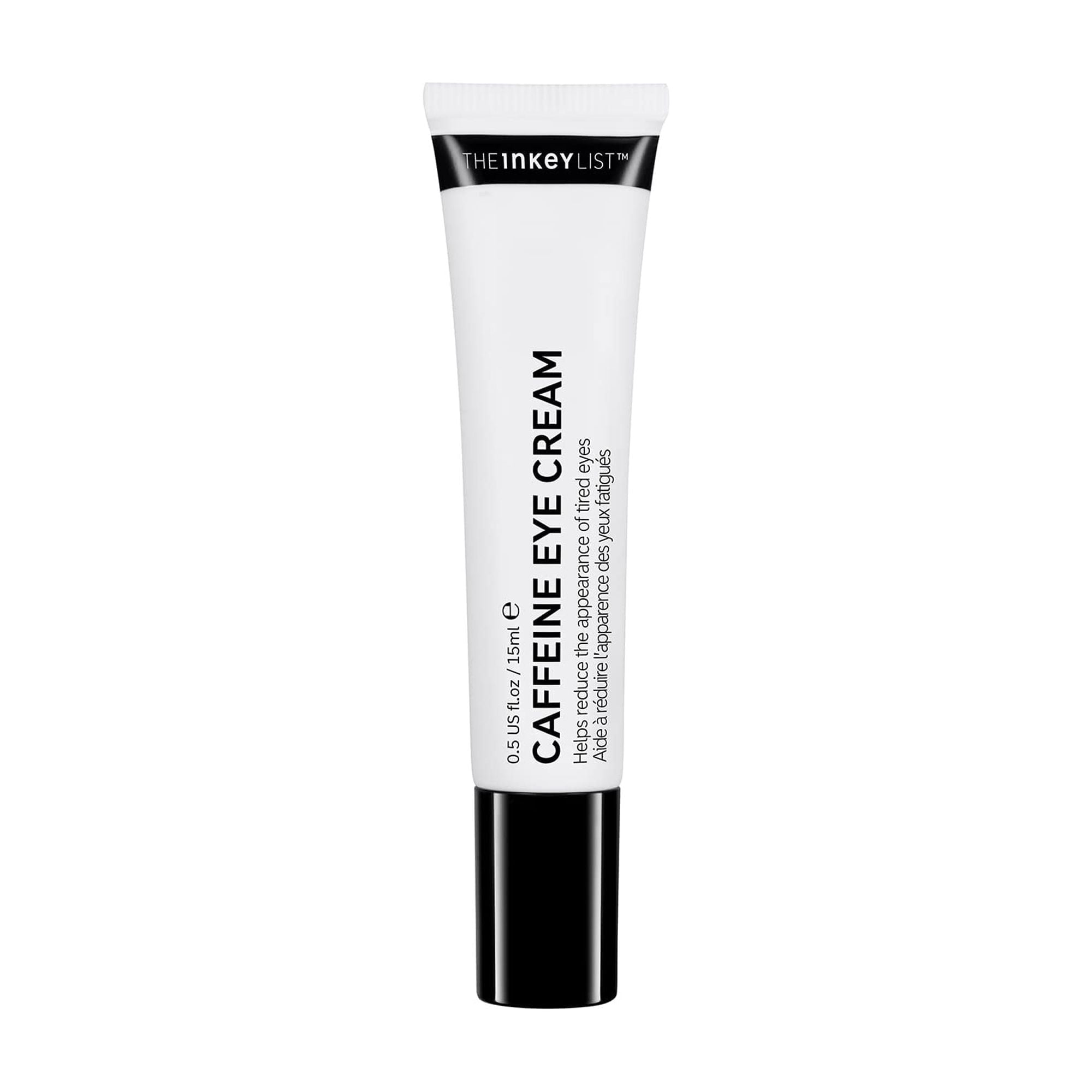

Eye Cream The Inkey List Caffeine Reduce Puffiness 15ml
Analysis updated September 2026 · How Scout scores
At a glance
Summary
This eye cream contains a variety of beneficial ingredients such as glycerin, jojoba esters, squalane, and hyaluronic acid, which are known for their moisturizing and skin-protecting properties. The presence of caffeine and botanical extracts adds antioxidant and anti-inflammatory benefits, enhancing the product's effectiveness in reducing puffiness. However, the inclusion of phenoxyethanol as a preservative, while generally safe, can be irritating to some individuals, slightly impacting the overall ingredient safety score.
Key ingredients 35
Jojoba EstersVery Good
Jojoba Esters are derived from jojoba oil and are used as emollients in cosmetics. They help to moisturize and protect the skin. They are generally considered safe and beneficial for most skin types.
Risks
There are minimal risks associated with jojoba esters.
Benefits
Jojoba Esters help to moisturize and protect the skin.
SqualaneVery Good
Squalane is a highly effective emollient and natural antioxidant. It helps to hydrate and protect the skin without leaving a greasy residue. It is generally considered safe and beneficial for most skin types.
Risks
There are minimal risks associated with squalane.
Benefits
Squalane helps to hydrate and protect the skin.
TocopherolVery Good
Tocopherol, also known as Vitamin E, is an antioxidant used in cosmetics for its skin-conditioning properties. It helps to protect the skin from environmental stressors and improve its appearance. It is generally considered safe and beneficial for most skin types.
Risks
There are minimal risks associated with tocopherol.
Benefits
Tocopherol helps to protect the skin from environmental stressors and improve its appearance.
Palmitoyl Tetrapeptide-7Very Good
Palmitoyl Tetrapeptide-7 is a peptide used in cosmetics for its anti-aging properties. It helps to reduce inflammation and improve skin elasticity. It is generally considered safe and beneficial for most skin types.
Risks
There are minimal risks associated with palmitoyl tetrapeptide-7.
Benefits
It helps to reduce inflammation and improve skin elasticity.
Palmitoyl Tripeptide-1Very Good
Palmitoyl Tripeptide-1 is a peptide used in cosmetics for its anti-aging properties. It helps to stimulate collagen production and improve skin texture. It is generally considered safe and beneficial for most skin types.
Risks
There are minimal risks associated with palmitoyl tripeptide-1.
Benefits
It helps to stimulate collagen production and improve skin texture.
GlycerinGood
Glycerin is a humectant that attracts moisture to the skin, helping to keep it hydrated. It is widely used in skincare for its moisturizing properties. It is generally considered safe and beneficial for most skin types.
Risks
There are minimal risks associated with glycerin, though it may cause irritation in very sensitive skin.
Benefits
Glycerin helps to keep the skin hydrated and improve its barrier function.
Albizia Julibrissin Bark ExtractGood
Albizia Julibrissin Bark Extract is a botanical ingredient used for its antioxidant and skin-soothing properties. It helps to protect the skin from environmental stressors. It is generally considered safe and beneficial for most skin types.
Risks
There are minimal risks associated with Albizia Julibrissin Bark Extract.
Benefits
It helps to protect the skin from environmental stressors.
PhospholipidsGood
Phospholipids are used in cosmetics for their moisturizing and skin-conditioning properties. They help to improve the skin's barrier function and retain moisture. They are generally considered safe and beneficial for most skin types.
Risks
There are minimal risks associated with phospholipids.
Benefits
Phospholipids help to improve the skin's barrier function and retain moisture.
Glycine Soja OilGood
Glycine Soja Oil is a natural oil used for its emollient and antioxidant properties. It helps to moisturize and protect the skin. It is generally considered safe and beneficial for most skin types.
Risks
There are minimal risks associated with glycine soja oil.
Benefits
Glycine Soja Oil helps to moisturize and protect the skin.
Hyaluronic AcidGood
Hyaluronic Acid is a powerful humectant used in cosmetics for its moisturizing properties. It helps to retain moisture and improve skin elasticity. It is generally considered safe and beneficial for most skin types.
Risks
There are minimal risks associated with hyaluronic acid.
Benefits
Hyaluronic Acid helps to retain moisture and improve skin elasticity.
WaterNeutral
Water is a common solvent used in cosmetics to dissolve other ingredients. It helps in the application and absorption of the product. It does not provide direct benefits or risks.
Risks
There are no significant risks associated with water in cosmetics.
Benefits
Water helps in the application and absorption of the product.
Dicaprylyl CarbonateNeutral
Dicaprylyl Carbonate is an emollient that helps to improve the spreadability of the product. It provides a smooth and silky feel to the skin. It is generally considered safe for use in cosmetics.
Risks
There are no significant risks associated with dicaprylyl carbonate.
Benefits
It provides a smooth and silky feel to the skin.
PropanediolNeutral
Propanediol is used as a solvent and skin-conditioning agent in cosmetics. It helps to improve the texture and feel of the product. It is generally considered safe for use in cosmetics.
Risks
There are minimal risks associated with propanediol, though it may cause irritation in very sensitive skin.
Benefits
Propanediol helps to improve the texture and feel of the product.
Polyglyceryl-6 DistearateNeutral
Polyglyceryl-6 Distearate is an emulsifier that helps to blend oil and water-based ingredients. It improves the stability and consistency of the product. It is generally considered safe for use in cosmetics.
Risks
There are no significant risks associated with polyglyceryl-6 distearate.
Benefits
It improves the stability and consistency of the product.
Cetyl AlcoholNeutral
Cetyl Alcohol is a fatty alcohol used as an emollient and thickening agent in cosmetics. It helps to soften and smooth the skin. It is generally considered safe for use in cosmetics.
Risks
There are minimal risks associated with cetyl alcohol, though it may cause irritation in very sensitive skin.
Benefits
Cetyl Alcohol helps to soften and smooth the skin.
Glyceryl BehenateNeutral
Glyceryl Behenate is an emollient and thickening agent used in cosmetics. It helps to improve the texture and feel of the product. It is generally considered safe for use in cosmetics.
Risks
There are no significant risks associated with glyceryl behenate.
Benefits
It helps to improve the texture and feel of the product.
Hydroxyethyl Acrylate/Sodium Acryloyldimethyl Taurate CopolymerNeutral
This copolymer is used as a thickening agent and stabilizer in cosmetics. It helps to improve the texture and consistency of the product. It is generally considered safe for use in cosmetics.
Risks
There are no significant risks associated with this copolymer.
Benefits
It helps to improve the texture and consistency of the product.
CaffeineNeutral
Standard formulation ingredient — neither beneficial nor harmful at typical use.
Risks
There are minimal risks associated with caffeine.
Benefits
Caffeine helps to reduce puffiness and improve the appearance of the skin.
Polyglyceryl-3 BeeswaxNeutral
Polyglyceryl-3 Beeswax is an emulsifier and thickening agent used in cosmetics. It helps to blend oil and water-based ingredients and improve the texture of the product. It is generally considered safe for use in cosmetics.
Risks
There are no significant risks associated with polyglyceryl-3 beeswax.
Benefits
It helps to blend oil and water-based ingredients and improve the texture of the product.
EthylhexylglycerinNeutral
Ethylhexylglycerin is used as a preservative and skin-conditioning agent in cosmetics. It helps to enhance the efficacy of other preservatives and improve the texture of the product. It is generally considered safe for use in cosmetics.
Risks
There are minimal risks associated with ethylhexylglycerin.
Benefits
It helps to enhance the efficacy of other preservatives and improve the texture of the product.
Xanthan GumNeutral
Xanthan Gum is used as a thickening and stabilizing agent in cosmetics. It helps to improve the texture and consistency of the product. It is generally considered safe for use in cosmetics.
Risks
There are no significant risks associated with xanthan gum.
Benefits
It helps to improve the texture and consistency of the product.
Sodium PhytateNeutral
Sodium Phytate is used as a chelating agent in cosmetics to stabilize formulations. It helps to prevent the degradation of the product. It is generally considered safe for use in cosmetics.
Risks
There are no significant risks associated with sodium phytate.
Benefits
It helps to prevent the degradation of the product.
GlycolipidsNeutral
Glycolipids are used in cosmetics for their moisturizing and skin-conditioning properties. They help to improve the skin's barrier function and retain moisture. They are generally considered safe for use in cosmetics.
Risks
There are no significant risks associated with glycolipids.
Benefits
They help to improve the skin's barrier function and retain moisture.
Sorbitan IsostearateNeutral
Sorbitan Isostearate is an emulsifier used to blend oil and water-based ingredients in cosmetics. It helps to improve the stability and consistency of the product. It is generally considered safe for use in cosmetics.
Risks
There are no significant risks associated with sorbitan isostearate.
Benefits
It helps to improve the stability and consistency of the product.
Butylene GlycolNeutral
Butylene Glycol is used as a solvent and skin-conditioning agent in cosmetics. It helps to improve the texture and feel of the product. It is generally considered safe for use in cosmetics.
Risks
There are minimal risks associated with butylene glycol, though it may cause irritation in very sensitive skin.
Benefits
Butylene Glycol helps to improve the texture and feel of the product.
Citric AcidNeutral
Citric Acid is used as a pH adjuster and exfoliant in cosmetics. It helps to maintain the stability of the product and improve skin texture. It is generally considered safe for use in cosmetics.
Risks
There are minimal risks associated with citric acid, though it may cause irritation in very sensitive skin.
Benefits
Citric Acid helps to maintain the stability of the product and improve skin texture.
Glycine Soja SterolsNeutral
Glycine Soja Sterols are used in cosmetics for their emollient and skin-conditioning properties. They help to improve the skin's barrier function and retain moisture. They are generally considered safe for use in cosmetics.
Risks
There are no significant risks associated with glycine soja sterols.
Benefits
They help to improve the skin's barrier function and retain moisture.
Leuconostoc/Radish Root Ferment FiltrateNeutral
Leuconostoc/Radish Root Ferment Filtrate is used as a natural preservative in cosmetics. It helps to prevent microbial growth and extend the shelf life of the product. It is generally considered safe for use in cosmetics.
Risks
There are no significant risks associated with this ferment filtrate.
Benefits
It helps to prevent microbial growth and extend the shelf life of the product.
CarbomerNeutral
Carbomer is used as a thickening and stabilizing agent in cosmetics. It helps to improve the texture and consistency of the product. It is generally considered safe for use in cosmetics.
Risks
There are no significant risks associated with carbomer.
Benefits
It helps to improve the texture and consistency of the product.
DarutosideNeutral
Darutoside is a plant-derived compound used for its skin-soothing and anti-aging properties. It helps to improve skin elasticity and reduce the appearance of wrinkles. It is generally considered safe for use in cosmetics.
Risks
There are no significant risks associated with darutoside.
Benefits
It helps to improve skin elasticity and reduce the appearance of wrinkles.
Sodium LactateNeutral
Sodium Lactate is used as a humectant and pH adjuster in cosmetics. It helps to retain moisture and improve the texture of the product. It is generally considered safe for use in cosmetics.
Risks
There are no significant risks associated with sodium lactate.
Benefits
It helps to retain moisture and improve the texture of the product.
Polysorbate 20Neutral
Polysorbate 20 is an emulsifier used to blend oil and water-based ingredients in cosmetics. It helps to improve the stability and consistency of the product. It is generally considered safe for use in cosmetics.
Risks
There are no significant risks associated with polysorbate 20.
Benefits
It helps to improve the stability and consistency of the product.
PhenoxyethanolBad
Phenoxyethanol is a preservative used to prevent microbial growth in cosmetics. It is effective in low concentrations but can cause irritation in some individuals. It is generally considered safe in concentrations up to 1%.
Risks
Phenoxyethanol can cause skin irritation and allergic reactions in sensitive individuals.
Benefits
It helps to prevent microbial growth and extend the shelf life of the product.
Polysorbate 60Bad
Processed additive flagged under Scout's ingredient doctrine.
Risks
There are no significant risks associated with polysorbate 60.
Benefits
It helps to improve the stability and consistency of the product.
Sodium BenzoateBad
Synthetic preservative that can form benzene in the presence of vitamin C.
Risks
There are minimal risks associated with sodium benzoate, though it may cause irritation in very sensitive skin.
Benefits
It helps to prevent microbial growth and extend the shelf life of the product.
Get the full breakdown in the Scout appTake Scout shopping
Scan any product to see lab results, healthy alternatives, and your personalized analysis.
Download on theApp Store GET IT ONGoogle PlayAmazon pricing & content
Amazon price as of . Product prices and availability are accurate as of the date/time indicated and are subject to change. Any price and availability information displayed on Amazon.com at the time of purchase will apply to the purchase of this product.
CERTAIN CONTENT THAT APPEARS ON THIS SITE COMES FROM AMAZON. THIS CONTENT IS PROVIDED “AS IS” AND IS SUBJECT TO CHANGE OR REMOVAL AT ANY TIME.