
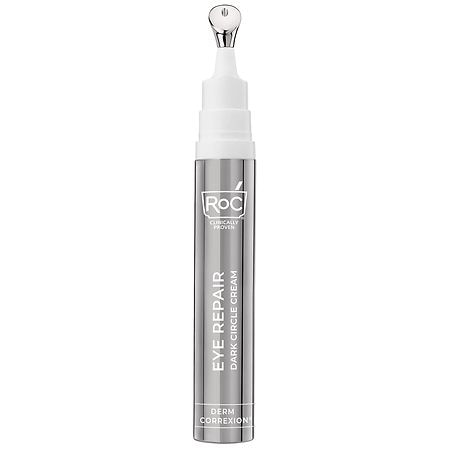

RoC Derm Correxion Dark Circle Eye Repair Cream - 15ml
Analysis updated August 2026 · How Scout scores
At a glance
Summary
This eye cream contains beneficial ingredients such as squalane, niacinamide, and retinol, which are known for their moisturizing and anti-aging properties. The product is formulated with a mix of natural and synthetic ingredients, including some emulsifiers and preservatives, which slightly lower its score. However, the absence of harsh chemicals or known irritants contributes positively to its overall safety and effectiveness.
Key ingredients 37
SqualaneVery Good
Squalane is a highly effective emollient and natural antioxidant. It mimics the skin's natural oils, making it an excellent moisturizer. It is suitable for all skin types, including sensitive skin.
Risks
There are minimal risks associated with squalane as it is non-irritating and non-comedogenic.
Benefits
Squalane helps to hydrate and protect the skin, improving its texture and appearance.
RetinolVery Good
Retinol is a form of Vitamin A that is known for its anti-aging properties. It helps to reduce the appearance of fine lines and wrinkles and improve skin texture. It is a potent ingredient that is effective in promoting skin renewal.
Risks
Retinol can cause irritation, redness, and peeling, especially in sensitive skin.
Benefits
It promotes cell turnover and improves the overall appearance of the skin.
ResveratrolVery Good
Resveratrol is a powerful antioxidant found in grapes and berries. It helps to protect the skin from environmental damage and reduce signs of aging. It is known for its anti-inflammatory and skin-soothing properties.
Risks
There are minimal risks associated with resveratrol.
Benefits
It provides strong antioxidant protection and helps to improve skin health.
Caprylic/Capric TriglycerideGood
Caprylic/Capric Triglyceride is derived from coconut oil and glycerin. It is used as an emollient and helps to smooth and soften the skin. It is well-tolerated by most skin types.
Risks
Rarely, it may cause mild irritation in sensitive individuals.
Benefits
It provides a lightweight, non-greasy barrier that helps to retain moisture in the skin.
GlycerinGood
Glycerin is a humectant that attracts moisture to the skin. It helps to maintain the skin's hydration levels and improve its barrier function. It is widely used in skincare for its moisturizing properties.
Risks
Glycerin is generally safe, but in very high concentrations, it may cause irritation.
Benefits
It enhances skin hydration, leaving it soft and supple.
NiacinamideGood
Niacinamide is a form of Vitamin B3 that offers multiple skin benefits. It helps to improve skin tone, reduce the appearance of pores, and enhance the skin's barrier function. It is well-tolerated by most skin types.
Risks
In rare cases, it may cause mild irritation or redness.
Benefits
Niacinamide is known for its anti-inflammatory properties and ability to improve skin texture and tone.
Cetearyl OlivateGood
Cetearyl Olivate is an emulsifier derived from olive oil. It helps to blend oil and water-based ingredients in formulations. It is gentle on the skin and helps to maintain moisture.
Risks
There are minimal risks associated with cetearyl olivate.
Benefits
It provides a smooth application and helps to keep the skin hydrated.
Sorbitan OlivateGood
Sorbitan Olivate is an emulsifier derived from olive oil and sorbitol. It helps to blend ingredients and improve the texture of the product. It is gentle on the skin and helps to maintain moisture.
Risks
There are minimal risks associated with sorbitan olivate.
Benefits
It provides a smooth application and helps to keep the skin hydrated.
TocopherolGood
Tocopherol, also known as Vitamin E, is an antioxidant that helps to protect the skin from free radical damage. It also has moisturizing properties. It is widely used in skincare for its protective benefits.
Risks
There are minimal risks associated with tocopherol.
Benefits
It helps to protect and nourish the skin, improving its resilience.
Fucus Vesiculosus ExtractGood
Fucus Vesiculosus Extract, derived from seaweed, is rich in antioxidants and minerals. It helps to protect the skin from environmental damage and improve its texture. It is known for its soothing and anti-inflammatory properties.
Risks
There are minimal risks associated with Fucus Vesiculosus Extract.
Benefits
It provides antioxidant protection and helps to soothe the skin.
Saccharomyces Cerevisiae ExtractGood
Saccharomyces Cerevisiae Extract is derived from yeast and is known for its skin-conditioning properties. It helps to improve skin texture and hydration. It is often used in skincare for its rejuvenating effects.
Risks
There are minimal risks associated with Saccharomyces Cerevisiae Extract.
Benefits
It helps to improve skin hydration and texture.
Ceramide NPGood
Ceramide NP is a lipid that helps to restore the skin's natural barrier. It improves hydration and protects the skin from environmental stressors. It is essential for maintaining healthy skin.
Risks
There are minimal risks associated with ceramide NP.
Benefits
It helps to strengthen the skin barrier and retain moisture.
Tocopheryl AcetateGood
Tocopheryl Acetate is a form of Vitamin E that acts as an antioxidant. It helps to protect the skin from free radical damage and improve its moisture content. It is widely used in skincare for its protective benefits.
Risks
There are minimal risks associated with tocopheryl acetate.
Benefits
It helps to protect and nourish the skin, improving its resilience.
GluconolactoneGood
Gluconolactone is a polyhydroxy acid (PHA) that provides gentle exfoliation. It helps to improve skin texture and hydration. It is suitable for sensitive skin due to its mild nature.
Risks
There are minimal risks associated with gluconolactone.
Benefits
It helps to gently exfoliate and hydrate the skin.
MicaGood
Beneficial ingredient — whole-food or functional value in this product class.
Risks
There are minimal risks associated with mica.
Benefits
It enhances the product's appearance and texture.
Water (Aqua/Eau)Neutral
Water is a common solvent used in cosmetics to dissolve other ingredients. It helps in the application and absorption of the product. It does not provide direct benefits or risks.
Risks
There are no significant risks associated with water in cosmetics.
Benefits
Water aids in the consistency and application of the product.
PropanediolNeutral
Propanediol is a glycol that is used as a solvent and skin-conditioning agent. It enhances the absorption of other ingredients. It is generally considered safe for use in cosmetics.
Risks
Propanediol may cause mild irritation in sensitive individuals.
Benefits
It helps to improve the texture and feel of the product.
1,2-HexanediolNeutral
1,2-Hexanediol is a synthetic preservative and moisture-binding agent. It helps to stabilize formulations and prevent microbial growth. It is considered safe for use in cosmetics.
Risks
There are minimal risks associated with 1,2-hexanediol.
Benefits
It helps to maintain the product's integrity and extend its shelf life.
Glyceryl Stearate SENeutral
Glyceryl Stearate SE is an emulsifier that helps to blend oil and water-based ingredients. It also acts as a lubricant on the skin's surface. It is generally considered safe for use in cosmetics.
Risks
There are minimal risks associated with glyceryl stearate SE.
Benefits
It helps to improve the texture and consistency of the product.
TrioleinNeutral
Triolein is a triglyceride that acts as an emollient and skin-conditioning agent. It helps to smooth and soften the skin. It is generally considered safe for use in cosmetics.
Risks
There are minimal risks associated with triolein.
Benefits
It helps to improve skin texture and maintain moisture.
Allyl Methacrylates CrosspolymerNeutral
Allyl Methacrylates Crosspolymer is a film-forming agent that provides a smooth texture. It helps to improve the spreadability of the product. It is generally considered safe for use in cosmetics.
Risks
There are minimal risks associated with allyl methacrylates crosspolymer.
Benefits
It enhances the product's texture and application.
CaffeineNeutral
Standard formulation ingredient — neither beneficial nor harmful at typical use.
Risks
There are minimal risks associated with caffeine in topical applications.
Benefits
It helps to reduce the appearance of puffiness and dark circles.
Dihydroxy MethylchromoneNeutral
Dihydroxy Methylchromone is a synthetic compound used for its skin-conditioning properties. It helps to improve the texture and feel of the product. It is generally considered safe for use in cosmetics.
Risks
There are minimal risks associated with dihydroxy methylchromone.
Benefits
It helps to improve the product's texture and application.
TetraacetylphytosphingosineNeutral
Tetraacetylphytosphingosine is a lipid that helps to improve skin barrier function. It is used for its skin-conditioning properties. It is generally considered safe for use in cosmetics.
Risks
There are minimal risks associated with tetraacetylphytosphingosine.
Benefits
It helps to improve skin barrier function and hydration.
Glyceryl DioleateNeutral
Glyceryl Dioleate is an emulsifier that helps to blend oil and water-based ingredients. It also acts as a skin-conditioning agent. It is generally considered safe for use in cosmetics.
Risks
There are minimal risks associated with glyceryl dioleate.
Benefits
It helps to improve the texture and consistency of the product.
Polysorbate 20Neutral
Polysorbate 20 is an emulsifier and surfactant used to stabilize formulations. It helps to blend ingredients and improve the texture of the product. It is generally considered safe for use in cosmetics.
Risks
There are minimal risks associated with polysorbate 20.
Benefits
It helps to improve the product's texture and application.
Sorbitan IsostearateNeutral
Sorbitan Isostearate is an emulsifier that helps to blend oil and water-based ingredients. It also acts as a skin-conditioning agent. It is generally considered safe for use in cosmetics.
Risks
There are minimal risks associated with sorbitan isostearate.
Benefits
It helps to improve the texture and consistency of the product.
Xanthan GumNeutral
Xanthan Gum is a thickening agent used to stabilize formulations. It helps to improve the texture and consistency of the product. It is generally considered safe for use in cosmetics.
Risks
There are minimal risks associated with xanthan gum.
Benefits
It helps to improve the product's texture and application.
Hydroxyethyl Acrylate/Sodium Acryloyldimethyl Taurate CopolymerNeutral
This copolymer is used as a thickening and stabilizing agent in cosmetics. It helps to improve the texture and consistency of the product. It is generally considered safe for use in cosmetics.
Risks
There are minimal risks associated with this copolymer.
Benefits
It helps to improve the product's texture and application.
Trisodium Ethylenediamine DisuccinateNeutral
Trisodium Ethylenediamine Disuccinate is a chelating agent that helps to stabilize formulations. It binds metal ions, preventing them from affecting the product's stability. It is generally considered safe for use in cosmetics.
Risks
There are minimal risks associated with this chelating agent.
Benefits
It helps to maintain the product's stability and efficacy.
Sodium ChlorideNeutral
Sodium Chloride, or table salt, is used as a thickening agent in cosmetics. It helps to improve the texture and consistency of the product. It is generally considered safe for use in cosmetics.
Risks
There are minimal risks associated with sodium chloride.
Benefits
It helps to improve the product's texture and application.
Pentaerythrityl Tetra-di-t-butyl HydroxyhydrocinnamateNeutral
This ingredient is an antioxidant used to stabilize formulations. It helps to prevent the oxidation of other ingredients. It is generally considered safe for use in cosmetics.
Risks
There are minimal risks associated with this antioxidant.
Benefits
It helps to maintain the product's stability and efficacy.
Caprylyl GlycolNeutral
Caprylyl Glycol is a skin-conditioning agent and preservative. It helps to improve the texture and feel of the product. It is generally considered safe for use in cosmetics.
Risks
There are minimal risks associated with caprylyl glycol.
Benefits
It helps to maintain the product's integrity and extend its shelf life.
Caprylhydroxamic AcidNeutral
Caprylhydroxamic Acid is a preservative used to prevent microbial growth in cosmetics. It is effective in maintaining the product's stability. It is generally considered safe for use in cosmetics.
Risks
There are minimal risks associated with caprylhydroxamic acid.
Benefits
It helps to maintain the product's integrity and extend its shelf life.
Titanium Dioxide (CI 77891)Neutral
Titanium Dioxide is a mineral used as a pigment and sunscreen agent in cosmetics. It provides coverage and protection from UV rays. It is generally considered safe for use in cosmetics.
Risks
There are minimal risks associated with titanium dioxide in topical applications.
Benefits
It provides UV protection and improves the product's coverage.
Polysorbate 60Bad
Processed additive flagged under Scout's ingredient doctrine.
Risks
There are minimal risks associated with polysorbate 60.
Benefits
It helps to improve the product's texture and application.
Sodium BenzoateBad
Synthetic preservative that can form benzene in the presence of vitamin C.
Risks
There are minimal risks associated with sodium benzoate.
Benefits
It helps to maintain the product's integrity and extend its shelf life.
Get the full breakdown in the Scout appTake Scout shopping
Scan any product to see lab results, healthy alternatives, and your personalized analysis.
Download on theApp Store GET IT ONGoogle PlayAmazon pricing & content
Amazon price as of . Product prices and availability are accurate as of the date/time indicated and are subject to change. Any price and availability information displayed on Amazon.com at the time of purchase will apply to the purchase of this product.
CERTAIN CONTENT THAT APPEARS ON THIS SITE COMES FROM AMAZON. THIS CONTENT IS PROVIDED “AS IS” AND IS SUBJECT TO CHANGE OR REMOVAL AT ANY TIME.