
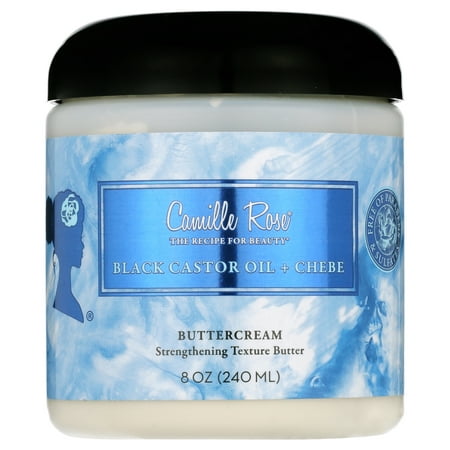


Camille Rose Black Castor Oil + Chebe Buttercream 8 oz All Hair Type
Summary
This hair buttercream contains beneficial natural ingredients like black castor oil and chebe, which are known for their nourishing properties. However, the product is processed and includes some synthetic components that slightly lower its overall safety profile. While it avoids major harmful substances, the presence of processed ingredients prevents it from achieving a top-tier score.
At a glance
Key ingredients 19
Deionized Water
Deionized water is used as a solvent to dissolve other ingredients and ensure even distribution. It is free from impurities that could interfere with the product's stability. This makes it a neutral component in cosmetic formulations.
Risks
There are no significant risks associated with deionized water.
Benefits
It helps in maintaining the consistency and stability of the product.
Cocos Nucifera (Coconut) Oil
Coconut oil is a natural emollient that helps to moisturize and soften the skin. It contains fatty acids that can penetrate the skin for deep hydration. It is widely used in cosmetics for its nourishing properties.
Risks
Some individuals may experience allergic reactions or clogged pores.
Benefits
It provides deep hydration and has antimicrobial properties.
Glycerin
Glycerin is a humectant that attracts moisture to the skin, helping to keep it hydrated. It is a common ingredient in skincare products due to its ability to improve skin barrier function. It is considered safe and effective for most skin types.
Risks
Rarely, it can cause irritation in sensitive individuals.
Benefits
It enhances skin hydration and improves skin barrier function.
Brassicyl Isoleucinate Esylate
This ingredient is used as a conditioning agent in cosmetics, providing a smooth feel to the skin. It is derived from amino acids and is considered biodegradable. It is a relatively new ingredient with a good safety profile.
Risks
There are no significant risks associated with this ingredient.
Benefits
It conditions the skin and is environmentally friendly.
Cetearyl Alcohol
Cetearyl alcohol is a fatty alcohol used as an emollient and emulsifier in cosmetics. It helps to stabilize and thicken formulations while providing a creamy texture. It is considered safe and non-irritating for most skin types.
Risks
It may cause mild irritation in very sensitive skin.
Benefits
It stabilizes formulations and provides a smooth texture.
Ricinus Communis (Black Castor) Seed Oil
Black castor oil is known for its moisturizing and strengthening properties, particularly for hair. It is rich in ricinoleic acid, which helps to nourish and condition. It is a popular choice for promoting hair health.
Risks
Overuse can lead to buildup and potential scalp irritation.
Benefits
It deeply moisturizes and strengthens hair.
Butyrospermum Parkii (Shea) Butter
Shea butter is a natural fat extracted from the nuts of the shea tree, known for its moisturizing and anti-inflammatory properties. It is rich in vitamins and fatty acids, making it an excellent skin conditioner. It is widely used in cosmetics for its nourishing benefits.
Risks
Rarely, it can cause allergic reactions in individuals with nut allergies.
Benefits
It deeply moisturizes and soothes the skin.
Theobroma Cacao (Cocoa) Seed Butter
Cocoa butter is a natural fat derived from cocoa beans, known for its emollient properties. It helps to lock in moisture and improve skin elasticity. It is a popular ingredient in skincare for its rich texture and pleasant aroma.
Risks
It may cause breakouts in acne-prone skin due to its comedogenic nature.
Benefits
It provides deep hydration and improves skin elasticity.
Diheptyl Succinate
Diheptyl succinate is used as an emollient and skin conditioning agent in cosmetics. It provides a lightweight, non-greasy feel to formulations. It is considered safe and effective for use in personal care products.
Risks
There are no significant risks associated with this ingredient.
Benefits
It provides a lightweight, non-greasy feel.
Brassica Alcohol
Brassica alcohol is a fatty alcohol derived from plant sources, used as an emollient and emulsifier. It helps to stabilize formulations and improve texture. It is considered safe and non-irritating for most skin types.
Risks
It may cause mild irritation in very sensitive skin.
Benefits
It stabilizes formulations and improves texture.
Capryloyl Glycerin/Sebacic Acid Copolymer
This copolymer is used as a film-forming agent and emollient in cosmetics. It provides a smooth, silky feel to the skin and helps to lock in moisture. It is considered safe and biodegradable.
Risks
There are no significant risks associated with this ingredient.
Benefits
It provides a smooth feel and locks in moisture.
Caprylic/Capric Triglyceride
Caprylic/capric triglyceride is a mixed triester derived from coconut oil and glycerin, used as an emollient. It helps to improve the spreadability of formulations and provides a lightweight, non-greasy feel. It is considered safe and non-irritating.
Risks
There are no significant risks associated with this ingredient.
Benefits
It improves spreadability and provides a lightweight feel.
Croton Zambesicus (Chebe) Powder
Chebe powder is a traditional African hair care ingredient known for its ability to strengthen and condition hair. It is used to promote hair growth and reduce breakage. It is gaining popularity for its natural hair care benefits.
Risks
There are no significant risks associated with this ingredient.
Benefits
It strengthens hair and promotes growth.
Black Tea Extract
Black tea extract is rich in antioxidants and is used for its anti-inflammatory and astringent properties. It helps to soothe the skin and reduce puffiness. It is a beneficial ingredient in skincare for its protective effects.
Risks
There are no significant risks associated with this ingredient.
Benefits
It soothes the skin and provides antioxidant protection.
Curcumin
Curcumin is the active compound in turmeric, known for its anti-inflammatory and antioxidant properties. It is used in cosmetics for its ability to soothe and protect the skin. It is a popular ingredient for its natural healing benefits.
Risks
There are no significant risks associated with this ingredient.
Benefits
It provides anti-inflammatory and antioxidant benefits.
Oryza Sativa (Rice) Bran Wax
Rice bran wax is used as a thickening agent and emollient in cosmetics. It helps to stabilize formulations and provides a smooth texture. It is considered safe and non-irritating.
Risks
There are no significant risks associated with this ingredient.
Benefits
It stabilizes formulations and provides a smooth texture.
Phenoxyethanol
Phenoxyethanol is a preservative used to prevent microbial growth in cosmetics. It is effective in low concentrations and is considered a safer alternative to parabens. However, it can cause irritation in some individuals.
Risks
It may cause irritation, especially in sensitive skin.
Benefits
It effectively preserves the product and extends shelf life.
Ethylhexylglycerin
Ethylhexylglycerin is used as a preservative and skin conditioning agent in cosmetics. It enhances the efficacy of other preservatives and provides a mild moisturizing effect. It is considered safe and non-irritating.
Risks
There are no significant risks associated with this ingredient.
Benefits
It enhances preservative efficacy and conditions the skin.
Phthalate Free Fragrance
Phthalate-free fragrance is used to provide scent without the use of phthalates, which are linked to health concerns. While it avoids phthalates, the term 'fragrance' can still include a variety of undisclosed chemicals. It is important to consider potential sensitivities to fragrance components.
Risks
Fragrance can cause allergic reactions or irritation in sensitive individuals.
Benefits
It provides scent without using phthalates.
Processing
Processed Foods
Get the full breakdown in the Scout app
Scan any product to see lab results, healthy alternatives, and your personalized analysis.
Download on theApp Store