
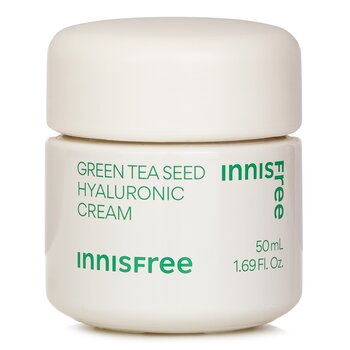

InnisfreeGreen Tea Seed Hyaluronic Cream 50ml/1.69oz
Analysis updated August 2026 · How Scout scores
At a glance
Summary
This moisturizer features a blend of beneficial ingredients such as glycerin, squalane, hyaluronic acid, and camellia sinensis seed oil, which are known for their hydrating and antioxidant properties. The product is minimally processed and contains no harmful chemicals or synthetic fragrances, making it a safe choice for most skin types. The inclusion of ceramides and madecassoside further enhances its ability to support skin barrier function and soothe irritation.
Key ingredients 10
SqualaneVery Good
Squalane is a highly effective emollient and natural antioxidant. It helps to moisturize and protect the skin barrier. It is well-tolerated by most skin types and is considered very beneficial.
Risks
There are no significant risks associated with squalane in cosmetic formulations.
Benefits
Squalane helps to moisturize and protect the skin barrier.
Camellia Sinensis Seed OilVery Good
Camellia Sinensis Seed Oil is rich in antioxidants and fatty acids. It helps to nourish and protect the skin from environmental damage. It is considered very beneficial for skin health.
Risks
There are no significant risks associated with Camellia Sinensis Seed Oil in cosmetic formulations.
Benefits
Camellia Sinensis Seed Oil nourishes and protects the skin.
Camellia Sinensis Leaf ExtractVery Good
Camellia Sinensis Leaf Extract is known for its antioxidant and anti-inflammatory properties. It helps to soothe and protect the skin from environmental stressors. It is highly regarded for its skin benefits.
Risks
There are no significant risks associated with Camellia Sinensis Leaf Extract in cosmetic formulations.
Benefits
Camellia Sinensis Leaf Extract soothes and protects the skin.
MadecassosideVery Good
Madecassoside is a compound derived from Centella Asiatica, known for its soothing and healing properties. It helps to calm irritated skin and promote skin repair. It is beneficial for sensitive and damaged skin.
Risks
There are no significant risks associated with Madecassoside in cosmetic formulations.
Benefits
Madecassoside calms irritated skin and promotes skin repair.
GlycerinGood
Glycerin is a humectant that attracts moisture to the skin, helping to keep it hydrated. It is widely used in skincare for its moisturizing properties. It is considered safe and beneficial for most skin types.
Risks
There are no significant risks associated with glycerin in cosmetic formulations.
Benefits
Glycerin helps to keep the skin hydrated by attracting moisture.
Hyaluronic AcidGood
Hyaluronic Acid is a powerful humectant that can hold up to 1000 times its weight in water. It helps to hydrate and plump the skin, reducing the appearance of fine lines. It is highly beneficial for maintaining skin moisture.
Risks
There are no significant risks associated with hyaluronic acid in cosmetic formulations.
Benefits
Hyaluronic Acid helps to hydrate and plump the skin.
Ceramide NPGood
Ceramide NP is a lipid that helps to restore the skin barrier and retain moisture. It is essential for maintaining healthy skin and preventing moisture loss. It is highly beneficial for dry and sensitive skin.
Risks
There are no significant risks associated with Ceramide NP in cosmetic formulations.
Benefits
Ceramide NP restores the skin barrier and retains moisture.
WaterNeutral
Water is a common solvent used in cosmetics to dissolve other ingredients. It helps in the application and absorption of the product. It does not have any direct benefits or risks.
Risks
There are no known risks associated with water in cosmetic formulations.
Benefits
Water helps in the application and absorption of the product.
PropanediolNeutral
Propanediol is used as a solvent and skin-conditioning agent. It helps to improve the texture and feel of the product. It is generally considered safe for use in cosmetics.
Risks
There are minimal risks associated with propanediol, though it may cause irritation in sensitive individuals.
Benefits
Propanediol helps to improve the texture and feel of the product.
Stearyl DimethiconeNeutral
Stearyl Dimethicone is a silicone-based compound used to improve the texture and spreadability of products. It provides a smooth, silky feel on the skin. It is generally considered safe for use in cosmetics.
Risks
There are minimal risks associated with Stearyl Dimethicone, though it may cause build-up on the skin with prolonged use.
Benefits
Stearyl Dimethicone improves the texture and spreadability of products.
Get the full breakdown in the Scout appTake Scout shopping
Scan any product to see lab results, healthy alternatives, and your personalized analysis.
Download on theApp Store GET IT ONGoogle PlayAmazon pricing & content
Amazon price as of . Product prices and availability are accurate as of the date/time indicated and are subject to change. Any price and availability information displayed on Amazon.com at the time of purchase will apply to the purchase of this product.
CERTAIN CONTENT THAT APPEARS ON THIS SITE COMES FROM AMAZON. THIS CONTENT IS PROVIDED “AS IS” AND IS SUBJECT TO CHANGE OR REMOVAL AT ANY TIME.