
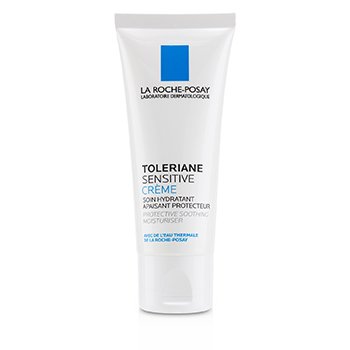



La Roche-Posay Toleriane Sensitive Cream 40ml
La Roche-PosayAnalysis updated September 2026 · How Scout scores
At a glance
Summary
This moisturizer contains beneficial ingredients like glycerin, squalane, niacinamide, and ceramide NP, which are known for their moisturizing and skin barrier-restoring properties. The product avoids harsh chemicals and synthetic fragrances, making it suitable for sensitive skin. The presence of dimethicone and ammonium polyacryloyldimethyl taurate, while synthetic, are generally considered safe and do not significantly detract from the overall ingredient quality.
Key ingredients 18
SqualaneVery Good
Squalane is a highly effective emollient and natural antioxidant. It mimics the skin's natural oils, making it an excellent moisturizer. It is non-irritating and suitable for all skin types.
Risks
There are no significant risks associated with squalane.
Benefits
Squalane helps to lock in moisture and protect the skin from environmental damage.
GlycerinGood
Glycerin is a humectant that attracts moisture to the skin, helping to keep it hydrated. It is widely used in skincare for its moisturizing properties. It is considered safe and beneficial for most skin types.
Risks
There are minimal risks, though excessive use can sometimes lead to a sticky feeling.
Benefits
Glycerin helps maintain skin hydration and improves skin barrier function.
NiacinamideGood
Niacinamide is a form of Vitamin B3 that offers multiple skin benefits, including improving skin tone and texture. It helps to reduce inflammation and redness. It is well-tolerated by most skin types.
Risks
There are minimal risks, though some may experience mild irritation.
Benefits
Niacinamide improves skin elasticity, enhances barrier function, and reduces signs of aging.
Ceramide NPGood
Ceramide NP is a lipid that helps to restore the skin barrier and retain moisture. It is essential for maintaining healthy skin. It is well-tolerated and beneficial for most skin types.
Risks
There are no significant risks associated with ceramides.
Benefits
Ceramide NP helps to strengthen the skin barrier and improve hydration.
Aqua / WaterNeutral
Water is a universal solvent used as a base in many cosmetic formulations. It helps dissolve other ingredients and provides hydration. It is generally considered safe and non-irritating.
Risks
There are no significant risks associated with water in cosmetics.
Benefits
Water helps in hydrating the skin and acts as a carrier for other beneficial ingredients.
Zea Mays Starch / Corn StarchNeutral
Corn starch is used as a thickening agent and absorbent in cosmetics. It helps to improve the texture and feel of the product. It is generally safe for use on the skin.
Risks
In rare cases, it may cause irritation or allergic reactions.
Benefits
Corn starch helps to absorb excess oil and provides a smooth finish.
Ammonium Polyacryloyldimethyl TaurateNeutral
This ingredient is used as a thickener and stabilizer in cosmetic formulations. It helps to improve the texture and consistency of the product. It is generally considered safe for use.
Risks
There are no significant risks associated with this ingredient.
Benefits
It helps to stabilize emulsions and improve product texture.
Myristyl MyristateNeutral
Myristyl Myristate is an ester used as an emollient and thickening agent. It helps to improve the texture and spreadability of the product. It is generally safe for use in cosmetics.
Risks
It may cause mild irritation in sensitive individuals.
Benefits
It provides a smooth application and enhances the moisturizing properties of the product.
Stearic AcidNeutral
Stearic Acid is a fatty acid used as an emulsifier and thickener in cosmetics. It helps to stabilize formulations and improve texture. It is generally considered safe for use.
Risks
There are minimal risks, though it may cause irritation in sensitive skin.
Benefits
Stearic Acid helps to stabilize emulsions and improve the texture of the product.
Potassium Cetyl PhosphateNeutral
This ingredient is used as an emulsifier and surfactant in cosmetic formulations. It helps to blend oil and water components. It is generally considered safe for use.
Risks
There are no significant risks associated with this ingredient.
Benefits
It helps to stabilize emulsions and improve product consistency.
Glyceryl Stearate SENeutral
Glyceryl Stearate SE is an emulsifier that helps to blend oil and water components in formulations. It provides a smooth texture and enhances the moisturizing properties of the product. It is generally considered safe for use.
Risks
There are minimal risks, though it may cause irritation in sensitive skin.
Benefits
It helps to stabilize emulsions and improve the texture of the product.
Sodium HydroxideNeutral
Sodium Hydroxide is used to adjust the pH of cosmetic formulations. It is used in very small amounts to ensure product stability. It is generally considered safe when used appropriately.
Risks
In high concentrations, it can be irritating, but it is used in safe amounts in cosmetics.
Benefits
It helps to maintain the stability and effectiveness of the product by adjusting pH.
Myristic AcidNeutral
Myristic Acid is a fatty acid used as an emulsifier and surfactant in cosmetics. It helps to stabilize formulations and improve texture. It is generally considered safe for use.
Risks
There are minimal risks, though it may cause irritation in sensitive skin.
Benefits
Myristic Acid helps to stabilize emulsions and improve the texture of the product.
Palmitic AcidNeutral
Palmitic Acid is a fatty acid used as an emollient and thickener in cosmetics. It helps to improve the texture and spreadability of the product. It is generally considered safe for use.
Risks
There are minimal risks, though it may cause irritation in sensitive skin.
Benefits
It provides a smooth application and enhances the moisturizing properties of the product.
Capryloyl GlycineNeutral
Capryloyl Glycine is used for its antimicrobial properties and to help regulate sebum production. It is generally considered safe for use in cosmetics. It helps to maintain skin balance.
Risks
There are no significant risks associated with this ingredient.
Benefits
It helps to control oil production and has antimicrobial properties.
Caprylyl GlycolNeutral
Caprylyl Glycol is used as a skin conditioning agent and preservative. It helps to improve the texture and feel of the product. It is generally considered safe for use.
Risks
There are no significant risks associated with this ingredient.
Benefits
It helps to condition the skin and enhance the product's shelf life.
Xanthan GumNeutral
Xanthan Gum is used as a thickening and stabilizing agent in cosmetics. It helps to improve the texture and consistency of the product. It is generally considered safe for use.
Risks
There are no significant risks associated with this ingredient.
Benefits
It helps to stabilize formulations and improve product texture.
DimethiconeBad
Occlusive silicone film-former — flagged under clean-beauty doctrine.
Risks
It may cause breakouts in some individuals with very sensitive skin.
Benefits
Dimethicone provides a silky texture and helps to protect the skin from moisture loss.
Get the full breakdown in the Scout appTake Scout shopping
Scan any product to see lab results, healthy alternatives, and your personalized analysis.
Download on theApp Store GET IT ONGoogle PlayAmazon pricing & content
Amazon price as of . Product prices and availability are accurate as of the date/time indicated and are subject to change. Any price and availability information displayed on Amazon.com at the time of purchase will apply to the purchase of this product.
CERTAIN CONTENT THAT APPEARS ON THIS SITE COMES FROM AMAZON. THIS CONTENT IS PROVIDED “AS IS” AND IS SUBJECT TO CHANGE OR REMOVAL AT ANY TIME.