
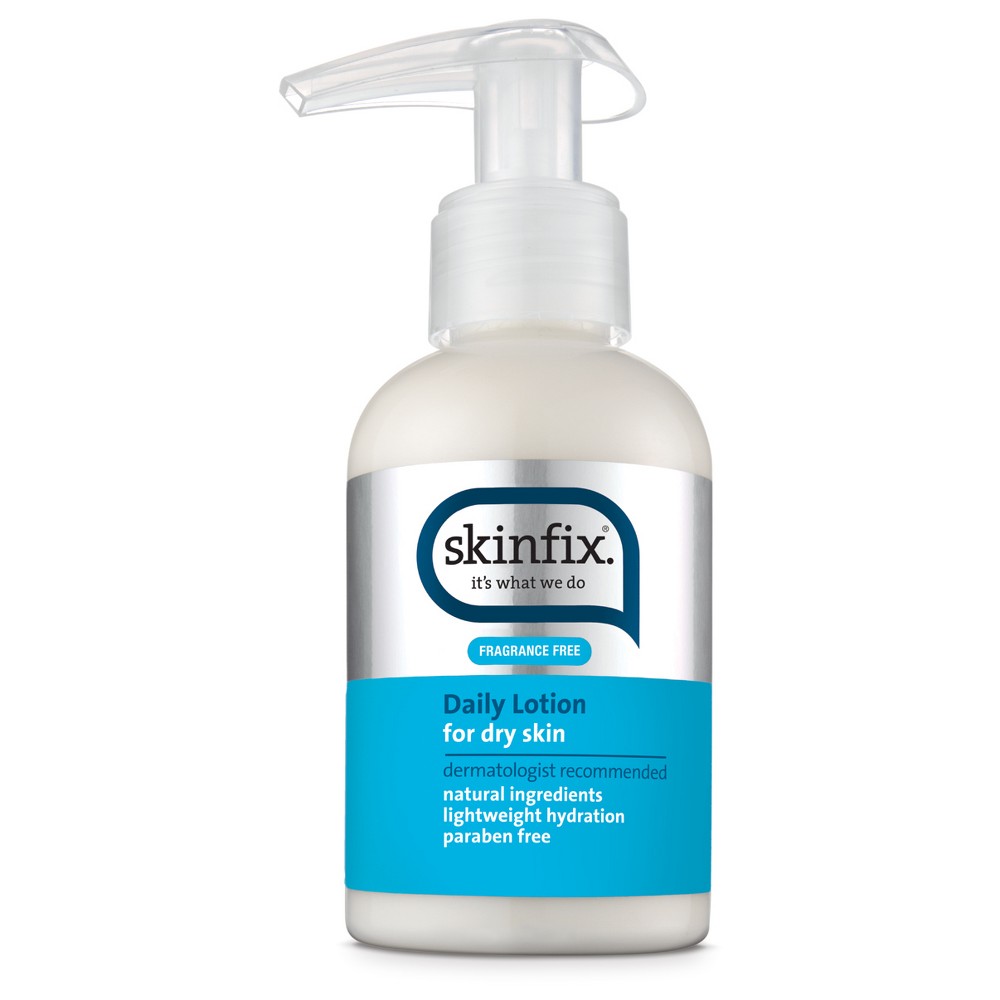

Skinfix Daily Trial Size Lotion - 3 fl oz
Analysis updated August 2026 · How Scout scores
At a glance
Summary
This moisturizer features a predominantly natural ingredient list with beneficial components like aloe vera, sunflower seed oil, and jojoba oil, which provide hydration and nourishment. The presence of phenoxyethanol as a preservative is a minor concern due to potential irritation, but it is balanced by the overall clean and minimally processed formulation. The product's use of natural oils and extracts contributes to its high rating.
Key ingredients 28
Aloe Barbadensis Leaf JuiceVery Good
Aloe vera is known for its soothing and moisturizing properties. It is beneficial for calming irritated skin and providing hydration. It is a natural ingredient with a long history of safe use.
Risks
Rarely, aloe vera can cause allergic reactions in sensitive individuals.
Benefits
Aloe vera provides soothing relief and hydration to the skin.
Helianthus Annuus (Sunflower) Seed OilVery Good
Sunflower seed oil is rich in vitamins A, D, and E, and is known for its moisturizing properties. It helps to maintain the skin's natural barrier and prevent moisture loss. It is a natural oil that is well-tolerated by most skin types.
Risks
There are minimal risks, though it may cause allergic reactions in individuals with sunflower allergies.
Benefits
It provides deep hydration and supports skin barrier function.
Prunus Armeniaca (Apricot) Kernel OilVery Good
Apricot kernel oil is rich in fatty acids and vitamins, providing excellent moisturizing and nourishing properties. It helps to soften and smooth the skin. It is a natural oil that is gentle and suitable for sensitive skin.
Risks
There are minimal risks, though it may cause allergic reactions in individuals with apricot allergies.
Benefits
It provides deep nourishment and improves skin elasticity.
Avena Sativa Kernel OilVery Good
Oat kernel oil is known for its soothing and anti-inflammatory properties. It helps to calm irritated skin and provides moisture. It is a natural ingredient that is well-tolerated by most skin types.
Risks
There are minimal risks, though it may cause allergic reactions in individuals with oat allergies.
Benefits
It soothes and hydrates the skin, reducing redness and irritation.
AllantoinVery Good
Allantoin is known for its skin-soothing and healing properties. It helps to calm irritated skin and promote cell regeneration. It is a well-researched ingredient with a strong safety profile.
Risks
There are no significant risks associated with allantoin.
Benefits
It soothes and heals the skin, promoting a healthy complexion.
Cocos Nucifera (Coconut) OilVery Good
Coconut oil is a natural emollient that provides deep hydration and nourishment to the skin. It helps to improve skin texture and barrier function. It is a well-tolerated ingredient with a long history of safe use.
Risks
There are minimal risks, though it may cause breakouts in very oily skin types.
Benefits
It provides deep hydration and supports skin barrier health.
Simmondsia Chinensis (Jojoba) Seed OilVery Good
Jojoba oil is a natural emollient that closely resembles the skin's natural sebum. It helps to balance oil production and provide moisture. It is a well-tolerated ingredient suitable for all skin types.
Risks
There are no significant risks associated with jojoba oil.
Benefits
It balances skin oil levels and provides hydration.
Calendula Officinalis ExtractVery Good
Calendula extract is known for its soothing and anti-inflammatory properties. It helps to calm irritated skin and promote healing. It is a natural ingredient that is well-tolerated by most skin types.
Risks
There are minimal risks, though it may cause allergic reactions in individuals with calendula allergies.
Benefits
It soothes and heals the skin, reducing redness and irritation.
Chamomilla Recutita (Matricaria) Flower ExtractVery Good
Chamomile extract is known for its soothing and anti-inflammatory properties. It helps to calm irritated skin and reduce redness. It is a natural ingredient that is well-tolerated by most skin types.
Risks
There are minimal risks, though it may cause allergic reactions in individuals with chamomile allergies.
Benefits
It soothes and calms the skin, reducing irritation and redness.
Avena Sativa Kernel FlourVery Good
Oat flour is known for its soothing and anti-inflammatory properties. It helps to calm irritated skin and provide moisture. It is a natural ingredient that is well-tolerated by most skin types.
Risks
There are minimal risks, though it may cause allergic reactions in individuals with oat allergies.
Benefits
It soothes and hydrates the skin, reducing redness and irritation.
Caprylic/Capric TriglycerideGood
This ingredient is derived from coconut oil and glycerin, providing a lightweight texture and excellent skin conditioning properties. It helps to improve the spreadability of the product. It is generally well-tolerated by most skin types.
Risks
There are minimal risks, though it may cause breakouts in very oily skin types.
Benefits
It enhances skin hydration and improves the texture of the product.
Caprylyl Caprylate/CaprateGood
This ingredient acts as an emollient and skin-conditioning agent. It helps to soften and smooth the skin. It is derived from natural sources and is considered safe for use.
Risks
There are no significant risks associated with this ingredient.
Benefits
It provides a silky feel and improves skin texture.
GlycerinGood
Glycerin is a powerful humectant that attracts moisture to the skin. It helps to keep the skin hydrated and soft. It is a well-researched ingredient with a strong safety profile.
Risks
There are no significant risks associated with glycerin.
Benefits
It enhances skin hydration and improves skin texture.
Cetearyl OlivateGood
Cetearyl olivate is an emulsifier derived from olive oil, helping to blend oil and water components. It provides a smooth texture and enhances the moisturizing properties of the product. It is considered safe and non-irritating.
Risks
There are no significant risks associated with this ingredient.
Benefits
It improves product texture and enhances skin hydration.
Sorbitan OlivateGood
Sorbitan olivate is an emulsifier derived from olive oil, used to stabilize formulations. It helps to improve the texture and spreadability of the product. It is considered safe and non-irritating.
Risks
There are no significant risks associated with this ingredient.
Benefits
It enhances product stability and improves skin feel.
Oryza Sativa (Rice) Bran ExtractGood
Rice bran extract is rich in antioxidants and nutrients, providing skin conditioning and anti-aging benefits. It helps to improve skin texture and tone. It is a natural ingredient that is generally well-tolerated.
Risks
There are no significant risks associated with rice bran extract.
Benefits
It provides antioxidant protection and improves skin texture.
Rosmarinus Officinalis (Rosemary) Leaf ExtractGood
Rosemary extract is known for its antioxidant and antimicrobial properties. It helps to protect the skin from environmental damage and improve product preservation. It is a natural ingredient that is generally well-tolerated.
Risks
There are minimal risks, though it may cause allergic reactions in sensitive individuals.
Benefits
It provides antioxidant protection and enhances product stability.
TocopherolGood
Tocopherol, or Vitamin E, is a powerful antioxidant that helps to protect the skin from free radical damage. It provides moisturizing and anti-aging benefits. It is a well-researched ingredient with a strong safety profile.
Risks
There are no significant risks associated with tocopherol.
Benefits
It provides antioxidant protection and improves skin hydration.
Water/Aqua/EauNeutral
Water is a common solvent used in cosmetics to dissolve other ingredients. It helps in the application and absorption of the product. It does not provide direct benefits or risks.
Risks
There are no significant risks associated with water in cosmetics.
Benefits
Water helps in the even distribution of other ingredients on the skin.
PropanediolNeutral
Propanediol is a glycol used as a solvent and humectant in cosmetics. It helps to improve the texture and moisture content of the product. It is generally considered safe for use.
Risks
There are no significant risks associated with propanediol.
Benefits
It enhances product texture and provides moisture to the skin.
EthylhexylglycerinNeutral
Ethylhexylglycerin is used as a skin conditioning agent and preservative enhancer. It helps to improve the efficacy of preservatives in the product. It is generally considered safe for use.
Risks
There are no significant risks associated with ethylhexylglycerin.
Benefits
It enhances product preservation and provides mild skin conditioning.
Cetyl AlcoholNeutral
Cetyl alcohol is a fatty alcohol used as an emollient and thickener in cosmetics. It helps to improve the texture and spreadability of the product. It is generally considered safe for use.
Risks
There are no significant risks associated with cetyl alcohol.
Benefits
It enhances product texture and provides mild skin conditioning.
Glyceryl StearateNeutral
Glyceryl stearate is an emulsifier and emollient used to stabilize formulations and improve texture. It helps to blend oil and water components in the product. It is generally considered safe for use.
Risks
There are no significant risks associated with glyceryl stearate.
Benefits
It enhances product stability and provides mild skin conditioning.
Citric AcidNeutral
Citric acid is used to adjust the pH of cosmetic formulations. It helps to maintain the stability and efficacy of the product. It is generally considered safe for use.
Risks
There are no significant risks associated with citric acid.
Benefits
It helps to maintain product stability and efficacy.
Xanthan GumNeutral
Xanthan gum is a thickening agent used to improve the texture and stability of cosmetic formulations. It helps to provide a smooth and even application. It is generally considered safe for use.
Risks
There are no significant risks associated with xanthan gum.
Benefits
It enhances product texture and stability.
Trisodium Ethylenediamine DisuccinateNeutral
This ingredient is a chelating agent used to improve the stability and efficacy of cosmetic formulations. It helps to bind metal ions and prevent their negative effects on the product. It is generally considered safe for use.
Risks
There are no significant risks associated with this ingredient.
Benefits
It enhances product stability and efficacy.
Potassium SorbateBad
Synthetic preservative — flagged in daily-use products.
Risks
There are no significant risks associated with potassium sorbate.
Benefits
It helps to preserve the product and extend its shelf life.
PhenoxyethanolBad
Phenoxyethanol is a preservative used to prevent microbial growth in cosmetics. It is effective but can cause irritation in some individuals. It is a synthetic ingredient with some safety concerns at high concentrations.
Risks
It may cause skin irritation and allergic reactions in sensitive individuals.
Benefits
It helps to preserve the product and prevent microbial contamination.
Get the full breakdown in the Scout appTake Scout shopping
Scan any product to see lab results, healthy alternatives, and your personalized analysis.
Download on theApp Store GET IT ONGoogle Play