
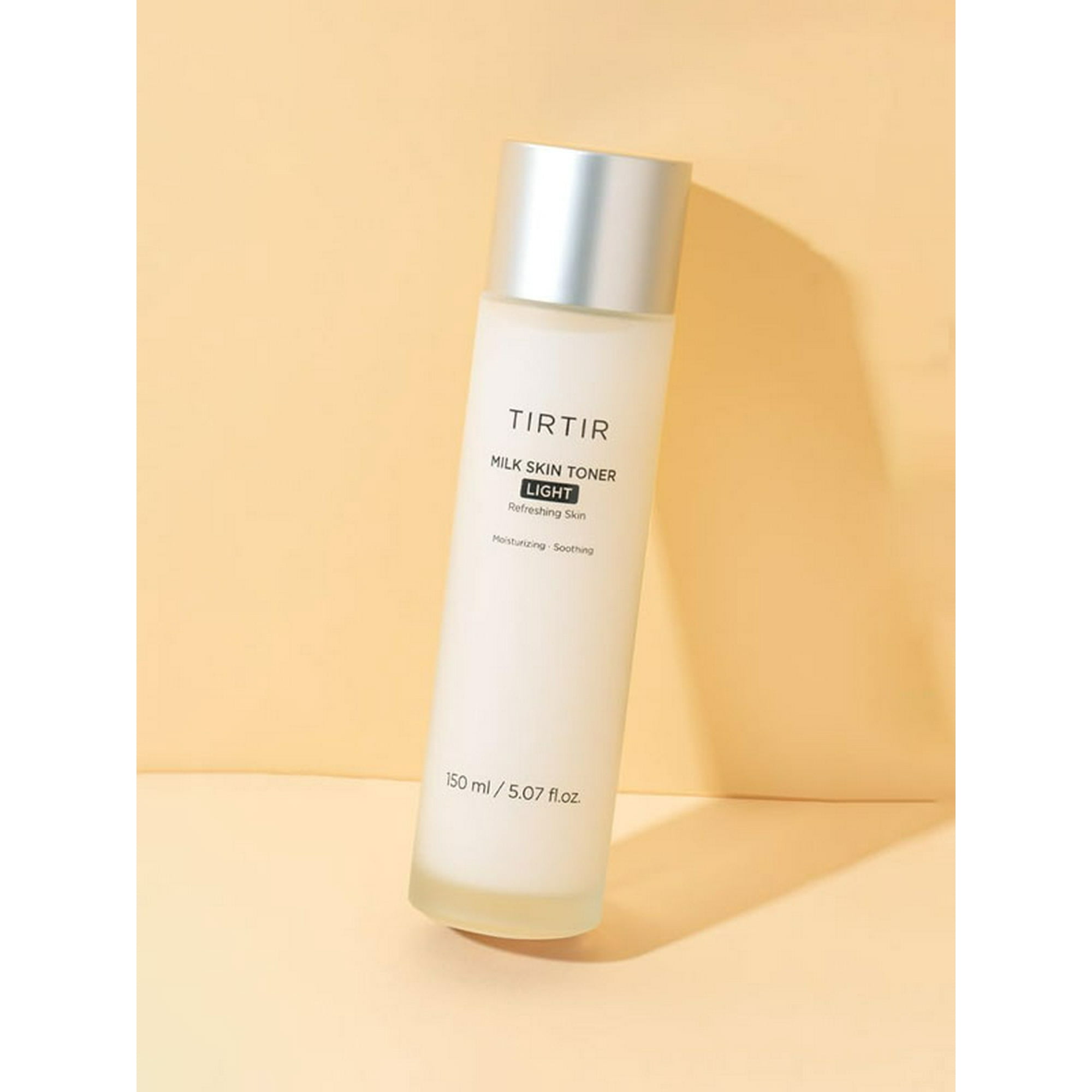
Tirtir Milk Skin Toner Light 150ml 150ml
Analysis updated August 2026 · How Scout scores
At a glance
Summary
This toner contains a variety of beneficial ingredients such as niacinamide, glycerin, and several plant extracts like chamomile and green tea, which are known for their soothing and antioxidant properties. The formulation is rich in natural extracts and skin actives, contributing to its high rating. However, the presence of some synthetic ingredients and the processed nature of the product slightly limit its score.
Key ingredients 41
Camellia Sinensis Leaf ExtractVery Good
Green Tea Extract is rich in antioxidants and has anti-inflammatory properties. It helps protect the skin from environmental damage and soothes irritation. It is beneficial for all skin types, especially acne-prone skin.
Risks
Rare allergic reactions in sensitive individuals.
Benefits
Provides antioxidant protection and soothes the skin.
Centella Asiatica ExtractVery Good
Centella Asiatica is known for its healing and anti-inflammatory properties. It helps to soothe and repair damaged skin. It is beneficial for sensitive and irritated skin.
Risks
Rare allergic reactions in sensitive individuals.
Benefits
Promotes skin healing and reduces inflammation.
PanthenolVery Good
Panthenol, also known as provitamin B5, is known for its moisturizing and healing properties. It helps to improve skin hydration and repair damaged skin. It is beneficial for all skin types, especially dry and sensitive skin.
Risks
Rare allergic reactions in sensitive individuals.
Benefits
Moisturizes and repairs the skin, enhancing its barrier function.
Olea Europaea (Olive) Leaf ExtractVery Good
Olive Leaf Extract is rich in antioxidants and has anti-inflammatory properties. It helps to protect the skin from environmental damage and soothe irritation. It is beneficial for all skin types.
Risks
Rare allergic reactions in sensitive individuals.
Benefits
Protects against environmental damage and soothes the skin.
Avena Sativa (Oat) Kernel ExtractVery Good
Oat Kernel Extract is known for its soothing and anti-inflammatory properties. It helps to calm irritated skin and reduce redness. It is beneficial for sensitive and dry skin types.
Risks
Rare allergic reactions in sensitive individuals.
Benefits
Soothes and calms irritated skin, reducing redness.
Beta-GlucanVery Good
Beta-Glucan is known for its moisturizing and skin-soothing properties. It helps to improve skin hydration and reduce irritation. It is beneficial for sensitive and dry skin types.
Risks
Generally considered safe with minimal risk.
Benefits
Enhances skin hydration and soothes irritation.
Copper Tripeptide-1Very Good
Copper Tripeptide-1 is known for its anti-aging and skin-repairing properties. It helps to improve skin elasticity and reduce the appearance of fine lines. It is beneficial for mature and aging skin.
Risks
Generally considered safe with minimal risk.
Benefits
Enhances skin elasticity and reduces fine lines.
Acetyl Hexapeptide-8Very Good
Acetyl Hexapeptide-8 is known for its anti-aging properties, often referred to as 'Botox in a jar'. It helps to reduce the appearance of wrinkles and improve skin smoothness. It is beneficial for mature and aging skin.
Risks
Generally considered safe with minimal risk.
Benefits
Reduces wrinkles and improves skin smoothness.
GlycerinGood
Glycerin is a humectant that attracts moisture to the skin, helping to keep it hydrated. It is widely used in skincare for its moisturizing properties. It is generally well-tolerated by most skin types.
Risks
Rarely, it may cause irritation in very sensitive skin.
Benefits
Helps maintain skin hydration and improves skin barrier function.
NiacinamideGood
Niacinamide is a form of Vitamin B3 that is known for its anti-inflammatory and skin-brightening properties. It helps improve skin texture and tone. It is beneficial for acne-prone and aging skin.
Risks
High concentrations may cause skin irritation.
Benefits
Reduces inflammation, improves skin tone, and strengthens the skin barrier.
Anthemis Nobilis Flower ExtractGood
This extract, also known as chamomile, is known for its soothing and anti-inflammatory properties. It is often used to calm irritated skin. It is beneficial for sensitive skin types.
Risks
Rare allergic reactions in sensitive individuals.
Benefits
Soothes and calms irritated skin, reducing redness and inflammation.
Oryza Sativa (Rice) Bran ExtractGood
Rice Bran Extract is rich in antioxidants and nutrients that help nourish the skin. It is known for its anti-aging and brightening properties. It is beneficial for improving skin texture and tone.
Risks
Rare allergic reactions in sensitive individuals.
Benefits
Nourishes the skin and provides antioxidant protection.
Glycyrrhiza Glabra (Licorice) Root ExtractGood
Licorice Root Extract is known for its skin-brightening and anti-inflammatory properties. It helps to reduce hyperpigmentation and soothe irritated skin. It is beneficial for sensitive and uneven skin tones.
Risks
Potential for mild irritation in sensitive skin.
Benefits
Brightens skin tone and reduces inflammation.
Rosmarinus Officinalis (Rosemary) Leaf ExtractGood
Rosemary Leaf Extract is known for its antioxidant and antimicrobial properties. It helps protect the skin from free radical damage and supports skin health. It is beneficial for maintaining a clear complexion.
Risks
Potential for mild irritation in sensitive skin.
Benefits
Protects against environmental damage and supports skin health.
Chamomilla Recutita (Matricaria) Flower ExtractGood
Chamomile Extract is known for its soothing and anti-inflammatory properties. It helps to calm irritated skin and reduce redness. It is beneficial for sensitive skin types.
Risks
Rare allergic reactions in sensitive individuals.
Benefits
Soothes and calms irritated skin, reducing redness.
Polygonum Cuspidatum Root ExtractGood
This extract is rich in resveratrol, a potent antioxidant. It helps protect the skin from environmental damage and supports skin health. It is beneficial for anti-aging and skin protection.
Risks
Rare allergic reactions in sensitive individuals.
Benefits
Provides antioxidant protection and supports skin health.
Scutellaria Baicalensis Root ExtractGood
This extract is known for its antioxidant and anti-inflammatory properties. It helps to protect the skin from environmental damage and soothe irritation. It is beneficial for sensitive and aging skin.
Risks
Rare allergic reactions in sensitive individuals.
Benefits
Protects against environmental damage and soothes the skin.
BetaineGood
Betaine is a natural humectant that helps to hydrate and protect the skin. It is known for its ability to improve skin moisture retention. It is beneficial for maintaining skin hydration and smoothness.
Risks
Generally considered safe with minimal risk.
Benefits
Enhances skin hydration and improves texture.
AllantoinGood
Allantoin is known for its soothing and skin-conditioning properties. It helps to calm irritated skin and promote healing. It is beneficial for sensitive and damaged skin.
Risks
Generally considered safe with minimal risk.
Benefits
Soothes and conditions the skin, promoting healing.
Sodium PCAGood
Sodium PCA is a natural component of the skin's natural moisturizing factor. It helps to maintain skin hydration and improve texture. It is beneficial for keeping the skin soft and supple.
Risks
Generally considered safe with minimal risk.
Benefits
Enhances skin hydration and maintains softness.
AdenosineGood
Adenosine is known for its anti-aging and skin-soothing properties. It helps to reduce the appearance of wrinkles and improve skin smoothness. It is beneficial for mature and aging skin.
Risks
Generally considered safe with minimal risk.
Benefits
Reduces wrinkles and improves skin smoothness.
Sodium HyaluronateGood
Sodium Hyaluronate is a form of hyaluronic acid known for its excellent moisturizing properties. It helps to retain moisture in the skin and improve elasticity. It is beneficial for all skin types, especially dry and dehydrated skin.
Risks
Generally considered safe with minimal risk.
Benefits
Deeply hydrates the skin and improves elasticity.
ArginineGood
Arginine is an amino acid that helps to improve skin hydration and elasticity. It is known for its skin-conditioning properties. It is beneficial for maintaining healthy and supple skin.
Risks
Generally considered safe with minimal risk.
Benefits
Enhances skin hydration and elasticity.
Ceramide NPGood
Ceramide NP is known for its ability to restore the skin barrier and retain moisture. It helps to improve skin hydration and protect against environmental damage. It is beneficial for all skin types, especially dry and sensitive skin.
Risks
Generally considered safe with minimal risk.
Benefits
Restores the skin barrier and enhances moisture retention.
WaterNeutral
Water is a common solvent used in cosmetics to dissolve other ingredients. It helps in the application and absorption of the product. It does not provide direct benefits or risks.
Benefits
Acts as a base for other ingredients to be delivered effectively.
Butylene GlycolNeutral
Butylene Glycol is used as a solvent and conditioning agent in cosmetics. It helps improve the texture and spreadability of products. It is generally considered safe for use in cosmetics.
Risks
May cause irritation in sensitive skin types.
Benefits
Improves product texture and helps in moisture retention.
1, 2-HexanediolNeutral
1, 2-Hexanediol is a synthetic preservative and moisture-binding agent. It helps to stabilize formulations and improve product longevity. It is generally considered safe in cosmetics.
Risks
Potential for mild irritation in sensitive skin.
Benefits
Enhances product stability and helps retain moisture.
Caprylyl GlycolNeutral
Caprylyl Glycol is used as a skin conditioning agent and preservative. It helps to improve the texture and feel of products. It is generally well-tolerated in cosmetic formulations.
Risks
May cause mild irritation in sensitive skin.
Benefits
Improves product texture and provides mild moisturizing effects.
Hamamelis Virginiana (Witch Hazel) ExtractNeutral
Witch Hazel is known for its astringent and anti-inflammatory properties. It helps to tighten pores and reduce inflammation. It is commonly used in toners for oily and acne-prone skin.
Risks
May cause dryness or irritation in sensitive skin.
Benefits
Tightens pores and reduces inflammation.
CarbomerNeutral
Carbomer is used as a thickening agent in cosmetics to improve texture. It helps to stabilize emulsions and provide a smooth consistency. It is generally considered safe in cosmetics.
Risks
May cause mild irritation in sensitive skin.
Benefits
Improves product texture and stability.
Illicium Verum (Anise) Fruit ExtractNeutral
Anise Fruit Extract is used for its fragrance and potential antimicrobial properties. It helps to add a pleasant scent to products. It is generally considered safe in cosmetics.
Risks
May cause irritation in sensitive skin.
Benefits
Provides a natural fragrance and potential antimicrobial effects.
Alchemilla Vulgaris ExtractNeutral
This extract is known for its astringent and antioxidant properties. It helps to tighten pores and protect the skin from environmental damage. It is beneficial for oily and combination skin types.
Risks
May cause mild irritation in sensitive skin.
Benefits
Tightens pores and provides antioxidant protection.
Amaranthus Caudatus ExtractNeutral
Amaranthus Caudatus Extract is known for its antioxidant properties. It helps to protect the skin from free radical damage. It is beneficial for maintaining skin health.
Risks
Rare allergic reactions in sensitive individuals.
Benefits
Provides antioxidant protection and supports skin health.
Veronica Officinalis ExtractNeutral
This extract is known for its astringent and soothing properties. It helps to calm irritated skin and tighten pores. It is beneficial for sensitive and oily skin types.
Risks
May cause mild irritation in sensitive skin.
Benefits
Soothes irritated skin and tightens pores.
Mentha Piperita (Peppermint) Leaf ExtractNeutral
Peppermint Leaf Extract is known for its cooling and refreshing properties. It helps to invigorate the skin and provide a pleasant scent. It is beneficial for oily and acne-prone skin.
Risks
May cause irritation or allergic reactions in sensitive skin.
Benefits
Provides a cooling sensation and invigorates the skin.
Ulmus Davidiana Root ExtractNeutral
This extract is known for its soothing and anti-inflammatory properties. It helps to calm irritated skin and reduce redness. It is beneficial for sensitive and inflamed skin.
Risks
Rare allergic reactions in sensitive individuals.
Benefits
Soothes and calms irritated skin, reducing redness.
Cynara Scolymus (Artichoke) Leaf ExtractNeutral
Artichoke Leaf Extract is known for its antioxidant and astringent properties. It helps to protect the skin from environmental damage and tighten pores. It is beneficial for oily and combination skin types.
Risks
May cause mild irritation in sensitive skin.
Benefits
Provides antioxidant protection and tightens pores.
Sambucus Nigra Flower ExtractNeutral
Elderflower Extract is known for its antioxidant and astringent properties. It helps to protect the skin from environmental damage and tighten pores. It is beneficial for oily and combination skin types.
Risks
May cause mild irritation in sensitive skin.
Benefits
Provides antioxidant protection and tightens pores.
Chamaecyparis Obtusa Leaf ExtractNeutral
This extract is known for its antimicrobial and soothing properties. It helps to calm irritated skin and reduce redness. It is beneficial for sensitive and acne-prone skin.
Risks
Rare allergic reactions in sensitive individuals.
Benefits
Soothes irritated skin and provides antimicrobial effects.
Laminaria Japonica ExtractNeutral
This extract is known for its moisturizing and antioxidant properties. It helps to protect the skin from environmental damage and improve hydration. It is beneficial for maintaining skin health.
Risks
Rare allergic reactions in sensitive individuals.
Benefits
Provides antioxidant protection and enhances hydration.
Disodium EDTABad
Processed additive flagged under Scout's ingredient doctrine.
Risks
May cause mild irritation in sensitive skin.
Benefits
Enhances product stability and longevity.
Processing
Processed Foods
Get the full breakdown in the Scout appTake Scout shopping
Scan any product to see lab results, healthy alternatives, and your personalized analysis.
Download on theApp Store GET IT ONGoogle PlayAmazon pricing & content
Amazon price as of . Product prices and availability are accurate as of the date/time indicated and are subject to change. Any price and availability information displayed on Amazon.com at the time of purchase will apply to the purchase of this product.
CERTAIN CONTENT THAT APPEARS ON THIS SITE COMES FROM AMAZON. THIS CONTENT IS PROVIDED “AS IS” AND IS SUBJECT TO CHANGE OR REMOVAL AT ANY TIME.