
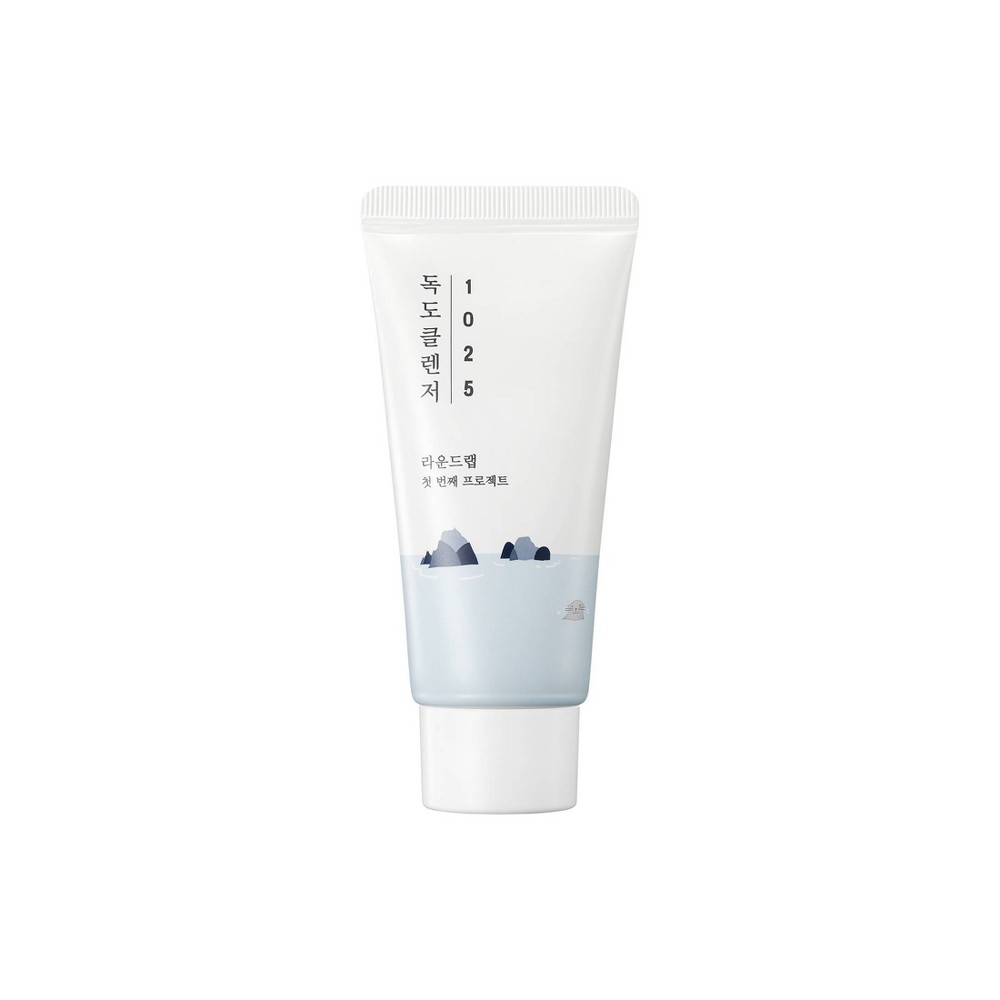
Round Lab 1025 Dokdo Cleanser - 40ml: Foam, Soothing, Hydrating, Normal & Sensitive Skin

78 Good
$11.39 · 5.07 fl oz
View on Amazon
Verified Amazon match

Summary

This cleanser contains a mix of gentle surfactants and beneficial skin actives like hyaluronic acid, panthenol, and chamomile oil, which are known for their hydrating and soothing properties. However, the presence of synthetic ingredients such as polyquaternium-67 and disodium EDTA, along with the processed nature of the product, slightly lowers its score. The formula is mostly safe for sensitive skin, but the inclusion of these synthetic components prevents it from achieving a higher rating.

At a glance

Beneficial ingredients 14
Harmful ingredients 0
Category Face Wash

Key ingredients 38

Water
Neutral

Water is a common solvent used in cosmetics to dissolve other ingredients. It is essential for the formulation but does not provide direct skin benefits.

Risks

There are no known risks associated with water in cosmetic formulations.

Benefits

Water helps to hydrate the skin by providing moisture.

See more about Water →
Sodium Cocoyl Isethionate
Good

Sodium Cocoyl Isethionate is a mild surfactant derived from coconut oil. It is known for its gentle cleansing properties and ability to produce a creamy lather.

Risks

There are minimal risks, though it may cause mild irritation in very sensitive skin.

Benefits

It effectively cleanses the skin without stripping natural oils, making it suitable for sensitive skin.

See more about Sodium Cocoyl Isethionate →
Glycerin
Very Good

Glycerin is a humectant that attracts moisture to the skin. It is widely used in skincare for its hydrating properties.

Risks

There are no significant risks associated with glycerin in cosmetic use.

Benefits

Glycerin helps maintain skin hydration, improving skin barrier function and smoothness.

See more about Glycerin →
Sodium Methyl Cocoyl Taurate
Good

Sodium Methyl Cocoyl Taurate is a mild surfactant that provides gentle cleansing. It is derived from coconut and is suitable for sensitive skin.

Risks

It may cause mild irritation if used in high concentrations.

Benefits

It cleanses the skin effectively while maintaining its natural moisture balance.

See more about Sodium Methyl Cocoyl Taurate →
Coco-Betaine
Good

Coco-Betaine is a surfactant derived from coconut oil. It is used to enhance the foaming properties of cleansers.

Risks

In rare cases, it may cause mild irritation or allergic reactions.

Benefits

It helps to create a rich lather and improves the texture of the product.

See more about Coco-Betaine →
Potassium Cocoyl Glycinate
Good

Potassium Cocoyl Glycinate is a mild surfactant that provides gentle cleansing. It is derived from coconut oil and amino acids.

Risks

There are minimal risks, though it may cause mild irritation in sensitive individuals.

Benefits

It cleanses the skin without causing dryness or irritation, making it suitable for sensitive skin.

Potassium Benzoate
Neutral

Potassium Benzoate is a preservative used to prevent microbial growth in cosmetic products. It is considered safe in low concentrations.

Risks

High concentrations may cause irritation, but it is generally used in safe amounts.

Benefits

It helps to extend the shelf life of the product by preventing spoilage.

See more about Potassium Benzoate →
Sodium Chloride
Neutral

Sodium Chloride, or table salt, is used to adjust the viscosity of cosmetic products. It is a common ingredient with no direct skin benefits.

Risks

In high concentrations, it may cause dryness or irritation.

Benefits

It helps to thicken the product and improve its texture.

See more about Sodium Chloride →
Potassium Cocoate
Neutral

Potassium Cocoate is a surfactant derived from coconut oil. It is used for its cleansing properties.

Risks

There are minimal risks, though it may cause mild irritation in sensitive skin.

Benefits

It helps to cleanse the skin by removing dirt and oil.

See more about Potassium Cocoate →
Citric Acid
Neutral

Citric Acid is used to adjust the pH of cosmetic products. It is a weak organic acid found in citrus fruits.

Risks

In high concentrations, it may cause irritation or sensitivity.

Benefits

It helps to maintain the stability and effectiveness of the product.

See more about Citric Acid →
Polyquaternium-67
Neutral

Polyquaternium-67 is a conditioning agent used to improve the texture and feel of the skin. It is a synthetic polymer.

Risks

There are minimal risks, though it may cause mild irritation in sensitive individuals.

Benefits

It enhances the smoothness and softness of the skin after cleansing.

Disodium EDTA
Neutral

Disodium EDTA is a chelating agent used to improve the stability of cosmetic products. It binds to metal ions to prevent degradation.

Risks

There are minimal risks, though it may cause mild irritation in sensitive skin.

Benefits

It helps to maintain the integrity and effectiveness of the product over time.

See more about Disodium EDTA →
Allantoin
Good

Allantoin is a skin-soothing agent known for its ability to promote skin healing. It is often used in products for sensitive skin.

Risks

There are no significant risks associated with allantoin in cosmetic use.

Benefits

It helps to soothe and protect the skin, reducing irritation and promoting healing.

See more about Allantoin →
Panthenol
Very Good

Panthenol, also known as provitamin B5, is a moisturizing agent that improves skin hydration. It is widely used for its soothing and healing properties.

Risks

There are no significant risks associated with panthenol in cosmetic use.

Benefits

It enhances skin hydration, reduces inflammation, and promotes healing.

See more about Panthenol →
Sea Water
Neutral

Sea Water is used for its mineral content and potential skin benefits. It is believed to have soothing and hydrating properties.

Risks

There are minimal risks, though it may cause mild irritation in sensitive skin.

Benefits

It provides minerals that may help to soothe and hydrate the skin.

Sodium Acetate
Neutral

Sodium Acetate is used as a buffering agent to maintain the pH of cosmetic products. It is a salt of acetic acid.

Risks

There are minimal risks, though it may cause mild irritation in sensitive skin.

Benefits

It helps to stabilize the product and maintain its effectiveness.

See more about Sodium Acetate →
Butylene Glycol
Neutral

Butylene Glycol is a solvent and humectant used to improve the texture and moisture content of cosmetic products. It is commonly used in skincare formulations.

Risks

In high concentrations, it may cause irritation or sensitivity.

Benefits

It helps to improve the texture of the product and enhance skin hydration.

See more about Butylene Glycol →
1, 2-Hexanediol
Neutral

1, 2-Hexanediol is a solvent and preservative used to enhance the stability of cosmetic products. It is considered safe in low concentrations.

Risks

There are minimal risks, though it may cause mild irritation in sensitive skin.

Benefits

It helps to preserve the product and maintain its effectiveness.

Fructooligosaccharides
Neutral

Fructooligosaccharides are prebiotics used to support the skin's microbiome. They are derived from plants and are considered safe for use in cosmetics.

Risks

There are minimal risks, though it may cause mild irritation in sensitive skin.

Benefits

They help to support the skin's natural microbiome, promoting a healthy skin barrier.

See more about Fructooligosaccharides →
Saccharide Hydrolysate
Neutral

Saccharide Hydrolysate is a moisturizing agent derived from sugars. It is used to enhance skin hydration and improve texture.

Risks

There are minimal risks, though it may cause mild irritation in sensitive skin.

Benefits

It helps to improve skin hydration and texture, making the skin feel smoother.

Pullulan
Neutral

Pullulan is a polysaccharide used as a film-forming agent in cosmetics. It is derived from starch and is considered safe for use.

Risks

There are minimal risks, though it may cause mild irritation in sensitive skin.

Benefits

It helps to form a protective film on the skin, enhancing its smoothness and texture.

See more about Pullulan →
Chamomilla Recutita (Matricaria) Flower Oil
Very Good

Chamomilla Recutita Flower Oil is a botanical extract known for its soothing and anti-inflammatory properties. It is commonly used in products for sensitive skin.

Risks

There are minimal risks, though it may cause allergic reactions in individuals sensitive to chamomile.

Benefits

It helps to soothe and calm irritated skin, reducing redness and inflammation.

Caprylic/Capric Triglyceride
Good

Caprylic/Capric Triglyceride is an emollient derived from coconut oil and glycerin. It is used to improve the texture and feel of cosmetic products.

Risks

There are minimal risks, though it may cause mild irritation in sensitive skin.

Benefits

It helps to moisturize and soften the skin, enhancing the product's texture.

See more about Caprylic/Capric Triglyceride →
Beta-Glucan
Very Good

Beta-Glucan is a polysaccharide known for its skin-soothing and anti-inflammatory properties. It is often used in products for sensitive or irritated skin.

Risks

There are no significant risks associated with beta-glucan in cosmetic use.

Benefits

It helps to soothe and protect the skin, reducing redness and irritation.

Phosphatidylcholine
Neutral

Phosphatidylcholine is a phospholipid used to improve the texture and absorption of cosmetic products. It is derived from soybeans and is considered safe for use.

Risks

There are minimal risks, though it may cause mild irritation in sensitive skin.

Benefits

It helps to enhance the absorption and effectiveness of active ingredients in the product.

See more about Phosphatidylcholine →
Hyaluronic Acid
Very Good

Hyaluronic Acid is a powerful humectant known for its ability to retain moisture in the skin. It is widely used in skincare for its hydrating properties.

Risks

There are no significant risks associated with hyaluronic acid in cosmetic use.

Benefits

It helps to deeply hydrate the skin, improving its elasticity and smoothness.

See more about Hyaluronic Acid →
Ceramide NP
Very Good

Ceramide NP is a lipid molecule that helps to restore the skin's natural barrier. It is essential for maintaining skin hydration and health.

Risks

There are no significant risks associated with ceramide NP in cosmetic use.

Benefits

It helps to strengthen the skin barrier, improving hydration and reducing sensitivity.

See more about Ceramide NP →
Ethylhexylglycerin
Neutral

Ethylhexylglycerin is a preservative and skin-conditioning agent used to enhance the stability of cosmetic products. It is considered safe in low concentrations.

Risks

There are minimal risks, though it may cause mild irritation in sensitive skin.

Benefits

It helps to preserve the product and maintain its effectiveness.

See more about Ethylhexylglycerin →
Glycine
Neutral

Glycine is an amino acid used to improve the texture and feel of cosmetic products. It is considered safe for use in skincare formulations.

Risks

There are minimal risks, though it may cause mild irritation in sensitive skin.

Benefits

It helps to improve the texture and feel of the product, enhancing its application.

See more about Glycine →
Hydrolyzed Hyaluronic Acid
Very Good

Hydrolyzed Hyaluronic Acid is a smaller molecule form of hyaluronic acid that penetrates deeper into the skin. It is known for its superior hydrating properties.

Risks

There are no significant risks associated with hydrolyzed hyaluronic acid in cosmetic use.

Benefits

It provides deep hydration, improving skin elasticity and reducing the appearance of fine lines.

Glutamic Acid
Neutral

Glutamic Acid is an amino acid used to improve the texture and feel of cosmetic products. It is considered safe for use in skincare formulations.

Risks

There are minimal risks, though it may cause mild irritation in sensitive skin.

Benefits

It helps to improve the texture and feel of the product, enhancing its application.

See more about Glutamic Acid →
Serine
Neutral

Serine is an amino acid used to improve the texture and feel of cosmetic products. It is considered safe for use in skincare formulations.

Risks

There are minimal risks, though it may cause mild irritation in sensitive skin.

Benefits

It helps to improve the texture and feel of the product, enhancing its application.

Sodium Hyaluronate
Very Good

Sodium Hyaluronate is a salt form of hyaluronic acid known for its ability to retain moisture in the skin. It is widely used in skincare for its hydrating properties.

Risks

There are no significant risks associated with sodium hyaluronate in cosmetic use.

Benefits

It helps to deeply hydrate the skin, improving its elasticity and smoothness.

See more about Sodium Hyaluronate →
Alanine
Neutral

Alanine is an amino acid used to improve the texture and feel of cosmetic products. It is considered safe for use in skincare formulations.

Risks

There are minimal risks, though it may cause mild irritation in sensitive skin.

Benefits

It helps to improve the texture and feel of the product, enhancing its application.

Lysine
Neutral

Lysine is an amino acid used to improve the texture and feel of cosmetic products. It is considered safe for use in skincare formulations.

Risks

There are minimal risks, though it may cause mild irritation in sensitive skin.

Benefits

It helps to improve the texture and feel of the product, enhancing its application.

See more about Lysine →
Arginine
Neutral

Arginine is an amino acid used to improve the texture and feel of cosmetic products. It is considered safe for use in skincare formulations.

Risks

There are minimal risks, though it may cause mild irritation in sensitive skin.

Benefits

It helps to improve the texture and feel of the product, enhancing its application.

See more about Arginine →
Proline
Neutral

Proline is an amino acid used to improve the texture and feel of cosmetic products. It is considered safe for use in skincare formulations.

Risks

There are minimal risks, though it may cause mild irritation in sensitive skin.

Benefits

It helps to improve the texture and feel of the product, enhancing its application.

Threonine
Neutral

Threonine is an amino acid used to improve the texture and feel of cosmetic products. It is considered safe for use in skincare formulations.

Risks

There are minimal risks, though it may cause mild irritation in sensitive skin.

Benefits

It helps to improve the texture and feel of the product, enhancing its application.

Processing

Group 3 · Processed

Processed Foods

Get the full breakdown in the Scout app

Scan any product to see lab results, healthy alternatives, and your personalized analysis.

Download on theApp Store