
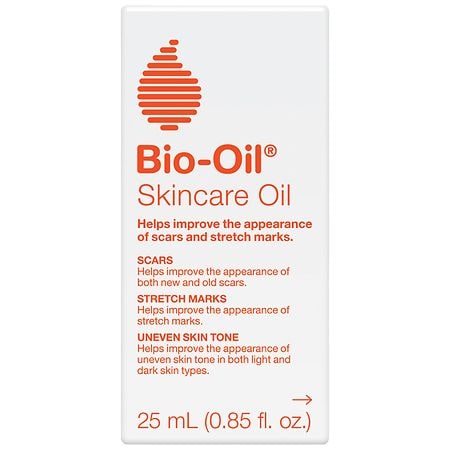
Bio-Oil Skincare Body Oil for Scars and Stretch Marks Serum Hydrates Skin 0.85 fl oz
Analysis updated August 2026 · How Scout scores
At a glance
Summary
This body oil contains beneficial ingredients like Retinyl Palmitate and Tocopheryl Acetate, which are known for their skin-regenerative and antioxidant properties. However, the presence of Paraffinum Liquidum and BHT, along with synthetic fragrance (Parfum), raises concerns due to potential skin irritation and environmental impact. The product's formulation includes both natural oils and synthetic components, resulting in a mixed ingredient profile.
Key ingredients 15
Retinyl PalmitateVery Good
Retinyl Palmitate is a derivative of Vitamin A, known for its anti-aging properties. It helps to improve skin texture and reduce the appearance of fine lines. It is a beneficial ingredient in skincare for its regenerative properties.
Risks
It can increase skin sensitivity to sunlight, so sunscreen is recommended.
Benefits
It promotes cell turnover and improves skin texture, making it a valuable anti-aging ingredient.
Anthemis Nobilis Flower OilVery Good
Anthemis Nobilis Flower Oil, also known as chamomile oil, is known for its soothing and anti-inflammatory properties. It is beneficial for calming irritated skin and reducing redness. It is a natural ingredient valued for its gentle effects on the skin.
Risks
There is a low risk of allergic reactions in individuals sensitive to chamomile.
Benefits
It soothes and calms the skin, making it ideal for sensitive or irritated skin.
Lavandula Angustifolia OilVery Good
Lavandula Angustifolia Oil, or lavender oil, is known for its calming and soothing properties. It is used in skincare for its ability to reduce inflammation and promote relaxation. It is a natural ingredient with a pleasant aroma.
Risks
There is a potential for skin irritation or allergic reactions in sensitive individuals.
Benefits
It provides a calming effect and helps to reduce skin inflammation.
Rosmarinus Officinalis Leaf OilVery Good
Rosmarinus Officinalis Leaf Oil, or rosemary oil, is known for its antioxidant and antimicrobial properties. It is used in skincare to help protect the skin and improve circulation. It is a natural ingredient with multiple skin benefits.
Risks
There is a low risk of irritation or allergic reactions in sensitive individuals.
Benefits
It provides antioxidant protection and supports healthy skin circulation.
Calendula Officinalis ExtractVery Good
Calendula Officinalis Extract is known for its healing and anti-inflammatory properties. It is used in skincare to soothe and repair damaged skin. It is a natural ingredient valued for its gentle and effective skin benefits.
Risks
There is a low risk of allergic reactions in individuals sensitive to calendula.
Benefits
It promotes skin healing and reduces inflammation, making it ideal for sensitive skin.
Helianthus Annuus Seed OilVery Good
Helianthus Annuus Seed Oil, or sunflower seed oil, is rich in vitamins and fatty acids. It is used in skincare for its moisturizing and nourishing properties. It is a natural oil that helps to maintain skin health.
Risks
There are minimal risks, though it may cause irritation in very sensitive skin.
Benefits
It provides deep hydration and nourishment to the skin, supporting overall skin health.
Glycine Soja OilVery Good
Glycine Soja Oil, or soybean oil, is rich in essential fatty acids and antioxidants. It is used in skincare for its moisturizing and protective properties. It is a natural oil that helps to improve skin texture and health.
Risks
There are minimal risks, though it may cause irritation in very sensitive skin.
Benefits
It provides hydration and antioxidant protection, supporting healthy skin.
BisabololVery Good
Bisabolol is a natural compound known for its soothing and anti-inflammatory properties. It is used in skincare to calm irritated skin and enhance the absorption of other ingredients. It is a beneficial ingredient for sensitive skin.
Risks
There are minimal risks, though it may cause irritation in very sensitive skin.
Benefits
It soothes and calms the skin, making it ideal for sensitive or irritated skin.
Tocopheryl AcetateGood
Tocopheryl Acetate is a form of Vitamin E, a powerful antioxidant. It helps to protect the skin from free radical damage and supports skin health. It is widely used in skincare for its moisturizing and protective properties.
Risks
There are minimal risks, though it may cause irritation in very sensitive skin.
Benefits
It provides antioxidant protection and helps to maintain skin moisture.
TriisononanoinNeutral
Triisononanoin is an emollient that helps to soften and smooth the skin. It is used in formulations to improve the texture and feel of the product. It is generally considered safe and non-irritating.
Risks
There are minimal risks associated with this ingredient, though it is synthetic.
Benefits
It provides a silky feel to the skin and enhances the spreadability of the product.
Cetearyl EthylhexanoateNeutral
Cetearyl Ethylhexanoate is an ester used as an emollient and conditioning agent. It helps to improve the texture of the skin and the product. It is generally considered safe for use in cosmetics.
Risks
There are minimal risks, though it may cause irritation in very sensitive individuals.
Benefits
It enhances the smoothness and spreadability of the product on the skin.
Isopropyl MyristateNeutral
Isopropyl Myristate is a synthetic oil used to enhance the absorption of other ingredients. It is commonly used in cosmetics for its ability to create a smooth, non-greasy feel. It is generally safe but can cause irritation in some individuals.
Risks
It may cause skin irritation or acne in sensitive individuals.
Benefits
It helps to improve the absorption of active ingredients and provides a smooth application.
Paraffinum LiquidumBad
Processed additive flagged under Scout's ingredient doctrine.
Risks
There is a concern about its petroleum origin, which may not be suitable for those seeking natural products.
Benefits
It effectively forms a barrier on the skin to prevent moisture loss, keeping the skin hydrated.
BHTBad
BHT, or Butylated Hydroxytoluene, is a synthetic antioxidant used to preserve product stability. It is controversial due to potential health concerns and environmental impact. It is generally considered safe in low concentrations but is not favored in natural formulations.
Risks
There are concerns about its potential endocrine-disrupting effects and environmental persistence.
Benefits
It helps to extend the shelf life of products by preventing oxidation.
ParfumBad
Parfum, or fragrance, is a mixture of aromatic compounds used to scent products. It is often criticized for its potential to cause skin irritation and allergic reactions. It is considered a negative ingredient due to its synthetic nature and lack of transparency.
Risks
There is a high risk of skin irritation and allergic reactions, especially in sensitive individuals.
Benefits
It provides a pleasant scent to the product, enhancing user experience.
Get the full breakdown in the Scout appTake Scout shopping
Scan any product to see lab results, healthy alternatives, and your personalized analysis.
Download on theApp Store GET IT ONGoogle PlayAmazon pricing & content
Amazon price as of . Product prices and availability are accurate as of the date/time indicated and are subject to change. Any price and availability information displayed on Amazon.com at the time of purchase will apply to the purchase of this product.
CERTAIN CONTENT THAT APPEARS ON THIS SITE COMES FROM AMAZON. THIS CONTENT IS PROVIDED “AS IS” AND IS SUBJECT TO CHANGE OR REMOVAL AT ANY TIME.