
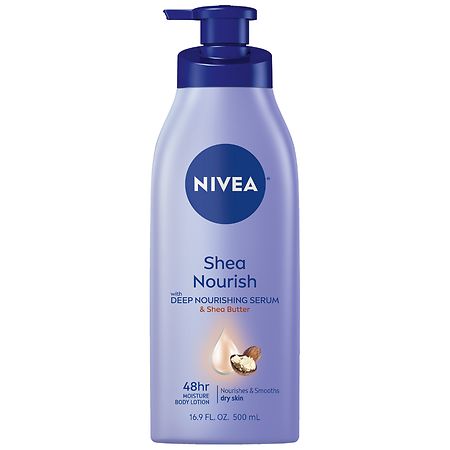
NIVEA Shea Daily Moisture Body Lotion for Dry Skin Shea Butter 48Hr Moisturizer 16.9 fl oz
Analysis updated August 2026 · How Scout scores
At a glance
Summary
This body lotion contains beneficial ingredients like glycerin and shea butter, which are known for their moisturizing and skin-soothing properties. However, the presence of mineral oil and fragrance can be concerning due to potential skin irritation and undisclosed components. Additionally, phenoxyethanol, while a common preservative, can cause irritation in some individuals. The product's ingredient list reflects a moderate level of processing with both natural and synthetic components.
Key ingredients 13
Butyrospermum Parkii (Shea) ButterVery Good
Shea Butter is a natural fat extracted from the nuts of the shea tree. It is rich in vitamins and fatty acids, making it an excellent moisturizer. It is known for its anti-inflammatory and healing properties.
Risks
Rarely, it can cause allergic reactions in individuals with nut allergies.
Benefits
Deeply moisturizes and nourishes the skin, improving elasticity and softness.
GlycerinGood
Glycerin is a humectant that attracts moisture to the skin, making it a popular ingredient in moisturizers. It helps to maintain the skin's water balance on an intercellular level. It is generally well-tolerated and beneficial for all skin types.
Risks
Rarely, it can cause irritation in very sensitive skin.
Benefits
Improves skin hydration, resilience, and smoothness.
WaterNeutral
Water is a common solvent used in cosmetics to dissolve other ingredients. It helps in spreading the product evenly on the skin. It does not have any direct benefits or risks associated with its use in lotions.
Risks
There are no significant risks associated with water in cosmetic formulations.
Benefits
Water helps in hydrating the skin by acting as a vehicle for other moisturizing ingredients.
Cetearyl AlcoholNeutral
Cetearyl Alcohol is a fatty alcohol used as an emollient and thickening agent in lotions. It helps to stabilize and thicken formulations. It is considered safe and non-irritating for most skin types.
Risks
Minimal risk of irritation for sensitive skin.
Benefits
Helps to soften and smooth the skin.
Glyceryl Stearate CitrateNeutral
Glyceryl Stearate Citrate is an emulsifier that helps to blend oil and water components in formulations. It is derived from natural sources and is generally considered safe. It does not have significant direct benefits or risks.
Risks
Low risk of skin irritation.
Benefits
Contributes to the smooth texture of the lotion.
C15-19 AlkaneNeutral
C15-19 Alkane is used as an emollient and solvent in cosmetic formulations. It helps to improve the spreadability of the product. It is generally considered safe for use in cosmetics.
Risks
Minimal risk of irritation.
Benefits
Enhances the texture and application of the lotion.
CarbomerNeutral
Carbomer is a synthetic polymer used to thicken and stabilize cosmetic formulations. It helps to create a smooth, gel-like texture. It is generally considered safe for use in cosmetics.
Risks
Low risk of skin irritation.
Benefits
Improves the consistency and application of the lotion.
Sodium HydroxideNeutral
Sodium Hydroxide is used to adjust the pH of cosmetic formulations. It is used in very small amounts to ensure product stability. While it can be irritating in high concentrations, it is safe in the low concentrations used in cosmetics.
Risks
Potential for irritation if used in high concentrations.
Benefits
Helps to maintain the stability and effectiveness of the product.
EthylhexylglycerinNeutral
Ethylhexylglycerin is used as a skin conditioning agent and preservative enhancer. It is considered safe and is often used in combination with other preservatives. It has a low risk of causing irritation.
Risks
Minimal risk of skin irritation.
Benefits
Enhances the effectiveness of preservatives and conditions the skin.
Mineral OilBad
Processed additive flagged under Scout's ingredient doctrine.
Risks
Potential to clog pores and cause acne in sensitive individuals.
Benefits
Provides a barrier to prevent moisture loss, keeping the skin hydrated.
DimethiconeBad
Occlusive silicone film-former — flagged under clean-beauty doctrine.
Risks
May cause build-up on the skin with prolonged use.
Benefits
Provides a silky, smooth feel and helps to lock in moisture.
PhenoxyethanolBad
Phenoxyethanol is a preservative used to prevent microbial growth in cosmetics. It is effective but can cause skin irritation and allergic reactions in some individuals. It is considered a safer alternative to parabens but still has potential risks.
Risks
Potential for skin irritation and allergic reactions.
Benefits
Prevents microbial contamination, extending the shelf life of the product.
FragranceVery Bad
Fragrance is used to impart a pleasant scent to cosmetic products. However, it is a common cause of allergic reactions and skin irritation. The specific components of 'fragrance' are often undisclosed, leading to potential unknown risks.
Risks
High risk of skin irritation and allergic reactions.
Benefits
Provides a pleasant scent to the product.
Get the full breakdown in the Scout appTake Scout shopping
Scan any product to see lab results, healthy alternatives, and your personalized analysis.
Download on theApp Store GET IT ONGoogle PlayAmazon pricing & content
Amazon price as of . Product prices and availability are accurate as of the date/time indicated and are subject to change. Any price and availability information displayed on Amazon.com at the time of purchase will apply to the purchase of this product.
CERTAIN CONTENT THAT APPEARS ON THIS SITE COMES FROM AMAZON. THIS CONTENT IS PROVIDED “AS IS” AND IS SUBJECT TO CHANGE OR REMOVAL AT ANY TIME.