
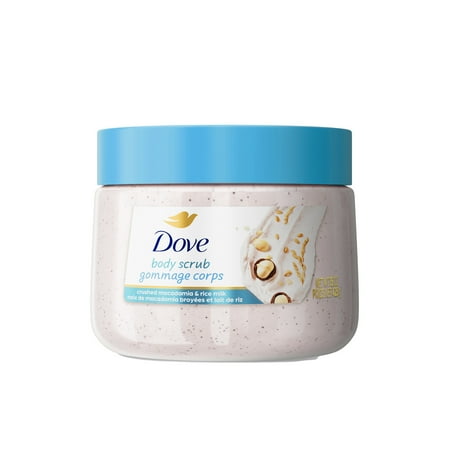


Dove Exfoliating Body Scrub for Women Macadamia Rice Milk 15 oz
Analysis updated August 2026 · How Scout scores
At a glance
Summary
This body scrub contains beneficial ingredients like macadamia seed oil and rice bran oil, which provide moisturizing and skin-nourishing properties. However, the presence of synthetic fragrance and several fragrance-related allergens such as coumarin, limonene, and linalool can cause skin irritation and allergic reactions. The product's formulation includes a mix of natural and synthetic components, resulting in a moderate processing level.
Key ingredients 28
Macadamia Integrifolia/Tetraphylla Seed OilVery Good
Macadamia seed oil is rich in fatty acids and antioxidants, providing excellent moisturizing and skin-nourishing properties. It is well-absorbed and helps improve skin elasticity.
Risks
Generally safe, though nut oils can cause allergic reactions in sensitive individuals.
Benefits
Deeply moisturizes and nourishes the skin, improving its texture and appearance.
Oryza Sativa (Rice) Bran OilVery Good
Rice bran oil is rich in antioxidants, vitamins, and fatty acids, making it beneficial for skin health. It helps moisturize and protect the skin barrier.
Risks
Generally considered safe with minimal risk of irritation.
Benefits
Provides antioxidant protection and enhances skin hydration.
GlycerinGood
Glycerin is a humectant that attracts moisture to the skin, helping to keep it hydrated. It is widely used in skincare for its moisturizing properties.
Risks
There are minimal risks associated with glycerin, though it may cause irritation in very sensitive skin.
Benefits
Glycerin helps maintain skin hydration and improves skin barrier function.
Caprylic/Capric TriglycerideGood
Caprylic/capric triglyceride is an emollient derived from coconut oil and glycerin. It is used for its moisturizing and skin-conditioning properties.
Risks
Generally safe with minimal risk of irritation.
Benefits
Provides lightweight hydration and improves skin texture.
Water (Eau)Neutral
Water is a common solvent used in cosmetic formulations. It helps dissolve other ingredients and provides a base for the product.
Risks
There are no significant risks associated with water in cosmetics.
Benefits
Water helps in hydrating the skin and acts as a carrier for other beneficial ingredients.
Hydrated SilicaNeutral
Hydrated silica is used as an abrasive agent in exfoliating products. It helps remove dead skin cells and smooth the skin surface.
Risks
Overuse of abrasive agents can lead to skin irritation or micro-tears.
Benefits
It effectively exfoliates the skin, leaving it smooth and refreshed.
Sodium Lauroyl IsethionateNeutral
Sodium lauroyl isethionate is a mild surfactant used for its cleansing properties. It is less irritating compared to harsher surfactants like SLS.
Risks
May cause mild irritation in sensitive individuals.
Benefits
Provides gentle cleansing without stripping the skin of its natural oils.
Stearic AcidNeutral
Stearic acid is a fatty acid used as an emulsifier and thickener in cosmetics. It helps stabilize formulations and improve texture.
Risks
Generally considered safe, though it may cause minor irritation in some individuals.
Benefits
Contributes to the creamy texture of products and helps maintain product stability.
Sodium StearateNeutral
Sodium stearate is a salt of stearic acid used as a thickener and emulsifier. It helps maintain the consistency of the product.
Risks
May cause mild irritation if used in high concentrations.
Benefits
Helps in forming a stable emulsion and improves product texture.
Cocamidopropyl BetaineNeutral
Cocamidopropyl betaine is a surfactant derived from coconut oil. It is used for its foaming and cleansing properties.
Risks
Can cause skin irritation or allergic reactions in some individuals.
Benefits
Provides mild cleansing and helps create a rich lather.
Lauric AcidNeutral
Lauric acid is a fatty acid with antimicrobial properties. It is used in cosmetics for its ability to cleanse and condition the skin.
Risks
May cause irritation in sensitive skin if used in high concentrations.
Benefits
Helps cleanse the skin and provides antimicrobial benefits.
Sodium OleateNeutral
Sodium oleate is a surfactant and emulsifier used to stabilize formulations. It helps maintain the consistency of the product.
Risks
Can cause mild irritation if used in high concentrations.
Benefits
Contributes to product stability and texture.
Cetearyl AlcoholNeutral
Cetearyl alcohol is a fatty alcohol used as an emollient and thickener. It helps improve the texture and feel of the product.
Risks
Generally safe, though it may cause minor irritation in sensitive individuals.
Benefits
Provides a smooth, creamy texture and helps moisturize the skin.
Sodium IsethionateNeutral
Sodium isethionate is a surfactant used for its cleansing properties. It is milder than traditional soap and helps create a creamy lather.
Risks
May cause mild irritation in sensitive skin.
Benefits
Provides gentle cleansing and helps maintain skin moisture.
Sodium LaurateNeutral
Sodium laurate is a surfactant used for its cleansing and foaming properties. It helps remove dirt and oil from the skin.
Risks
Can cause irritation if used in high concentrations.
Benefits
Effectively cleanses the skin and contributes to product foaming.
Synthetic WaxNeutral
Synthetic wax is used as a thickener and emollient in cosmetics. It helps improve the texture and stability of the product.
Risks
Generally considered safe, though it may cause minor irritation in sensitive individuals.
Benefits
Enhances product texture and provides a smooth application.
Caprylyl GlycolNeutral
Caprylyl glycol is a humectant and skin-conditioning agent. It helps retain moisture and improve the feel of the product.
Risks
Generally considered safe with minimal risk of irritation.
Benefits
Enhances skin hydration and product texture.
Sodium GluconateNeutral
Sodium gluconate is a chelating agent used to improve product stability. It helps prevent the degradation of other ingredients.
Risks
Generally safe with minimal risk of irritation.
Benefits
Enhances product stability and effectiveness.
Sodium ChlorideNeutral
Sodium chloride is used as a thickener and stabilizer in cosmetics. It helps improve the texture and consistency of the product.
Risks
Can cause irritation in sensitive skin if used in high concentrations.
Benefits
Contributes to product stability and texture.
Benzyl SalicylateNeutral
Benzyl salicylate is used as a fragrance ingredient and UV absorber. It helps enhance the scent and protect the product from UV degradation.
Risks
Potential allergen and irritant, especially for sensitive skin.
Benefits
Enhances fragrance and provides UV protection for the product.
Titanium Dioxide (CI 77891)Neutral
Titanium dioxide is used as a pigment and UV filter in cosmetics. It helps provide opacity and sun protection.
Risks
Inhalation of fine particles can be harmful, though topical use is generally safe.
Benefits
Provides UV protection and improves product opacity.
Iron Oxides (CI 77499, CI 77491, CI 77492)Neutral
Iron oxides are used as pigments in cosmetics to provide color. They are stable and non-toxic, making them suitable for use in various products.
Risks
Generally considered safe with minimal risk of irritation.
Benefits
Provides natural color to the product.
Sodium BenzoateBad
Synthetic preservative that can form benzene in the presence of vitamin C.
Risks
Can cause irritation in sensitive skin, especially in high concentrations.
Benefits
Prevents spoilage and maintains product safety.
Benzyl AlcoholBad
Processed additive flagged under Scout's ingredient doctrine.
Risks
Can cause irritation or allergic reactions in sensitive individuals.
Benefits
Maintains product safety and extends shelf life.
CoumarinBad
Coumarin is a fragrance ingredient that can cause allergic reactions and skin irritation. It is often used to impart a sweet scent to products.
Risks
Potential allergen and irritant, especially for sensitive skin.
Benefits
Adds a pleasant scent to the product.
LimoneneBad
Limonene is a fragrance ingredient that can oxidize and cause skin irritation or allergic reactions. It is commonly used for its citrus scent.
Risks
Potential allergen and irritant, especially for sensitive skin.
Benefits
Provides a fresh, citrus scent to the product.
LinaloolBad
Linalool is a fragrance ingredient that can cause skin irritation or allergic reactions. It is used for its floral scent.
Risks
Potential allergen and irritant, especially for sensitive skin.
Benefits
Adds a floral scent to the product.
Fragrance (Parfum)Very Bad
Fragrance is used to impart scent to products but can be a mixture of various chemicals. It is a common cause of allergic reactions and skin irritation.
Risks
Potential allergen and irritant, especially for sensitive skin.
Benefits
Enhances the sensory experience of the product.
Get the full breakdown in the Scout appTake Scout shopping
Scan any product to see lab results, healthy alternatives, and your personalized analysis.
Download on theApp Store GET IT ONGoogle PlayAmazon pricing & content
Amazon price as of . Product prices and availability are accurate as of the date/time indicated and are subject to change. Any price and availability information displayed on Amazon.com at the time of purchase will apply to the purchase of this product.
CERTAIN CONTENT THAT APPEARS ON THIS SITE COMES FROM AMAZON. THIS CONTENT IS PROVIDED “AS IS” AND IS SUBJECT TO CHANGE OR REMOVAL AT ANY TIME.