
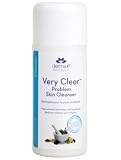
DermaE Natural Bodycare - Very Clear Problem Skin Cleanser 6 oz
Analysis updated July 2026 · How Scout scores
At a glance
Summary
This body cleanser contains beneficial ingredients like honey, niacinamide, and ascorbic acid, which are known for their skin-soothing and antioxidant properties. However, the presence of cellulose as an additive and the overall ultra-processed nature of the product limit its score. The formulation lacks harmful synthetic chemicals, but the processing level prevents it from achieving a higher rating.
Key ingredients 9
honeyGood
Honey is a natural humectant that helps retain moisture in the skin. It also has antimicrobial properties that can aid in reducing skin infections. Its soothing nature makes it beneficial for sensitive skin.
Risks
There is a low risk of allergic reactions in individuals sensitive to bee products.
Benefits
Honey provides excellent moisturizing and antibacterial benefits, promoting healthier skin.
niacinamideGood
Niacinamide is a form of Vitamin B3 that is known for its anti-inflammatory properties. It helps improve skin texture and reduce the appearance of pores. It is also effective in managing acne and hyperpigmentation.
Risks
Niacinamide is generally well-tolerated, but in rare cases, it may cause mild irritation.
Benefits
It enhances skin barrier function and reduces redness and blotchiness.
ascorbic acidGood
Ascorbic acid, or Vitamin C, is a powerful antioxidant that helps protect the skin from free radical damage. It also aids in collagen production, improving skin elasticity. Its brightening properties help reduce dark spots and even out skin tone.
Risks
High concentrations may cause irritation or redness in sensitive skin types.
Benefits
It provides anti-aging benefits and enhances skin radiance.
riboflavinGood
Essential B vitamin — beneficial micronutrient.
Risks
There are no significant risks associated with riboflavin in topical applications.
Benefits
It may offer some antioxidant protection to the skin.
d-alpha tocopherol (vitamin e sunflower)Good
D-alpha tocopherol is a natural form of Vitamin E derived from sunflower oil. It is a potent antioxidant that helps protect the skin from environmental damage. It also has moisturizing properties that improve skin hydration.
Risks
In rare cases, it may cause mild irritation in sensitive individuals.
Benefits
It provides antioxidant protection and enhances skin moisture.
pyridoxine hydrochlorideGood
Beneficial ingredient — whole-food or functional value in this product class.
Risks
There are no significant risks associated with its use in cosmetics.
Benefits
It may contribute to overall skin health and appearance.
celluloseNeutral
Cellulose is a natural polymer used as a thickening agent in cosmetic formulations. It helps improve the texture and consistency of products. It is inert and does not react with other ingredients.
Risks
There are no significant risks associated with cellulose in topical applications.
Benefits
It contributes to the stability and texture of the product.
choline bitartrateNeutral
Choline bitartrate is a compound that may support skin health by maintaining cell membrane integrity. It is not commonly used in topical applications, so its effects are not well-documented. It is generally considered safe for use in cosmetics.
Risks
There is limited data on topical use, but it is considered low-risk.
Benefits
It may support overall skin health through its role in cell membrane maintenance.
cadum stearateNeutral
Cadum stearate is a fatty acid salt used as an emulsifier in cosmetic products. It helps blend oil and water components, improving product consistency. It is generally considered safe for use in cosmetics.
Risks
There are minimal risks associated with its use in cosmetics.
Benefits
It enhances the texture and stability of formulations.
Get the full breakdown in the Scout appTake Scout shopping
Scan any product to see lab results, healthy alternatives, and your personalized analysis.
Download on theApp Store GET IT ONGoogle Play