
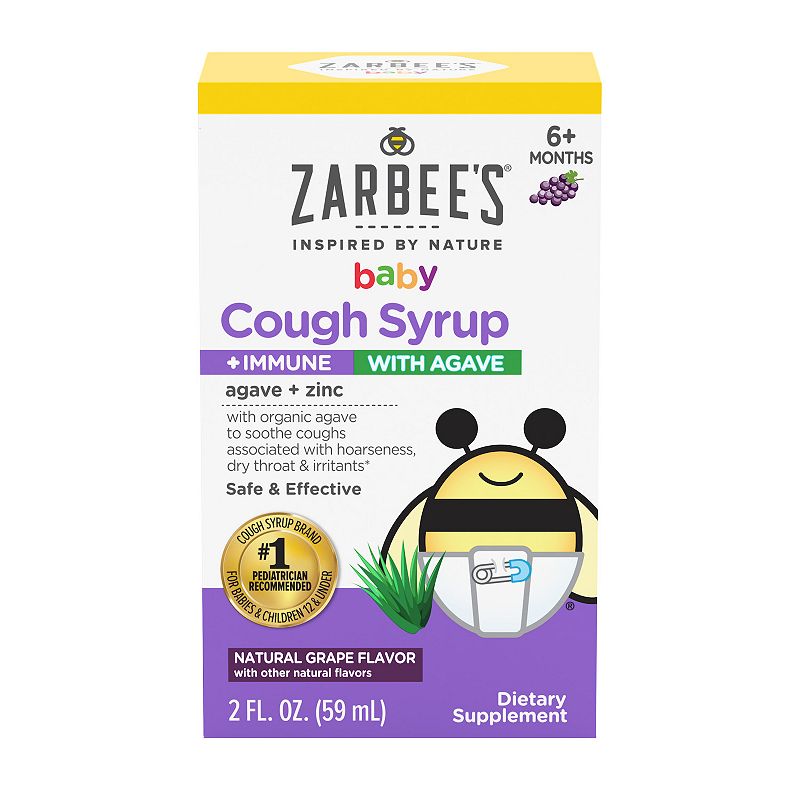


Zarbee's Baby Cough Syrup + Immune with Organic Agave & Zinc - Grape Flavor - 2 fl oz
Analysis updated September 2026 · How Scout scores
At a glance
Summary
This product contains a simple formulation with minimal additives, which is beneficial for a supplement. However, the use of natural flavors raises concerns due to the lack of transparency about the specific ingredients used, which can sometimes include synthetic additives. The presence of citric acid and potassium sorbate as preservatives is typical for shelf stability but contributes to a moderate level of processing.
Key ingredients 4
WaterNeutral
Water is a neutral ingredient used as a solvent and carrier for other ingredients. It does not contribute any nutritional value or health risks. Its presence is essential for the formulation but does not impact the health profile of the product.
See more about Water →Citric AcidNeutral
Citric acid is commonly used as a preservative and flavor enhancer in food products. It is generally recognized as safe when consumed in typical amounts found in foods. Its role in maintaining product stability is beneficial, but it does not provide nutritional value.
Risks
Excessive consumption may lead to dental erosion or gastrointestinal discomfort.
Natural FlavorBad
Natural flavors are often used as a catch-all term for a variety of flavoring agents, which can include synthetic additives. This lack of transparency can be concerning for consumers seeking to avoid artificial ingredients. The processing methods and potential inclusion of undisclosed additives contribute to its negative classification.
Risks
The primary risk is the potential inclusion of synthetic additives and allergens that are not disclosed on the label.
Potassium SorbateBad
Synthetic preservative — flagged in daily-use products.
Risks
Some individuals may experience allergic reactions or sensitivities to preservatives.
Processing
Ultra-Processed Foods
Get the full breakdown in the Scout appTake Scout shopping
Scan any product to see lab results, healthy alternatives, and your personalized analysis.
Download on theApp Store GET IT ONGoogle Play