
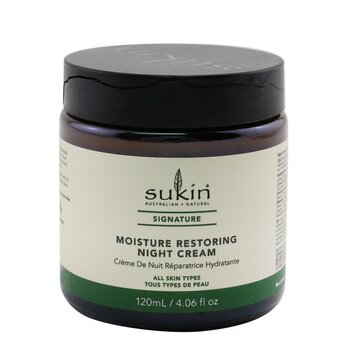


Sukin Signature Moisture Restoring Night Cream - 4.06 fl oz
Summary
This moisturizer contains beneficial natural ingredients such as jojoba oil, rosehip oil, and shea butter, which are known for their skin-nourishing properties. However, the presence of synthetic preservatives and emulsifiers slightly lowers its score, as these can be concerning for sensitive skin. The product is moderately processed, which also impacts its overall rating.
At a glance
Key ingredients 27
Aloe Barbadensis Leaf Juice
Aloe vera is known for its soothing and hydrating properties, making it beneficial for skin care. It helps to calm irritated skin and provides moisture. It is often used in products for its healing and anti-inflammatory effects.
Risks
There are minimal risks associated with aloe vera, though some individuals may experience allergic reactions.
Benefits
Aloe vera is highly beneficial for its moisturizing and soothing properties, making it ideal for sensitive or dry skin.
Sesamum Indicum (Sesame) Seed Oil
Sesame seed oil is rich in antioxidants and essential fatty acids, which help to nourish and protect the skin. It has anti-inflammatory properties that can soothe irritated skin. This oil is often used for its ability to deeply moisturize and improve skin elasticity.
Risks
Some individuals may experience allergic reactions to sesame oil.
Benefits
Sesame oil is beneficial for its moisturizing and antioxidant properties, which help to maintain healthy skin.
Cetearyl Alcohol
Cetearyl alcohol is a fatty alcohol used as an emollient and thickening agent in cosmetics. It helps to soften and smooth the skin. It is derived from natural sources and is considered safe for use in skincare products.
Risks
There are minimal risks associated with cetearyl alcohol, though it may cause irritation in sensitive individuals.
Benefits
Cetearyl alcohol is beneficial for its emollient properties, helping to soften and condition the skin.
Cetyl Alcohol
Cetyl alcohol is a fatty alcohol used as an emollient and thickener in skincare products. It helps to stabilize formulations and improve texture. It is derived from natural sources and is generally considered safe for use.
Risks
Cetyl alcohol may cause irritation in some sensitive individuals.
Benefits
Cetyl alcohol is beneficial for its emollient properties, providing a smooth and creamy texture to skincare products.
Glycerin
Glycerin is a humectant that attracts moisture to the skin, helping to keep it hydrated. It is a common ingredient in skincare products due to its moisturizing properties. Glycerin is safe and effective for all skin types.
Risks
Glycerin is generally safe, but in rare cases, it may cause irritation or allergic reactions.
Benefits
Glycerin is highly beneficial for its ability to hydrate and maintain moisture in the skin.
Rosa Canina Fruit Oil (Rose Hip)
Rose hip oil is rich in essential fatty acids and vitamins A and C, which help to rejuvenate and brighten the skin. It is known for its anti-aging properties and ability to improve skin texture. This oil is often used for its nourishing and regenerative effects.
Risks
Rose hip oil may cause irritation or allergic reactions in some individuals.
Benefits
Rose hip oil is beneficial for its anti-aging and skin-rejuvenating properties, promoting a healthy and radiant complexion.
Theobroma Cacao (Cocoa) Seed Butter
Cocoa butter is a natural fat extracted from cocoa beans, known for its moisturizing and emollient properties. It helps to improve skin elasticity and provides a protective barrier. Cocoa butter is often used in skincare for its ability to deeply nourish and hydrate the skin.
Risks
Cocoa butter may cause breakouts in acne-prone skin due to its comedogenic nature.
Benefits
Cocoa butter is beneficial for its deep moisturizing properties, helping to soften and smooth the skin.
Butyrospermum Parkii (Shea Butter)
Shea butter is a natural fat extracted from the nuts of the shea tree, known for its rich moisturizing properties. It contains vitamins A and E, which help to nourish and protect the skin. Shea butter is widely used for its ability to soothe and hydrate dry skin.
Risks
Shea butter is generally safe, but it may cause allergic reactions in individuals with nut allergies.
Benefits
Shea butter is highly beneficial for its moisturizing and soothing properties, making it ideal for dry and sensitive skin.
Simmondsia Chinensis (Jojoba) Seed Oil
Jojoba oil is a liquid wax ester that closely resembles the skin's natural sebum, making it an excellent moisturizer. It helps to balance oil production and provides a protective barrier. Jojoba oil is non-comedogenic and suitable for all skin types.
Risks
Jojoba oil is generally safe, but it may cause allergic reactions in rare cases.
Benefits
Jojoba oil is beneficial for its moisturizing and balancing properties, helping to maintain healthy skin.
Tocopherol (Vitamin E)
Vitamin E is a powerful antioxidant that helps to protect the skin from free radical damage. It supports skin repair and improves moisture retention. Vitamin E is commonly used in skincare for its anti-aging and protective benefits.
Risks
Vitamin E is generally safe, but high concentrations may cause skin irritation in sensitive individuals.
Benefits
Vitamin E is beneficial for its antioxidant properties, helping to protect and nourish the skin.
Persea Gratissima (Avocado) Oil
Avocado oil is rich in vitamins A, D, and E, as well as essential fatty acids, which help to nourish and moisturize the skin. It has anti-inflammatory properties that can soothe irritated skin. Avocado oil is often used for its ability to improve skin texture and elasticity.
Risks
Avocado oil may cause allergic reactions in individuals with latex allergies.
Benefits
Avocado oil is beneficial for its nourishing and moisturizing properties, promoting healthy and supple skin.
Triticum Vulgare (Wheat) Germ Oil
Wheat germ oil is rich in vitamins A, D, and E, as well as essential fatty acids, which help to nourish and protect the skin. It has antioxidant properties that can help to reduce signs of aging. Wheat germ oil is often used for its ability to improve skin texture and elasticity.
Risks
Wheat germ oil may cause allergic reactions in individuals with gluten sensitivities.
Benefits
Wheat germ oil is beneficial for its nourishing and antioxidant properties, promoting healthy and youthful skin.
Oenothera Biennis (Evening Primrose) Oil
Evening primrose oil is rich in gamma-linolenic acid, an essential fatty acid that helps to maintain healthy skin. It has anti-inflammatory properties that can soothe irritated skin. Evening primrose oil is often used for its ability to improve skin hydration and elasticity.
Risks
Evening primrose oil may cause allergic reactions in some individuals.
Benefits
Evening primrose oil is beneficial for its anti-inflammatory and moisturizing properties, supporting healthy skin.
Borago Officinalis Seed Oil (Borage)
Borage oil is high in gamma-linolenic acid, an essential fatty acid that helps to maintain skin health. It has anti-inflammatory properties that can soothe irritated skin. Borage oil is often used for its ability to improve skin hydration and elasticity.
Risks
Borage oil may cause allergic reactions in some individuals.
Benefits
Borage oil is beneficial for its anti-inflammatory and moisturizing properties, promoting healthy skin.
Equisetum Arvense Extract (Horsetail)
Horsetail extract is rich in silica, which helps to strengthen and improve skin elasticity. It has antioxidant properties that can protect the skin from environmental damage. Horsetail extract is often used for its ability to support healthy skin and reduce signs of aging.
Risks
Horsetail extract may cause irritation in sensitive individuals.
Benefits
Horsetail extract is beneficial for its strengthening and antioxidant properties, promoting healthy and resilient skin.
Arctium Lappa Root Extract (Burdock)
Burdock root extract is known for its anti-inflammatory and antibacterial properties, making it beneficial for acne-prone skin. It helps to detoxify and purify the skin. Burdock root extract is often used for its ability to improve skin clarity and reduce blemishes.
Risks
Burdock root extract may cause allergic reactions in some individuals.
Benefits
Burdock root extract is beneficial for its purifying and anti-inflammatory properties, supporting clear and healthy skin.
Urtica Dioica (Nettle) Leaf Extract
Nettle leaf extract is rich in vitamins and minerals that help to nourish and strengthen the skin. It has anti-inflammatory properties that can soothe irritated skin. Nettle leaf extract is often used for its ability to improve skin health and reduce redness.
Risks
Nettle leaf extract may cause irritation in sensitive individuals.
Benefits
Nettle leaf extract is beneficial for its nourishing and anti-inflammatory properties, promoting healthy and calm skin.
Citrus Tangerina (Tangerine) Peel Oil
Tangerine peel oil is rich in antioxidants and vitamin C, which help to brighten and rejuvenate the skin. It has a refreshing scent and can improve mood. Tangerine peel oil is often used for its ability to enhance skin radiance and vitality.
Risks
Tangerine peel oil may cause photosensitivity, increasing the risk of sunburn.
Benefits
Tangerine peel oil is beneficial for its brightening and rejuvenating properties, promoting a radiant complexion.
Citrus Nobilis (Mandarin Orange) Peel Oil
Mandarin orange peel oil is rich in antioxidants and vitamin C, which help to brighten and rejuvenate the skin. It has a pleasant citrus scent and can improve mood. Mandarin orange peel oil is often used for its ability to enhance skin radiance and vitality.
Risks
Mandarin orange peel oil may cause photosensitivity, increasing the risk of sunburn.
Benefits
Mandarin orange peel oil is beneficial for its brightening and rejuvenating properties, promoting a radiant complexion.
Lavandula Angustifolia (Lavender) Oil
Lavender oil is known for its calming and soothing properties, making it beneficial for sensitive or irritated skin. It has antibacterial properties that can help to prevent acne. Lavender oil is often used for its ability to promote relaxation and improve skin health.
Risks
Lavender oil may cause irritation or allergic reactions in sensitive individuals.
Benefits
Lavender oil is beneficial for its calming and antibacterial properties, supporting healthy and clear skin.
Vanillin
Vanillin is a compound derived from vanilla beans, used for its pleasant fragrance in cosmetics. It has antioxidant properties that can help to protect the skin from environmental damage. Vanillin is often used for its ability to enhance the sensory experience of skincare products.
Risks
Vanillin may cause irritation or allergic reactions in sensitive individuals.
Benefits
Vanillin is beneficial for its antioxidant properties and pleasant fragrance, enhancing the overall experience of skincare products.
Vanilla Planifolia Fruit Extract
Vanilla planifolia fruit extract is derived from vanilla beans and is used for its fragrance and antioxidant properties. It helps to protect the skin from environmental damage and provides a pleasant scent. Vanilla extract is often used for its ability to enhance the sensory experience of skincare products.
Risks
Vanilla extract may cause irritation or allergic reactions in sensitive individuals.
Benefits
Vanilla extract is beneficial for its antioxidant properties and pleasant fragrance, enhancing the overall experience of skincare products.
Citrus Paradisi (Grapefruit) Seed Extract
Grapefruit seed extract is known for its antimicrobial and antioxidant properties, making it beneficial for preserving skincare products. It helps to protect the skin from environmental damage and supports skin health. Grapefruit seed extract is often used for its ability to enhance product stability and efficacy.
Risks
Grapefruit seed extract may cause irritation or allergic reactions in sensitive individuals.
Benefits
Grapefruit seed extract is beneficial for its antimicrobial and antioxidant properties, supporting healthy skin and product stability.
Phenoxyethanol
Phenoxyethanol is a synthetic preservative used to prevent microbial growth in cosmetics. It is considered a safer alternative to parabens. Phenoxyethanol is effective in maintaining product stability and extending shelf life.
Risks
Phenoxyethanol may cause irritation or allergic reactions in sensitive individuals, and there are concerns about its potential neurotoxicity.
Benefits
Phenoxyethanol is beneficial for its preservative properties, helping to maintain product safety and stability.
Benzyl Alcohol
Benzyl alcohol is used as a preservative and solvent in cosmetics, helping to prevent microbial growth. It is naturally occurring in some essential oils. Benzyl alcohol is effective in maintaining product stability and extending shelf life.
Risks
Benzyl alcohol may cause irritation or allergic reactions in sensitive individuals.
Benefits
Benzyl alcohol is beneficial for its preservative properties, helping to maintain product safety and stability.
Limonene
Limonene is a naturally occurring compound found in citrus oils, used for its fragrance and solvent properties. It has antioxidant properties that can help to protect the skin from environmental damage. Limonene is often used for its ability to enhance the sensory experience of skincare products.
Risks
Limonene may cause irritation or allergic reactions in sensitive individuals, and it can oxidize to form skin-sensitizing compounds.
Benefits
Limonene is beneficial for its antioxidant properties and pleasant fragrance, enhancing the overall experience of skincare products.
Linalool
Linalool is a naturally occurring compound found in many essential oils, used for its fragrance. It has calming and soothing properties that can benefit the skin. Linalool is often used for its ability to enhance the sensory experience of skincare products.
Risks
Linalool may cause irritation or allergic reactions in sensitive individuals, and it can oxidize to form skin-sensitizing compounds.
Benefits
Linalool is beneficial for its calming properties and pleasant fragrance, enhancing the overall experience of skincare products.
Processing
Processed Foods
Get the full breakdown in the Scout app
Scan any product to see lab results, healthy alternatives, and your personalized analysis.
Download on theApp Store