
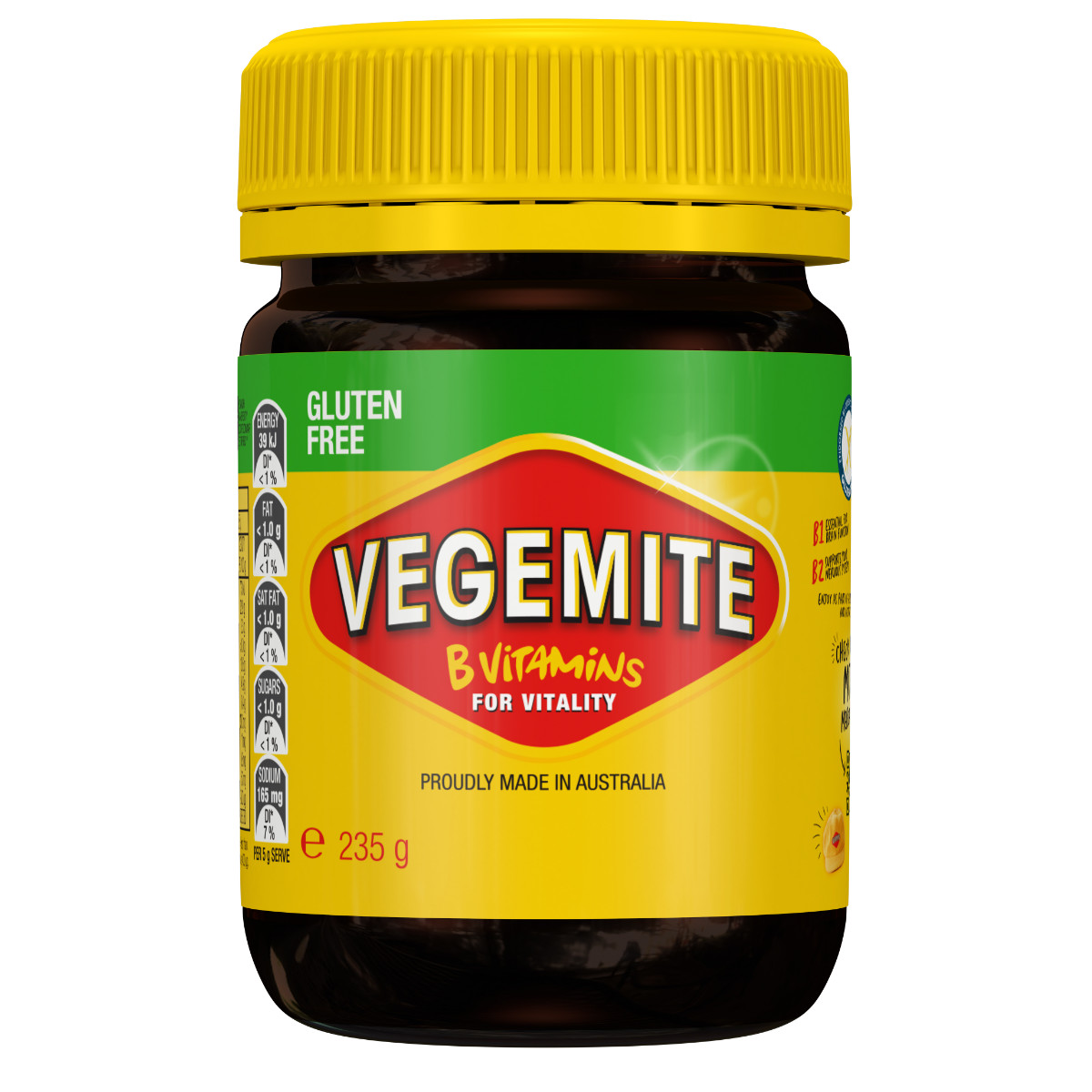


Gluten Free Vegemite
Summary
This gluten-free spread is heavily processed, containing additives like caramel color and vague flavorings, which can be concerning due to potential contaminants and lack of transparency. Despite its high protein content and fiber, the product's high salt level and ultra-processed nature limit its health benefits. The presence of multiple additives and the processing level significantly impact its overall healthiness rating.
At a glance
Key ingredients 9
Yeast extractNeutral
Yeast extract is a flavor enhancer derived from yeast cells. It is commonly used in spreads and soups for its umami taste. It is a natural ingredient but can be high in sodium.
Risks
High sodium content may contribute to increased blood pressure if consumed in excess.
Benefits
Provides a rich umami flavor and is a source of B vitamins, which are essential for energy metabolism.
SaltNeutral
Salt is used as a preservative and flavor enhancer in many foods. It is essential for maintaining fluid balance and nerve function. However, excessive intake can lead to health issues.
Risks
Excessive salt intake is linked to hypertension and cardiovascular diseases.
Benefits
Essential for maintaining electrolyte balance and proper muscle function.
Mineral saltGood
Unrefined sea salt — a minimally processed, natural source of sodium and essential trace minerals, and a legitimate whole-food seasoning. Treated as a positive ingredient.
Risks
Excessive consumption may contribute to high blood pressure and related health issues.
Benefits
Helps in maintaining the flavor profile of foods and can contribute to the intake of essential minerals.
ColourBad
Colour (150c) is a caramel color used to give foods a brown hue. It is produced by heating sugar compounds, often with acids or alkalis. Some forms of caramel color may contain contaminants like 4-MEI, which have raised health concerns.
Risks
Potential presence of 4-MEI, a byproduct that may be a carcinogen, especially in high doses.
FlavoursBad
Flavours are added to enhance the taste of food products. The term is vague and can include a wide range of substances, both natural and artificial. Lack of transparency can be concerning for consumers with allergies or sensitivities.
Risks
Potential for undisclosed allergens or artificial additives that may cause adverse reactions.
NiacinNeutral
Niacin, also known as vitamin B3, is added to fortify foods and support metabolic health. It is essential for converting nutrients into energy. While beneficial, excessive intake can cause side effects.
Risks
High doses may lead to skin flushing and liver damage.
Benefits
Supports energy metabolism and is important for maintaining healthy skin and nerves.
ThiamineNeutral
Thiamine, or vitamin B1, is crucial for energy metabolism and nerve function. It is often added to foods to prevent deficiencies. It is generally safe and beneficial in recommended amounts.
Benefits
Essential for carbohydrate metabolism and proper nerve function.
RiboflavinNeutral
Riboflavin, or vitamin B2, is important for energy production and cellular function. It is often used to fortify foods and improve nutritional content. It is water-soluble and generally safe.
Benefits
Supports energy production and helps maintain healthy skin and eyes.
FolateNeutral
Folate is a B vitamin essential for DNA synthesis and cell division. It is often added to foods to prevent deficiencies, especially in pregnant women. It is crucial for fetal development and overall health.
Benefits
Supports DNA synthesis and is vital for preventing neural tube defects during pregnancy.
Processing
Ultra-Processed Foods
Get the full breakdown in the Scout app
Scan any product to see lab results, healthy alternatives, and your personalized analysis.
Download on theApp Store