

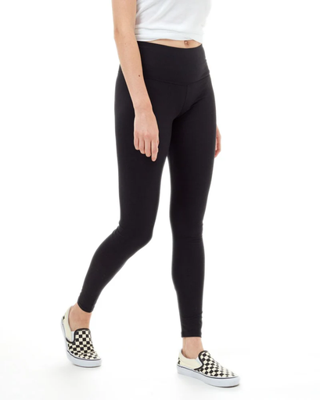

Nike One High-Waisted Full-Length Leggings
At a glance
Summary
Nike One High-Waisted Full-Length Leggings score 1/100. Center for Environmental Health (CEH, Oct 2022) lab testing detected BPA in polyester-spandex activewear — this exact fabric class. Nike received CEH's legal notice for affected product categories. BPA is an endocrine disruptor absorbed through skin during sweaty workouts. Fabric is 80% Polyester (≥50% recycled) / 20% Spandex — 100% petroleum-based synthetics worn against the entire lower body during exercise. Continuously sheds microplastics.
Contaminants 1
Source: Independent third-party laboratory testing
BPA (Bisphenol-A) Detected High
Detected at a high level — at or above health-based exposure limits. Regular exposure at this level is a genuine health concern. BPA is an endocrine disruptor that mimics estrogen and disrupts metabolism, growth, development, and reproduction. Sweat and elevated skin temperature during exercise increase dermal uptake. Nike received a CEH legal notice for this product category.
Detected by Center for Environmental Health (CEH) lab testing (October 2022) in this fabric class — polyester-based clothing with spandex.
Key ingredients 2
Polyester (80%)Very Bad
Petroleum-derived synthetic plastic fiber forming the main fabric. Polyester+spandex is the exact fabric class CEH found BPA in across multiple major activewear brands (Oct 2022 / May 2023 testing). Sheds microplastic fibers with every wash. Worn in maximum skin-to-fabric contact during sweaty exercise, which amplifies absorption of any residual chemical finishes.
See more about Polyester (80%) →Spandex (20%)Bad
Synthetic polyurethane stretch fiber. Suspected primary BPA carrier in athletic wear — commonly used as a polymerization catalyst or antioxidant during elastane production. Continuously sheds microplastics during washing.
See more about Spandex (20%) →Get the full breakdown in the Scout appTake Scout shopping
Scan any product to see lab results, healthy alternatives, and your personalized analysis.
Download on theApp Store GET IT ONGoogle PlayAmazon pricing & content
Amazon price as of . Product prices and availability are accurate as of the date/time indicated and are subject to change. Any price and availability information displayed on Amazon.com at the time of purchase will apply to the purchase of this product.
CERTAIN CONTENT THAT APPEARS ON THIS SITE COMES FROM AMAZON. THIS CONTENT IS PROVIDED “AS IS” AND IS SUBJECT TO CHANGE OR REMOVAL AT ANY TIME.