
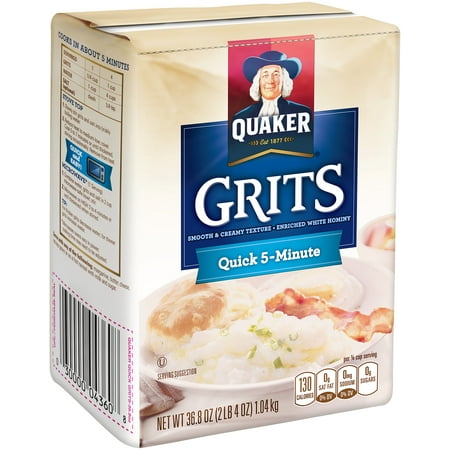


Quaker Grits Quick 5-Minute 36.8 Ounce Paper Bag
Summary
This product is minimally processed and primarily composed of white hominy grits, which retain most of the corn's natural nutrients. The addition of essential B vitamins and iron enhances its nutritional profile without introducing any harmful additives. Its clean ingredient list and minimal processing contribute to a high rating.
At a glance
Key ingredients 6
White Hominy GritsGood
White hominy grits are made from corn that has been treated to remove the hull and germ, resulting in a product that is easy to digest. This process enhances the texture and flavor, making it a popular choice for a quick and nutritious meal. The minimal processing retains most of the corn's natural nutrients.
Benefits
Provides a source of carbohydrates and fiber, supporting energy levels and digestive health.
NiacinGood
Niacin, also known as vitamin B3, is essential for converting food into energy and maintaining healthy skin and nerves. It is often added to foods to prevent deficiencies and support overall health. The inclusion of niacin in fortified foods helps ensure adequate intake in the diet.
Benefits
Supports energy metabolism and contributes to the maintenance of healthy skin and nerves.
Reduced IronGood
Reduced iron is a form of iron used to fortify foods, helping to prevent iron deficiency anemia. It is a stable and bioavailable form of iron that is commonly used in food fortification. This addition is particularly beneficial for individuals with increased iron needs.
Risks
Excessive iron intake can lead to toxicity, but this is rare with food fortification.
Benefits
Helps prevent iron deficiency anemia and supports oxygen transport in the body.
Thiamin MononitrateGood
Thiamin mononitrate is a synthetic form of vitamin B1, essential for energy metabolism and nerve function. It is commonly added to foods to ensure adequate intake and prevent deficiencies. This fortification helps support overall health and well-being.
Benefits
Supports energy metabolism and proper nerve function.
RiboflavinGood
Riboflavin, or vitamin B2, is crucial for energy production and the metabolism of fats, drugs, and steroids. It is often added to foods to prevent deficiencies and support overall health. Riboflavin fortification ensures adequate intake, especially in populations with limited dietary diversity.
Benefits
Contributes to energy production and the metabolism of various nutrients.
Folic AcidGood
Folic acid is a synthetic form of folate, a B vitamin essential for DNA synthesis and repair. It is added to foods to prevent neural tube defects in developing fetuses and support overall health. Fortification with folic acid is particularly important for women of childbearing age.
Risks
Excessive intake of folic acid can mask vitamin B12 deficiency, but this is uncommon with normal dietary consumption.
Benefits
Supports DNA synthesis and is crucial for fetal development during pregnancy.
Processing
Unprocessed or Minimally Processed Foods
Get the full breakdown in the Scout app
Scan any product to see lab results, healthy alternatives, and your personalized analysis.
Download on theApp Store