
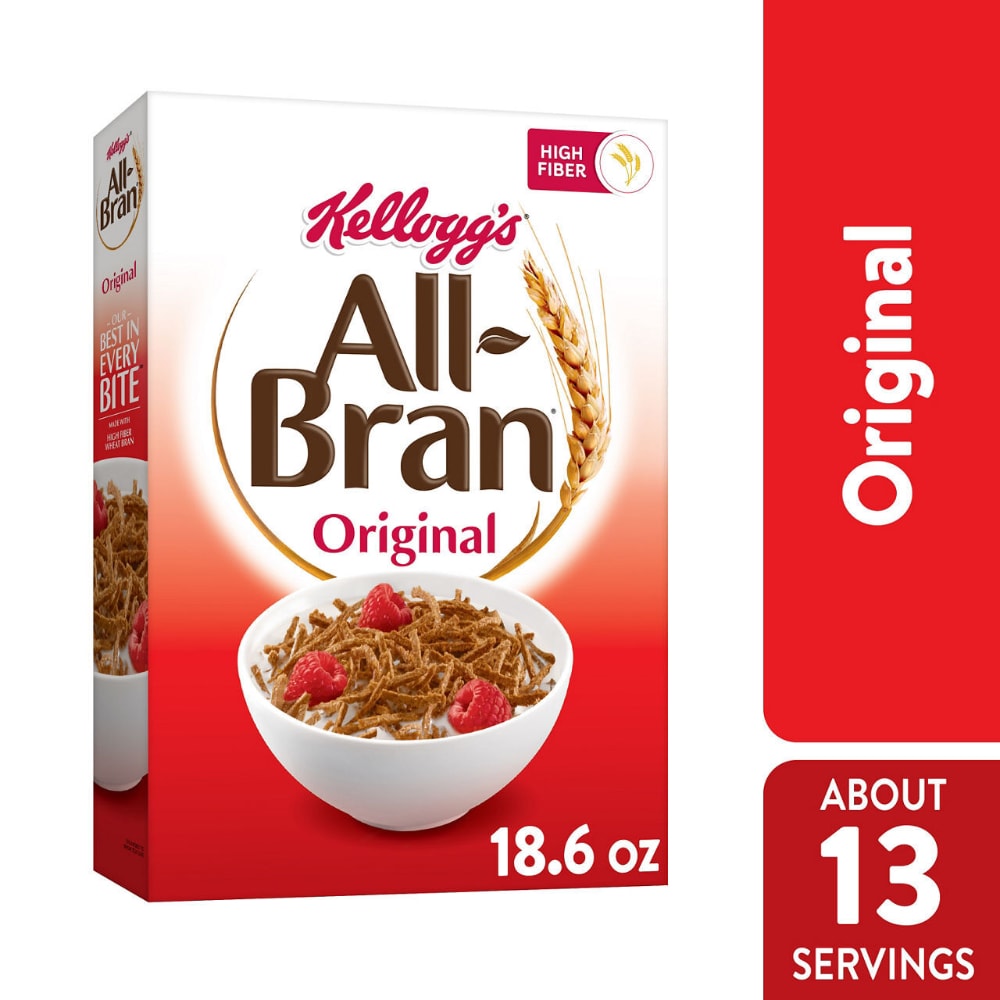



KELLOGG ALL BRAN CEREAL ORIGINAL 44.1LB 1CT
Summary
This cereal contains beneficial ingredients like wheat bran, which is high in fiber and supports digestive health, and is fortified with essential vitamins and minerals. However, it is heavily processed and contains added sugar, which can contribute to metabolic issues if consumed in excess. The high level of processing limits its overall healthiness despite the presence of some nutritious components.
At a glance
Key ingredients 9
Wheat branVery Good
Wheat bran is a high-fiber ingredient that supports digestive health. It is minimally processed and retains essential nutrients. Its high fiber content can aid in maintaining healthy cholesterol levels.
Risks
May cause digestive discomfort in individuals with gluten intolerance or wheat allergies.
Benefits
Rich in dietary fiber, which promotes healthy digestion and may help in weight management. Contains essential nutrients like magnesium and phosphorus.
SugarBad
Refined sugar is associated with increased risk of obesity and metabolic disorders. It is highly processed and lacks nutritional value. Excessive consumption can lead to dental issues and insulin resistance.
Risks
High intake of refined sugar can contribute to obesity, type 2 diabetes, and heart disease.
Malt flavorNeutral
Malt flavor is used to enhance the taste of food products. It is derived from malted barley and is generally considered safe. The processing of malt flavor does not significantly impact its nutritional profile.
Benefits
Provides a distinct flavor that can enhance the palatability of food products.
SaltNeutral
Salt is used as a flavor enhancer and preservative in food products. It is a natural mineral that is essential for various bodily functions. However, excessive intake can lead to health issues such as hypertension.
Risks
High sodium intake is associated with increased risk of hypertension and cardiovascular diseases.
Benefits
Essential for maintaining fluid balance and nerve function in the body.
Reduced ironGood
Reduced iron is added to fortify foods with essential minerals. It helps prevent iron deficiency anemia. The form of iron used is bioavailable and easily absorbed by the body.
Risks
Excessive iron intake can lead to toxicity, especially in individuals with hemochromatosis.
Benefits
Supports the production of hemoglobin and red blood cells, preventing anemia.
Vitamin B1 (thiamin hydrochloride)Good
Vitamin B1 is essential for energy metabolism and nerve function. It is added to foods to prevent deficiencies. Thiamin hydrochloride is a stable form used in food fortification.
Benefits
Supports energy production and proper nerve function.
Calcium pantothenateGood
Calcium pantothenate is a form of vitamin B5 used in food fortification. It plays a role in energy metabolism and the synthesis of coenzyme A. This form is stable and bioavailable.
Benefits
Supports energy metabolism and the synthesis of fatty acids and hormones.
Vitamin B6 (pyridoxine hydrochloride)Good
Vitamin B6 is crucial for protein metabolism and cognitive development. Pyridoxine hydrochloride is a stable form used in supplements and fortification. It helps in the production of neurotransmitters and red blood cells.
Benefits
Supports brain health and aids in the production of neurotransmitters.
Folic acidGood
Folic acid is a synthetic form of vitamin B9 used in food fortification. It is essential for DNA synthesis and cell division. Adequate intake is crucial during pregnancy to prevent neural tube defects.
Risks
Excessive intake can mask vitamin B12 deficiency symptoms.
Benefits
Supports cell division and is crucial for fetal development during pregnancy.
Processing
Ultra-Processed Foods
Get the full breakdown in the Scout app
Scan any product to see lab results, healthy alternatives, and your personalized analysis.
Download on theApp Store