
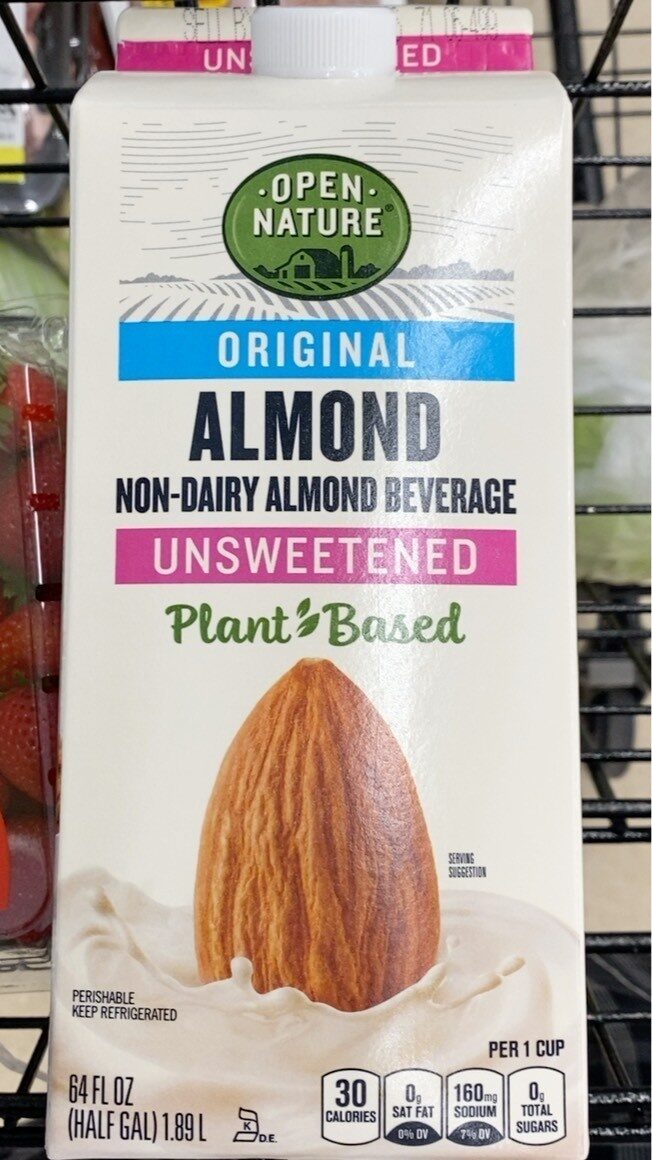
ORIGINAL ALMOND UNSWEETENED ALMONDMILK, ORIGINAL UNSWEETENED
Summary
This almond milk is ultra-processed, which limits its potential score despite having a low calorie and fat content. The presence of additives such as natural flavors and sunflower lecithin, which are processed and raise concerns about ingredient transparency and health impacts, further affects its rating. While it contains beneficial ingredients like almondmilk and calcium carbonate, the overall processing level and use of multiple additives prevent a higher score.
At a glance
Key ingredients 10
AlmondmilkGood
Almondmilk is a plant-based milk alternative that is low in calories and contains no cholesterol. It is often fortified with vitamins and minerals, making it a nutritious option for those avoiding dairy. The use of almonds provides a source of healthy fats and vitamin E.
Benefits
Rich in vitamin E and healthy fats, supporting heart health and providing antioxidant properties.
Calcium CarbonateGood
Calcium carbonate is commonly used to fortify plant-based milks with calcium, an essential mineral for bone health. It helps ensure that non-dairy consumers receive adequate calcium intake. The fortification process is standard in many plant-based beverages.
Risks
Excessive intake may lead to hypercalcemia, but this is unlikely from fortified beverages alone.
Benefits
Provides essential calcium, supporting bone health and preventing deficiencies in non-dairy diets.
Sea SaltGood
Unrefined sea salt — a minimally processed, natural source of sodium and essential trace minerals, and a legitimate whole-food seasoning. Treated as a positive ingredient.
Risks
Excessive sodium intake can lead to hypertension and cardiovascular issues.
Benefits
Contains trace minerals and enhances flavor without significant processing.
Natural FlavorBad
Natural flavors are often used to enhance taste but can be a catch-all term for various additives. The lack of transparency in their composition raises concerns about potential allergens or synthetic additives. They are heavily processed and may not align with clean eating principles.
Risks
Potential allergens or synthetic additives may be present, posing risks for sensitive individuals.
Locust Bean GumNeutral
Locust bean gum is a natural thickening agent derived from carob seeds. It is used to improve texture and stability in food products. It is generally considered safe and is minimally processed.
Benefits
Improves texture and stability in food products without significant processing.
Gellan GumNeutral
Gellan gum is a gelling agent used to stabilize and thicken food products. It is produced through bacterial fermentation and is considered safe for consumption. It is commonly used in plant-based milks to maintain consistency.
Benefits
Helps maintain consistency and texture in plant-based beverages.
Sunflower LecithinBad
Sunflower lecithin is an emulsifier derived from sunflower seeds, often used to improve texture and blend ingredients. Despite being plant-based, it is a processed seed oil product, which may contribute to an imbalance in omega-6 fatty acids. Its processing method raises concerns about potential health impacts.
Risks
High omega-6 content may promote inflammation when consumed in excess.
Vitamin E AcetateNeutral
Vitamin E acetate is a synthetic form of vitamin E used to fortify foods. It provides antioxidant benefits and supports immune function. However, synthetic forms may not be as bioavailable as natural sources.
Benefits
Provides antioxidant benefits and supports immune function.
Vitamin A PalmitateNeutral
Vitamin A palmitate is a synthetic form of vitamin A used to fortify foods. It is essential for vision and immune health. However, excessive intake of synthetic vitamin A can lead to toxicity.
Risks
Excessive intake can lead to vitamin A toxicity, but this is unlikely from fortified foods alone.
Benefits
Supports vision and immune health as an essential nutrient.
Vitamin D2Neutral
Vitamin D2 is a plant-based form of vitamin D used to fortify foods, supporting bone health and calcium absorption. It is less effective than vitamin D3 in raising blood levels of vitamin D. Fortification helps prevent deficiencies in non-dairy consumers.
Benefits
Supports bone health and calcium absorption, preventing deficiencies.
Processing
Ultra-Processed Foods
Get the full breakdown in the Scout app
Scan any product to see lab results, healthy alternatives, and your personalized analysis.
Download on theApp Store