
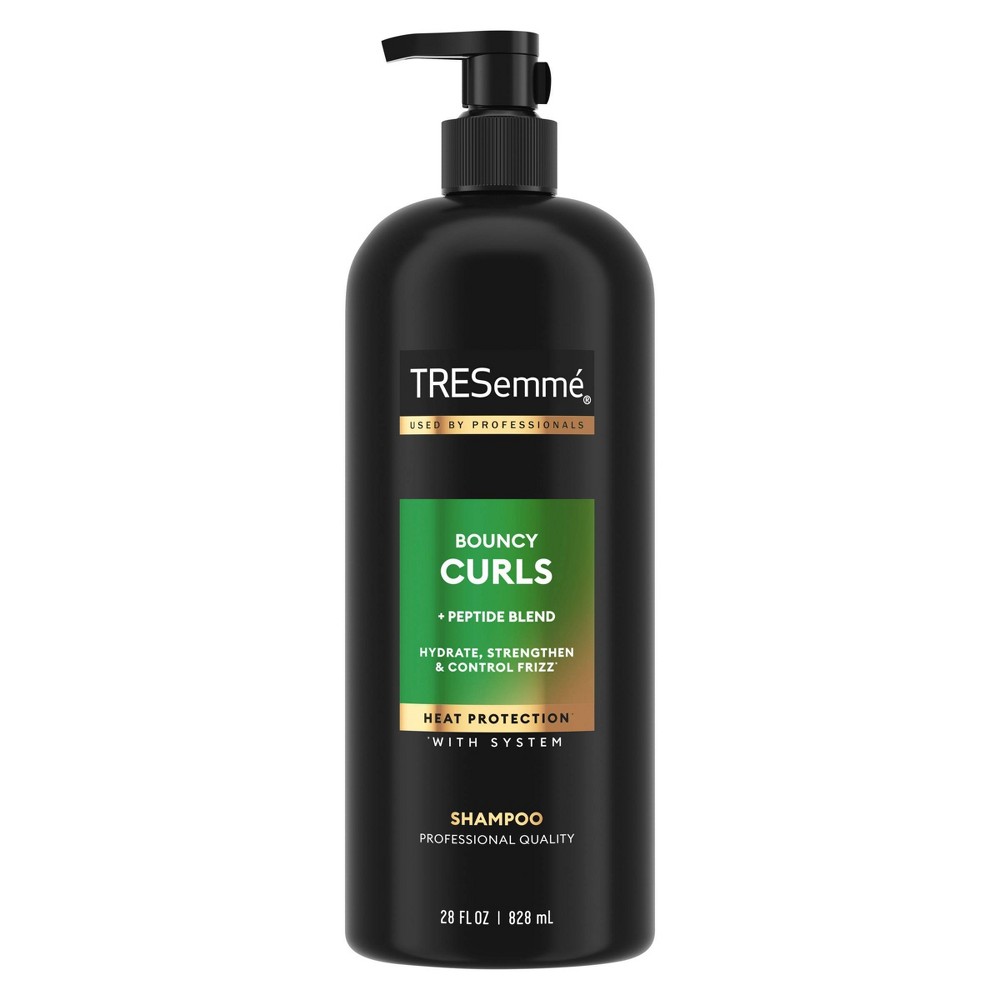
Tresemme Bouncy Curls Shampoo For Curly Hair - 28 fl oz: Moisturizing, Detangling, Contains Vitamin B, Scented
Summary
This shampoo contains beneficial ingredients like glycerin and vitamins that support hair health, but it also includes several potentially harmful substances such as Sodium Laureth Sulfate and DMDM Hydantoin, which can cause irritation and have environmental concerns. The presence of synthetic fragrances and preservatives that release formaldehyde further impacts its safety profile, leading to a moderate processing level and a mixed overall assessment.
At a glance
Key ingredients 27
WaterNeutral
Water is the primary solvent in this shampoo, providing a base for other ingredients. It is typically purified to remove impurities and ensure safety. No significant interactions or concerns are associated with water in this context.
See more about Water →Sodium Laureth SulfateBad
Sodium Laureth Sulfate is a surfactant used for its cleansing properties. It is known to strip natural oils from the scalp, which can lead to dryness and irritation. It is often processed with ethylene oxide, which can leave trace amounts of 1,4-dioxane, a potential carcinogen.
Risks
May cause skin irritation and dryness; potential contamination with 1,4-dioxane.
Benefits
Effective at removing dirt and oil from hair.
Cocamidopropyl BetaineNeutral
Cocamidopropyl Betaine is a mild surfactant derived from coconut oil, used to reduce irritation from harsher surfactants. It is processed through a chemical reaction with dimethylaminopropylamine. It can sometimes cause allergic reactions in sensitive individuals.
Risks
Potential for allergic reactions in sensitive individuals.
Benefits
Helps to create a rich lather and reduce irritation from other surfactants.
Sodium ChlorideNeutral
Sodium Chloride is used to adjust the viscosity of the shampoo. It is a natural mineral commonly used in personal care products. In high concentrations, it can cause dryness or irritation.
Risks
May cause dryness or irritation in high concentrations.
Benefits
Helps to thicken the shampoo for better application.
DimethiconolNeutral
Dimethiconol is a silicone used to provide smoothness and shine to hair. It is synthetically produced and can build up on hair over time. It is generally considered safe but may weigh down fine hair.
Risks
Can cause build-up on hair, potentially weighing it down.
Benefits
Provides smoothness and shine to hair.
ParfumBad
Parfum is a term used for fragrance, which can be a mixture of various chemicals. It is often associated with allergic reactions and sensitivities. The exact composition is usually undisclosed, leading to concerns about potential harmful substances.
Risks
Potential for allergic reactions and sensitivities.
Benefits
Provides a pleasant scent to the product.
GlycerinGood
Glycerin is a humectant that helps to retain moisture in hair. It is derived from natural sources like vegetable oils and is considered safe and effective. It can improve hair hydration and manageability.
Benefits
Helps to retain moisture and improve hair hydration.
CarbomerNeutral
Carbomer is a synthetic polymer used to thicken and stabilize formulations. It is chemically synthesized and considered safe for use in cosmetics. It does not have any significant interactions with other ingredients.
Benefits
Helps to stabilize and thicken the product.
Styrene/Acrylates CopolymerNeutral
Styrene/Acrylates Copolymer is used as a film-forming agent to provide hold and texture. It is synthetically produced and generally considered safe. It can sometimes cause build-up on hair with frequent use.
Risks
Potential for build-up on hair with frequent use.
Benefits
Provides hold and texture to hair.
Guar Hydroxypropyltrimonium ChlorideGood
Guar Hydroxypropyltrimonium Chloride is a conditioning agent derived from guar gum. It is used to improve hair manageability and reduce static. It is considered safe and effective for use in hair care products.
Benefits
Improves hair manageability and reduces static.
Tea-DodecylbenzenesulfonateBad
Tea-Dodecylbenzenesulfonate is a surfactant used for its cleansing properties. It is a synthetic compound that can be harsh on the skin and hair. It may cause irritation or dryness with frequent use.
Risks
May cause irritation or dryness with frequent use.
Benefits
Effective at removing dirt and oil from hair.
Citric AcidGood
Citric Acid is used to adjust the pH of the shampoo, ensuring it is suitable for hair and scalp. It is naturally derived from citrus fruits and is considered safe. It can help to enhance the effectiveness of other ingredients.
Benefits
Helps to adjust pH and enhance ingredient effectiveness.
Glycol DistearateNeutral
Glycol Distearate is used as an opacifying agent to give the shampoo a pearlescent appearance. It is synthetically produced and generally considered safe. It does not have any significant interactions with other ingredients.
Benefits
Provides a pearlescent appearance to the product.
Thiamine HclGood
Thiamine Hcl, also known as Vitamin B1, is included for its potential benefits to hair health. It is a water-soluble vitamin that supports cellular energy production. It is considered safe and beneficial for hair vitality.
Benefits
Supports cellular energy production and hair vitality.
Ascorbic AcidGood
Ascorbic Acid, or Vitamin C, is an antioxidant that helps protect hair from oxidative stress. It is naturally derived and supports collagen production. It is beneficial for maintaining healthy hair and scalp.
Benefits
Protects hair from oxidative stress and supports collagen production.
Tocopheryl AcetateGood
Tocopheryl Acetate, a form of Vitamin E, is used for its antioxidant properties. It helps to protect hair from environmental damage and supports scalp health. It is considered safe and beneficial for hair care.
Benefits
Protects hair from environmental damage and supports scalp health.
PanthenolGood
Panthenol, or Provitamin B5, is used for its moisturizing and conditioning properties. It penetrates the hair shaft to improve moisture retention and elasticity. It is considered safe and effective for enhancing hair health.
Benefits
Improves moisture retention and elasticity of hair.
NiacinamideGood
Niacinamide, a form of Vitamin B3, is included for its potential benefits to scalp health. It supports the skin barrier and improves moisture retention. It is considered safe and beneficial for maintaining a healthy scalp.
Benefits
Supports skin barrier and improves moisture retention.
BiotinGood
Biotin, or Vitamin B7, is known for its role in supporting hair health and growth. It is a water-soluble vitamin that strengthens hair and improves its resilience. It is considered safe and beneficial for hair care.
Benefits
Strengthens hair and supports hair growth.
Cocamide MeaBad
Cocamide Mea is a surfactant and foam booster derived from coconut oil. It is processed with monoethanolamine, which can lead to the formation of nitrosamines, potential carcinogens. It may cause skin irritation in sensitive individuals.
Risks
Potential formation of nitrosamines and skin irritation.
Benefits
Enhances foam and cleansing properties.
Tetrasodium EDTABad
Tetrasodium EDTA is a chelating agent used to improve stability and performance. It is synthetically produced and can enhance the penetration of other chemicals. It may cause irritation and is not biodegradable, raising environmental concerns.
Risks
May cause irritation and environmental concerns due to non-biodegradability.
Benefits
Improves stability and performance of the product.
DMDM HydantoinBad
DMDM Hydantoin is a preservative that releases formaldehyde to prevent microbial growth. It is synthetically produced and can cause skin irritation and allergic reactions. Concerns exist about its potential to release formaldehyde, a known carcinogen.
Risks
Potential to release formaldehyde, causing irritation and allergic reactions.
Benefits
Prevents microbial growth and extends product shelf life.
PEG-45MNeutral
PEG-45M is a polyethylene glycol used as a thickener and stabilizer. It is synthetically produced and generally considered safe. It does not have any significant interactions with other ingredients.
Benefits
Helps to thicken and stabilize the product.
PPG-9Neutral
PPG-9 is a synthetic polymer used as a skin conditioning agent. It is generally considered safe for use in cosmetics. It does not have any significant interactions with other ingredients.
Benefits
Acts as a skin conditioning agent.
Polysorbate 20Neutral
Polysorbate 20 is an emulsifier used to stabilize formulations. It is derived from sorbitol and ethylene oxide, and is generally considered safe. It helps to blend oil and water-based ingredients effectively.
Benefits
Stabilizes formulations by blending oil and water-based ingredients.
MicaNeutral
Mica is a mineral used to add shimmer and shine to cosmetic products. It is naturally sourced and considered safe for use. It does not have any significant interactions with other ingredients.
Benefits
Adds shimmer and shine to the product.
Ci 77891Neutral
CI 77891, also known as Titanium Dioxide, is used as a colorant and opacifying agent. It is naturally occurring and considered safe for use in cosmetics. It provides a white pigment to the product.
Benefits
Provides a white pigment and opacifying effect.
Processing
Processed Foods
Get the full breakdown in the Scout app
Scan any product to see lab results, healthy alternatives, and your personalized analysis.
Download on theApp Store