
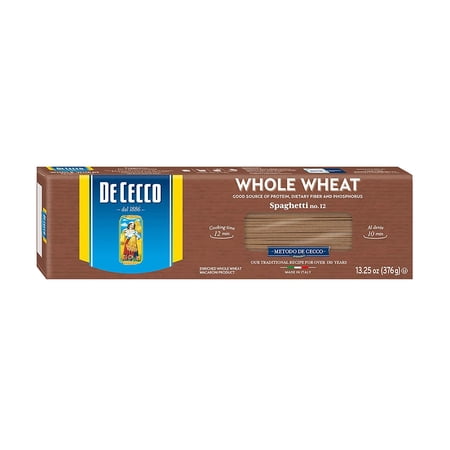



De Cecco 100% Whole Wheat Spaghetti No.12 Pasta 13.25 oz
Summary
This whole wheat spaghetti is minimally processed and primarily made from whole semolina, which retains essential nutrients and provides a good source of dietary fiber. The presence of ferrous lactate as an additive is a minor concern, but it does not significantly detract from the overall nutritional quality of the product. The short ingredient list and high fiber content contribute positively to its healthiness.
At a glance
Key ingredients 7
Whole semolina from wheatGood
Whole semolina from wheat is a minimally processed ingredient that retains the bran and germ, providing essential nutrients. It is a good source of dietary fiber, which supports digestive health and helps maintain stable blood sugar levels. Compared to refined wheat, it offers more vitamins and minerals, making it a healthier choice.
Risks
Contains gluten, which may cause adverse reactions in individuals with celiac disease or gluten sensitivity.
Benefits
Rich in fiber and essential nutrients, supporting digestive health and providing sustained energy.
NiacinNeutral
Niacin, also known as vitamin B3, is added to support metabolic processes and energy production. It is commonly used in fortified foods to prevent deficiencies. While beneficial in adequate amounts, excessive intake can lead to adverse effects.
Risks
High doses may cause skin flushing and liver damage.
Benefits
Supports energy metabolism and helps maintain healthy skin and nerves.
Ferrous lactateNeutral
Ferrous lactate is an iron supplement used to prevent iron deficiency anemia. It is a bioavailable form of iron that is often added to fortified foods. While it helps in maintaining adequate iron levels, excessive consumption can lead to toxicity.
Risks
Excessive intake can cause gastrointestinal distress and iron overload.
Benefits
Helps prevent iron deficiency anemia by providing a bioavailable source of iron.
Thiamine mononitrateNeutral
Thiamine mononitrate is a synthetic form of vitamin B1 used to fortify foods and prevent deficiencies. It plays a crucial role in energy metabolism and nerve function. While beneficial in preventing deficiency, it is generally neutral in terms of overall health impact.
Benefits
Essential for energy metabolism and proper nerve function.
RiboflavinNeutral
Riboflavin, or vitamin B2, is added to foods to support energy production and cellular function. It is water-soluble and generally considered safe, with no known toxicity at normal intake levels. It is often used in fortified foods to ensure adequate intake.
Benefits
Supports energy production and cellular function.
Folic acidNeutral
Folic acid is a synthetic form of vitamin B9 used to fortify foods and prevent neural tube defects during pregnancy. It is essential for DNA synthesis and cell division. While beneficial for pregnant women, excessive intake can mask vitamin B12 deficiency.
Risks
Excessive intake can mask vitamin B12 deficiency symptoms.
Benefits
Essential for DNA synthesis and preventing neural tube defects in pregnancy.
Ferrous lactate (E585)Bad
Ferrous lactate, also known as E585, is used as an iron supplement in foods. While it helps prevent iron deficiency, it is considered an additive and may not be necessary in a balanced diet. Overconsumption can lead to iron overload and associated health issues.
Risks
Potential for iron overload and gastrointestinal issues if consumed in excess.
Benefits
Provides a bioavailable source of iron to prevent deficiency.
Processing
Unprocessed or Minimally Processed Foods
Get the full breakdown in the Scout app
Scan any product to see lab results, healthy alternatives, and your personalized analysis.
Download on theApp Store