
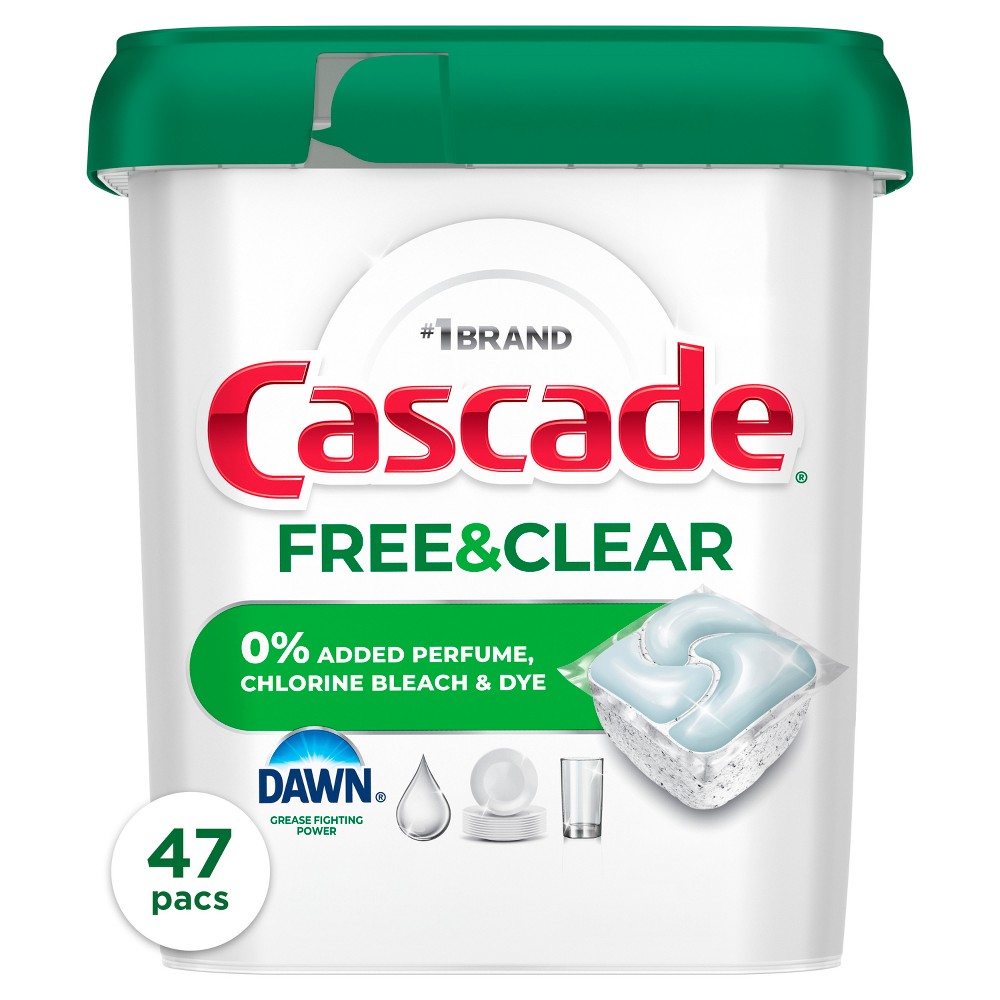

Cascade ActionPacs Free & Clear Dishwater Detergents - Unscented - 47ct
Analysis updated August 2026 · How Scout scores
At a glance
Summary
This dishwashing detergent contains beneficial enzymes like amylase and subtilisin, which are biodegradable and effective in cleaning. The product is unscented, which avoids the use of synthetic fragrances, a positive aspect for safety and environmental impact. However, the presence of synthetic compounds such as copolymers and ethoxylated alcohols, while common in cleaning products, slightly reduces its overall score due to potential environmental concerns.
Key ingredients 16
Amylase EnzymeGood
Amylase is an enzyme that helps break down starches into sugars, making it effective in cleaning. It is biodegradable and considered safe for use in cleaning products. Enzymes like amylase are derived from natural sources and are environmentally friendly.
Risks
There are minimal risks associated with amylase, though it can cause irritation if inhaled in powdered form.
Benefits
Amylase is effective in removing food residues and is biodegradable, making it an environmentally friendly choice.
SubtilisinGood
Subtilisin is an enzyme used to break down proteins, making it effective in cleaning. It is biodegradable and considered safe for use in cleaning products. Enzymes like subtilisin are derived from natural sources and are environmentally friendly.
Risks
There are minimal risks associated with subtilisin, though it can cause irritation if inhaled in powdered form.
Benefits
Subtilisin is effective in removing protein-based stains and is biodegradable, making it an environmentally friendly choice.
BenzotriazoleNeutral
Benzotriazole is used as a corrosion inhibitor in cleaning products. It helps protect metal surfaces from tarnishing. While effective, it is a synthetic compound with limited biodegradability.
Risks
Benzotriazole can be harmful to aquatic life if released into waterways.
Benefits
It effectively prevents corrosion, extending the life of metal items.
Copolymer of Acrylic and Sulphonic AcidsNeutral
This copolymer acts as a dispersing agent, preventing redeposition of soil on surfaces. It is a synthetic polymer commonly used in cleaning products. While effective, it is not biodegradable.
Risks
Synthetic polymers can contribute to environmental pollution if not properly managed.
Benefits
It enhances cleaning efficiency by preventing soil redeposition.
Dipropylene GlycolNeutral
Dipropylene glycol is a solvent used to dissolve other ingredients in cleaning products. It is generally considered safe and has low toxicity. It is a synthetic compound with moderate biodegradability.
Risks
In high concentrations, it can cause skin and eye irritation.
Benefits
It helps in dissolving other ingredients, enhancing the product's effectiveness.
GlycerinNeutral
Standard formulation ingredient — neither beneficial nor harmful at typical use.
Risks
There are minimal risks associated with glycerin, though it can cause irritation in sensitive individuals.
Benefits
Glycerin is moisturizing and biodegradable, making it a safe and environmentally friendly choice.
Isotridecanol EthoxylatedNeutral
Isotridecanol ethoxylated is a nonionic surfactant used for its cleaning properties. It is effective in removing grease and dirt. However, it is a synthetic compound with limited biodegradability.
Risks
It can cause skin and eye irritation in concentrated forms.
Benefits
It is effective in cleaning and removing grease.
PEG/PPG/Propylheptyl EtherNeutral
This compound is used as a surfactant and emulsifier in cleaning products. It helps in mixing water and oil-based ingredients. It is a synthetic compound with moderate biodegradability.
Risks
It can cause skin irritation in sensitive individuals.
Benefits
It enhances the cleaning power by emulsifying oils and dirt.
Polyvinyl Alcohol PolymerNeutral
Polyvinyl alcohol is used as a film-forming agent in cleaning products. It is water-soluble and helps in the controlled release of active ingredients. It is a synthetic polymer with limited biodegradability.
Risks
It can contribute to environmental pollution if not properly managed.
Benefits
It aids in the controlled release of cleaning agents, enhancing product performance.
Sodium CarbonateNeutral
Sodium carbonate, also known as washing soda, is used as a water softener in cleaning products. It helps in removing stains and grease. It is a naturally occurring compound and is generally considered safe.
Risks
In high concentrations, it can cause skin and eye irritation.
Benefits
It is effective in softening water and enhancing cleaning performance.
Sodium Carbonate PeroxideNeutral
Sodium carbonate peroxide is used as a bleaching agent in cleaning products. It releases hydrogen peroxide, which helps in stain removal. It is a synthetic compound with moderate biodegradability.
Risks
It can cause skin and eye irritation in concentrated forms.
Benefits
It is effective in removing stains and brightening surfaces.
Sodium SulfateNeutral
Sodium sulfate is used as a filler and thickening agent in cleaning products. It is a naturally occurring compound and is generally considered safe. It is used to improve the texture and consistency of the product.
Risks
In high concentrations, it can cause skin and eye irritation.
Benefits
It helps in improving the texture and consistency of cleaning products.
TolyltriazoleNeutral
Tolyltriazole is used as a corrosion inhibitor in cleaning products. It helps protect metal surfaces from tarnishing. While effective, it is a synthetic compound with limited biodegradability.
Risks
Tolyltriazole can be harmful to aquatic life if released into waterways.
Benefits
It effectively prevents corrosion, extending the life of metal items.
Transition Metal CatalystNeutral
Transition metal catalysts are used to enhance the effectiveness of cleaning agents. They help in accelerating chemical reactions. These catalysts are synthetic and have limited biodegradability.
Risks
They can be toxic to aquatic life if not properly managed.
Benefits
They enhance the cleaning power by accelerating chemical reactions.
Trisodium Dicarboxymethyl AlaninateNeutral
This compound is used as a chelating agent in cleaning products. It helps in binding metal ions, improving cleaning efficiency. It is a synthetic compound with moderate biodegradability.
Risks
It can cause skin and eye irritation in concentrated forms.
Benefits
It enhances cleaning efficiency by binding metal ions.
WaterNeutral
Water is used as a solvent and carrier for other ingredients in cleaning products. It is essential for dissolving and distributing active ingredients. Water is a natural and safe component.
Risks
There are no significant risks associated with water in cleaning products.
Benefits
It is a safe and natural solvent that helps in distributing active ingredients.
Get the full breakdown in the Scout appTake Scout shopping
Scan any product to see lab results, healthy alternatives, and your personalized analysis.
Download on theApp Store GET IT ONGoogle PlayAmazon pricing & content
Amazon price as of . Product prices and availability are accurate as of the date/time indicated and are subject to change. Any price and availability information displayed on Amazon.com at the time of purchase will apply to the purchase of this product.
CERTAIN CONTENT THAT APPEARS ON THIS SITE COMES FROM AMAZON. THIS CONTENT IS PROVIDED “AS IS” AND IS SUBJECT TO CHANGE OR REMOVAL AT ANY TIME.