
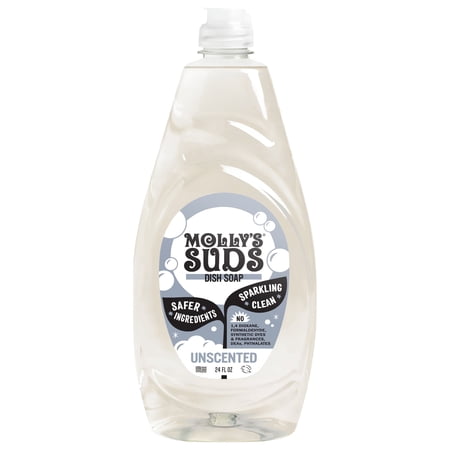

Molly s Suds Liquid Dish Soap | Simple Ingredients | Extra Scrubbing Power | Fragrance Free 24 oz
Analysis updated August 2026 · How Scout scores
At a glance
Summary
This dish soap features a blend of mild, plant-derived surfactants like lauryl glucoside, which are gentle on the skin and environmentally friendly. The inclusion of aloe vera and citric acid further enhances its safety and effectiveness, while the fragrance-free formula minimizes potential irritants. Despite being processed, the product avoids harsh chemicals and synthetic fragrances, making it a safer choice for indoor use.
Key ingredients 10
Lauryl GlucosideGood
Lauryl Glucoside is a mild, plant-derived surfactant. It is known for being gentle on the skin while effectively cleaning. It is biodegradable and environmentally friendly.
Risks
There are minimal risks associated with Lauryl Glucoside, though it may cause mild irritation in sensitive individuals.
Benefits
It provides effective cleaning power without the harshness of synthetic surfactants.
Aloe Barbadensis Leaf JuiceGood
Aloe Barbadensis Leaf Juice is known for its soothing and moisturizing properties. It is derived from the aloe plant and is often used in personal care products. It is beneficial for skin health.
Risks
There are no significant risks associated with aloe juice in cleaning products.
Benefits
It provides a soothing effect and can help to prevent skin irritation.
WaterNeutral
Water is a universal solvent used to dissolve other ingredients. It is essential for the formulation of liquid products. It does not contribute to cleaning efficacy directly.
Risks
There are no known risks associated with water in cleaning products.
Benefits
Water helps to evenly distribute other ingredients and is necessary for the product's liquid form.
Cocamidopropylamine OxideNeutral
Cocamidopropylamine Oxide is a foam booster and stabilizer. It is derived from coconut oil and is used to enhance the cleaning power of formulations. It is generally considered safe for use in cleaning products.
Risks
It may cause mild skin irritation in some individuals.
Benefits
It helps to improve the texture and effectiveness of the cleaning product.
Cocamidopropyl HydroxysultaineNeutral
Cocamidopropyl Hydroxysultaine is a surfactant and foam booster. It is derived from coconut oil and is used to enhance the cleaning power of formulations. It is considered mild and safe for use.
Risks
There is a low risk of skin irritation, particularly in sensitive individuals.
Benefits
It contributes to the product's foaming and cleaning abilities without being overly harsh.
Lauryl Lactyl LactateNeutral
Lauryl Lactyl Lactate is an emulsifier and surfactant. It helps to blend oil and water-based ingredients. It is derived from natural sources and is considered safe for use.
Risks
There are minimal risks associated with this ingredient.
Benefits
It aids in the stability and consistency of the product.
Citric AcidNeutral
Common acidulant and preservative — safe at typical use levels, neither beneficial nor harmful.
Risks
In high concentrations, it may cause mild skin irritation.
Benefits
It helps to break down mineral deposits and improve cleaning efficacy.
Tetrasodium Glutamate DiacetateNeutral
Tetrasodium Glutamate Diacetate is a chelating agent that helps to stabilize the product. It binds to metal ions, preventing them from interfering with the cleaning process. It is considered safe for use in cleaning products.
Risks
There are minimal risks associated with this ingredient.
Benefits
It enhances the effectiveness of the cleaning agents by preventing metal ion interference.
PropanediolNeutral
Propanediol is a solvent and humectant used to improve texture and moisture retention. It is derived from corn sugar and is considered safe for use. It helps to maintain the product's consistency.
Risks
There is a low risk of skin irritation, particularly in sensitive individuals.
Benefits
It helps to keep the product stable and enhances its moisturizing properties.
HydroxyacetophenoneNeutral
Hydroxyacetophenone is an antioxidant and preservative. It helps to protect the product from degradation and extend its shelf life. It is considered safe for use in cleaning products.
Risks
There are minimal risks associated with this ingredient.
Benefits
It helps to maintain the product's quality and effectiveness over time.
Get the full breakdown in the Scout appTake Scout shopping
Scan any product to see lab results, healthy alternatives, and your personalized analysis.
Download on theApp Store GET IT ONGoogle PlayAmazon pricing & content
Amazon price as of . Product prices and availability are accurate as of the date/time indicated and are subject to change. Any price and availability information displayed on Amazon.com at the time of purchase will apply to the purchase of this product.
CERTAIN CONTENT THAT APPEARS ON THIS SITE COMES FROM AMAZON. THIS CONTENT IS PROVIDED “AS IS” AND IS SUBJECT TO CHANGE OR REMOVAL AT ANY TIME.