
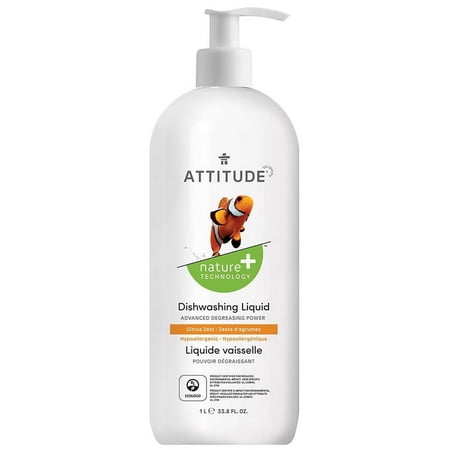

Attitude Citrus Zest Dishwashing Liquid 33.8 fl. oz
Analysis updated July 2026 · How Scout scores
At a glance
Summary
This dishwashing liquid contains several mild, plant-derived surfactants like lauryl glucoside and caprylyl glucoside, which are gentle and biodegradable, contributing positively to its environmental profile. However, the presence of synthetic fragrance, which can include undisclosed and potentially irritating compounds, detracts from its overall safety and eco-friendliness. The product is processed, which limits its score despite the inclusion of beneficial ingredients like citric acid and glycerin.
Key ingredients 16
Lauryl GlucosideGood
Lauryl glucoside is a mild, plant-derived surfactant. It is known for being gentle on the skin and biodegradable. It is often used in eco-friendly cleaning products.
Risks
Minimal risk of irritation compared to harsher surfactants.
Benefits
Biodegradable and gentle, making it suitable for sensitive skin.
Myristyl GlucosideGood
Myristyl glucoside is a non-ionic surfactant derived from natural sources. It is known for its mildness and ability to enhance the foaming properties of formulations. It is often used in gentle cleansing products.
Risks
Generally considered safe with low irritation potential.
Benefits
Enhances foaming and is gentle on the skin, making it suitable for sensitive applications.
Caprylyl GlucosideGood
Caprylyl glucoside is a mild, non-ionic surfactant derived from glucose and fatty alcohols. It is known for its excellent cleansing properties and biodegradability. It is often used in natural and eco-friendly products.
Risks
Low risk of irritation, generally considered safe.
Benefits
Biodegradable and effective at cleansing, suitable for sensitive skin.
Camellia Sinensis (Tea) Leaf ExtractGood
Camellia sinensis leaf extract is derived from tea leaves and is rich in antioxidants. It is used for its soothing and anti-inflammatory properties. It is often included in personal care products for its skin benefits.
Risks
Generally considered safe with low irritation potential.
Benefits
Rich in antioxidants, provides soothing and anti-inflammatory benefits.
Sodium Coco-SulfateNeutral
Sodium coco-sulfate is a surfactant derived from coconut oil. It is often used as a milder alternative to sodium lauryl sulfate. While it is less irritating, it can still cause dryness in sensitive skin.
Risks
Potential skin irritation for sensitive individuals.
Benefits
Derived from coconut oil, offering a more natural alternative to harsher surfactants.
Citric AcidNeutral
Common acidulant and preservative — safe at typical use levels, neither beneficial nor harmful.
Risks
Can cause mild irritation if used in high concentrations.
Benefits
Helps to adjust pH and improve cleaning efficacy by breaking down mineral deposits.
Sodium GluconateNeutral
Sodium gluconate is a chelating agent that helps to stabilize formulations. It is derived from glucose and is biodegradable. It is often used to improve the stability and efficacy of cleaning products.
Risks
Generally considered safe with low irritation potential.
Benefits
Improves product stability and efficacy, biodegradable.
GlycerinNeutral
Standard formulation ingredient — neither beneficial nor harmful at typical use.
Risks
Generally considered safe with low irritation potential.
Benefits
Moisturizes and improves skin feel, derived from natural sources.
Sodium HydroxideNeutral
Sodium hydroxide is used to adjust the pH of formulations. It is a strong base and must be used carefully to avoid irritation. It is commonly used in cleaning products for its ability to saponify fats.
Risks
Can cause irritation if used in high concentrations.
Benefits
Effective at adjusting pH and saponifying fats in cleaning formulations.
Terpineol AcetateNeutral
Terpineol acetate is a fragrance ingredient derived from natural sources. It is used to impart a pleasant scent to products. It is generally considered safe when used in low concentrations.
Risks
Potential for irritation or allergic reactions in sensitive individuals.
Benefits
Provides a pleasant fragrance, derived from natural sources.
TerpineolNeutral
Terpineol is a naturally occurring alcohol used as a fragrance ingredient. It is known for its pleasant scent and is used in various personal care and cleaning products. It is generally considered safe when used appropriately.
Risks
Potential for irritation or allergic reactions in sensitive individuals.
Benefits
Provides a pleasant fragrance, naturally occurring.
TetrahydrolinaloolNeutral
Tetrahydrolinalool is a fragrance ingredient used to impart a floral scent. It is a synthetic compound but is generally considered safe when used in low concentrations. It is commonly used in personal care and cleaning products.
Risks
Potential for irritation or allergic reactions in sensitive individuals.
Benefits
Provides a floral fragrance, enhancing product appeal.
Triethyl CitrateNeutral
Triethyl citrate is used as a fragrance ingredient and solvent. It is derived from citric acid and is known for its ability to stabilize fragrances. It is generally considered safe when used in appropriate concentrations.
Risks
Potential for mild irritation in sensitive individuals.
Benefits
Stabilizes fragrances, enhancing product scent profile.
Sodium BenzoateBad
Synthetic preservative that can form benzene in the presence of vitamin C.
Risks
Potential for skin irritation in sensitive individuals.
Benefits
Effective at preventing microbial growth, extending product shelf life.
Potassium SorbateBad
Synthetic preservative — flagged in daily-use products.
Risks
Potential for mild irritation in sensitive individuals.
Benefits
Effective at preventing mold and yeast growth, extending product shelf life.
fragrance (Parfum)Very Bad
Fragrance (parfum) is a term used to denote a mixture of various scent chemicals. It can include synthetic compounds that may cause allergic reactions or irritation. The exact composition is often undisclosed, leading to potential safety concerns.
Risks
Potential for allergic reactions and skin irritation due to undisclosed synthetic chemicals.
Benefits
Provides a pleasant scent, enhancing product appeal.
Get the full breakdown in the Scout appTake Scout shopping
Scan any product to see lab results, healthy alternatives, and your personalized analysis.
Download on theApp Store GET IT ONGoogle Play