
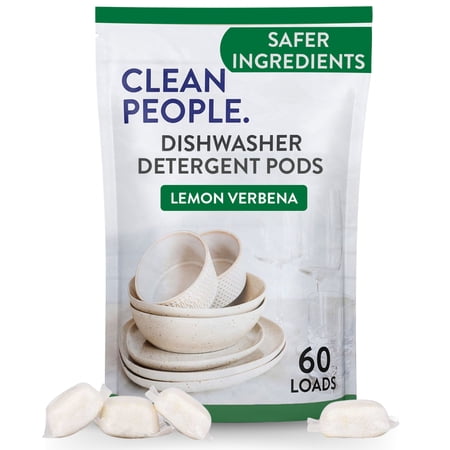


Clean People Dishwasher Detergent Pods - Lemon 60 Pack - No Residue Sparkling Clean
Analysis updated August 2026 · How Scout scores
At a glance
Summary
This dishwasher detergent features a range of environmentally friendly and biodegradable ingredients, such as alkyl polyglucoside, sodium citrate dihydrate, and sodium percarbonate, which contribute to its effectiveness and eco-friendliness. The use of natural enzymes like protease and amylase further enhances its cleaning power without relying on harsh chemicals. Although it contains a natural fragrance, the overall formulation is clean and plant-based, making it a strong choice for those seeking a safer cleaning product.
Key ingredients 12
Alkyl PolyglucosideGood
Alkyl polyglucoside is a plant-derived surfactant known for its mildness and biodegradability. It is effective in cleaning without being harsh on the skin. This makes it a preferred choice for eco-friendly cleaning products.
Risks
Generally considered safe with minimal risks.
Benefits
Mild, biodegradable, and effective plant-derived surfactant.
Sodium Citrate DihydrateGood
Sodium citrate dihydrate is used as a water softener and pH regulator in cleaning products. It is biodegradable and considered safe for use. It helps to enhance the effectiveness of detergents by binding with metal ions.
Risks
Minimal risks associated with its use.
Benefits
Biodegradable and enhances detergent effectiveness by softening water.
Sodium PercarbonateGood
Sodium percarbonate is an oxygen-based bleaching agent that is effective in stain removal. It breaks down into water, oxygen, and soda ash, making it environmentally friendly. It is a safer alternative to chlorine bleach.
Risks
Can cause irritation if inhaled or in contact with skin.
Benefits
Environmentally friendly bleaching agent that effectively removes stains.
ProteaseGood
Protease is an enzyme that breaks down protein-based stains, making it effective in cleaning. It is biodegradable and derived from natural sources. This makes it a valuable ingredient in eco-friendly cleaning products.
Risks
Generally considered safe with minimal risks.
Benefits
Biodegradable enzyme effective in removing protein-based stains.
AmylaseGood
Amylase is an enzyme that breaks down starches, enhancing the cleaning power of detergents. It is biodegradable and derived from natural sources. This makes it a preferred choice for environmentally friendly cleaning products.
Risks
Generally considered safe with minimal risks.
Benefits
Biodegradable enzyme effective in breaking down starches.
Sodium CarbonateNeutral
Sodium carbonate is a common cleaning agent used to soften water and enhance the effectiveness of detergents. It is generally considered safe for use in cleaning products. However, it can be irritating to the skin and eyes in concentrated forms.
Risks
Potential skin and eye irritation if not handled properly.
Benefits
Helps to soften water and improve cleaning efficiency.
Sodium SulfateNeutral
Sodium sulfate is used as a filler in powdered detergents and helps to improve the texture of the product. It is considered safe and non-toxic in cleaning applications. However, it does not contribute to the cleaning power of the detergent.
Risks
Minimal risks associated with its use in cleaning products.
Benefits
Acts as a filler to improve product texture.
Sodium MetasilicateNeutral
Sodium metasilicate is used as a builder in detergents to enhance cleaning performance. It is effective in removing grease and stains. However, it can be corrosive and irritating to the skin and eyes.
Risks
Corrosive and can cause skin and eye irritation.
Benefits
Enhances cleaning performance by removing grease and stains.
TAEDNeutral
TAED (tetraacetylethylenediamine) is used as a bleach activator in detergents. It enhances the performance of oxygen-based bleaches at lower temperatures. It is considered safe for use in cleaning products.
Risks
Generally considered safe with minimal risks.
Benefits
Enhances bleach performance at lower temperatures.
Itaconic Acid, Sodium SaltNeutral
Itaconic acid, sodium salt is used as a builder in detergents to improve cleaning efficiency. It is biodegradable and considered safe for use. It helps to prevent redeposition of dirt on fabrics.
Risks
Minimal risks associated with its use.
Benefits
Biodegradable and improves cleaning efficiency.
Natural Lemon Verbena FragranceNeutral
Natural lemon verbena fragrance is used to impart a pleasant scent to cleaning products. It is derived from natural sources and is generally considered safe. However, fragrances can sometimes cause allergic reactions in sensitive individuals.
Risks
Potential for allergic reactions in sensitive individuals.
Benefits
Provides a pleasant natural scent.
Polyvinyl AlcoholNeutral
Polyvinyl alcohol is used as a film-forming agent in detergent pods. It is water-soluble and considered safe for use in cleaning products. However, it is a synthetic polymer and not biodegradable.
Risks
Not biodegradable, but considered safe for use.
Benefits
Water-soluble film-forming agent used in detergent pods.
Processing
Processed Foods
Get the full breakdown in the Scout appTake Scout shopping
Scan any product to see lab results, healthy alternatives, and your personalized analysis.
Download on theApp Store GET IT ONGoogle PlayAmazon pricing & content
Amazon price as of . Product prices and availability are accurate as of the date/time indicated and are subject to change. Any price and availability information displayed on Amazon.com at the time of purchase will apply to the purchase of this product.
CERTAIN CONTENT THAT APPEARS ON THIS SITE COMES FROM AMAZON. THIS CONTENT IS PROVIDED “AS IS” AND IS SUBJECT TO CHANGE OR REMOVAL AT ANY TIME.