
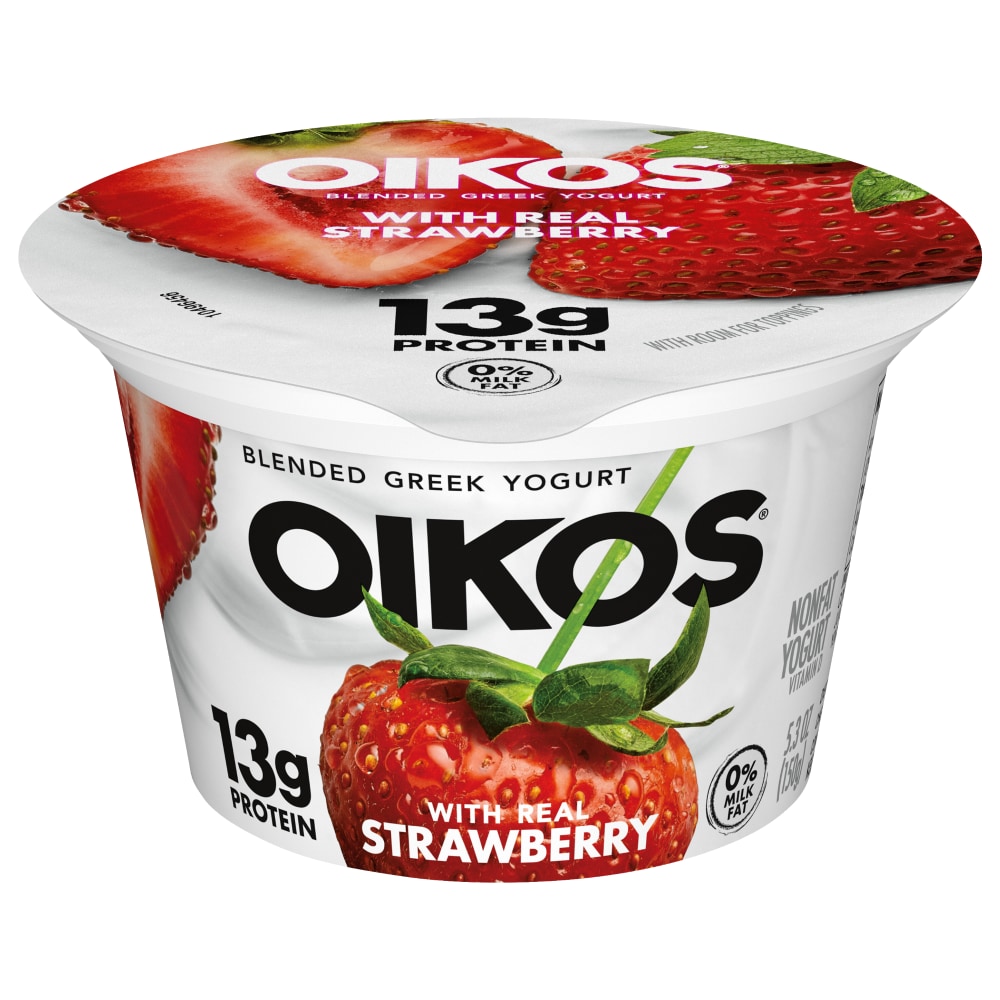





Oikos Greek Yogurt with Real Strawberry
OikosAnalysis updated August 2026 · How Scout scores
At a glance
Summary
This Greek yogurt contains beneficial ingredients such as cultured non-fat milk, strawberries, and probiotics, which contribute to its nutritional value. However, the presence of added cane sugar and natural flavors, along with its classification as an ultra-processed product, limits its healthiness. Despite having good macros, the processing level and added sugar prevent it from scoring higher.
Key ingredients 10
Cultured non fat milkGood
Cultured non fat milk is a source of protein and calcium, essential for bone health. The fermentation process enhances digestibility and provides probiotics beneficial for gut health. It is a minimally processed ingredient with no added sugars or fats.
Benefits
Provides high-quality protein and calcium, supporting bone health and muscle maintenance. Contains probiotics that may improve gut health.
StrawberriesGood
Strawberries are rich in vitamins, antioxidants, and fiber, contributing to overall health. They provide natural sweetness and flavor without the need for artificial additives. As a whole fruit, they are minimally processed and retain most of their nutritional value.
Benefits
Rich in vitamin C and antioxidants, which support immune function and reduce oxidative stress. The fiber content aids in digestion and promotes satiety.
Vitamin D3Good
Vitamin D3 is essential for calcium absorption and bone health. It is often added to dairy products to enhance nutritional value. It supports immune function and may have mood-regulating properties.
Benefits
Supports bone health and immune function, and may improve mood and energy levels.
Yogurt culturesGood
Yogurt cultures are beneficial bacteria that ferment milk, producing probiotics. They improve gut health and enhance the digestibility of lactose. These cultures are essential for the yogurt-making process and contribute to the product's health benefits.
Benefits
Promotes gut health by providing beneficial probiotics that support digestion and immune function.
L. thermophilus and L. bulgaricusGood
These are specific strains of probiotics used in yogurt fermentation. They enhance the probiotic content of the yogurt, supporting digestive health. Their presence is crucial for the characteristic taste and texture of yogurt.
Benefits
Supports digestive health and may improve lactose digestion for those with lactose intolerance.
WaterNeutral
Water is used as a solvent and to adjust the consistency of the product. It is a neutral ingredient with no direct nutritional impact. Its presence is essential for the texture and hydration of the product.
See more about Water →PectinNeutral
Pectin is a natural thickening agent derived from fruits, used to improve texture. It is minimally processed and does not significantly alter the nutritional profile of the product. It is commonly used in small amounts and is generally recognized as safe.
Benefits
May provide a small amount of dietary fiber, contributing to digestive health.
Fruit and vegetable juice concentrateNeutral
Used primarily for coloring, this ingredient is derived from natural sources. It is minimally processed compared to artificial colors. It does not significantly impact the nutritional profile of the product.
Benefits
Provides natural color without the use of synthetic dyes.
Cane sugarBad
Cane sugar is a refined sugar that can contribute to increased calorie intake and potential weight gain. It lacks nutritional benefits and can lead to blood sugar spikes. Excessive consumption is linked to various health issues, including metabolic syndrome.
Risks
High intake of refined sugars can lead to obesity, type 2 diabetes, and dental cavities.
Benefits
Provides quick energy but lacks significant nutritional benefits.
Natural flavorsBad
Umbrella term that can hide dozens of undisclosed synthetic constituents.
Risks
Potential for allergic reactions in sensitive individuals due to undisclosed components.
Benefits
Enhances flavor without adding sugars or calories.
Processing
Ultra-Processed Foods
Get the full breakdown in the Scout appTake Scout shopping
Scan any product to see lab results, healthy alternatives, and your personalized analysis.
Download on theApp Store GET IT ONGoogle PlayAmazon pricing & content
Amazon price as of . Product prices and availability are accurate as of the date/time indicated and are subject to change. Any price and availability information displayed on Amazon.com at the time of purchase will apply to the purchase of this product.
CERTAIN CONTENT THAT APPEARS ON THIS SITE COMES FROM AMAZON. THIS CONTENT IS PROVIDED “AS IS” AND IS SUBJECT TO CHANGE OR REMOVAL AT ANY TIME.