
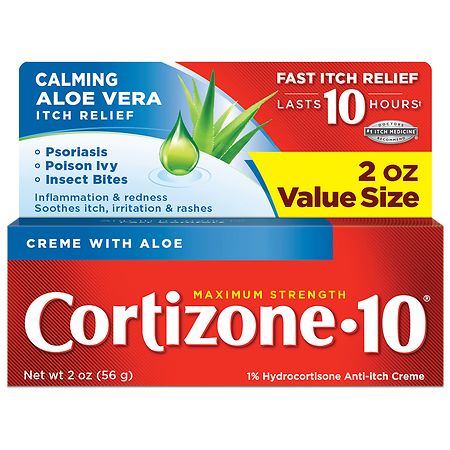

Cortizone-10 Maximum Strength Hydrocortisone Aloe Anti-Itch Cream - 2oz
Analysis updated May 2026 · How Scout scores
At a glance
Summary
This anti-itch cream contains beneficial natural ingredients like Aloe Barbadensis Leaf Juice and Beeswax, which are known for their soothing and moisturizing properties. However, the presence of Methylparaben, a preservative with potential endocrine-disrupting effects, impacts the overall safety profile. The product is moderately processed, which further influences its rating, despite the inclusion of some favorable ingredients.
Key ingredients 10
Aloe Barbadensis Leaf JuiceVery Good
Aloe Barbadensis Leaf Juice is a natural botanical extract known for its soothing and moisturizing properties. It is often used in skincare products to help calm irritated skin and provide hydration. Its natural origin and skin benefits make it a highly regarded ingredient.
Risks
There are minimal risks associated with Aloe Barbadensis Leaf Juice, though some individuals may experience allergic reactions.
Benefits
It provides soothing relief for irritated skin and helps maintain skin hydration.
BeeswaxVery Good
Beeswax is a natural wax produced by honeybees and is used in cosmetics for its emollient properties. It helps to lock in moisture and protect the skin barrier. Its natural origin and skin benefits make it a favorable ingredient.
Risks
Allergic reactions are rare but possible in individuals sensitive to bee products.
Benefits
It provides a protective barrier on the skin, locking in moisture and enhancing skin hydration.
GlycerinGood
Beneficial ingredient — whole-food or functional value in this product class.
Risks
There are minimal risks, though overuse may lead to a sticky feeling on the skin.
Benefits
It effectively attracts moisture to the skin, enhancing hydration.
HydrocortisoneNeutral
Hydrocortisone is a corticosteroid used to reduce inflammation and alleviate itching in topical applications. It is effective in treating various skin conditions such as eczema and dermatitis. While beneficial for short-term use, it should be used with caution to avoid potential side effects.
Risks
Long-term use can lead to skin thinning and other side effects, especially if used inappropriately.
Benefits
It effectively reduces inflammation and itching, providing relief from skin irritation.
Aluminum SulfateNeutral
Aluminum Sulfate is used as an astringent and antiseptic in skincare products. It helps to tighten skin and reduce irritation. While generally safe, it should be used in moderation.
Risks
Excessive use may lead to skin irritation or dryness.
Benefits
It acts as an astringent, helping to tighten skin and reduce irritation.
Calcium AcetateNeutral
Calcium Acetate is used as a buffering agent in cosmetics to maintain product stability. It helps to balance pH levels in formulations. Its role is primarily functional, with minimal direct impact on skin health.
Risks
There are minimal risks associated with its use in cosmetics.
Benefits
It helps maintain product stability by balancing pH levels.
Cetearyl AlcoholNeutral
Cetearyl Alcohol is a fatty alcohol used as an emollient and thickening agent in cosmetics. It helps to improve the texture and spreadability of products. It is generally considered safe and non-irritating.
Risks
Rarely, it may cause mild irritation in sensitive individuals.
Benefits
It enhances the texture and spreadability of cosmetic formulations.
Cetyl AlcoholNeutral
Cetyl Alcohol is a fatty alcohol used as an emollient and thickening agent in skincare products. It helps to soften and smooth the skin. It is generally regarded as safe and non-irritating.
Risks
In rare cases, it may cause mild irritation or allergic reactions.
Benefits
It provides emollient properties, helping to soften and smooth the skin.
Isopropyl PalmitateNeutral
Isopropyl Palmitate is an ester used as an emollient and thickening agent in cosmetics. It helps to improve the texture and feel of products on the skin. While generally safe, it may cause issues for acne-prone skin.
Risks
It may contribute to clogged pores in individuals with acne-prone skin.
Benefits
It enhances the texture and feel of cosmetic products, providing a smooth application.
MethylparabenVery Bad
Methylparaben is a preservative used to prevent microbial growth in cosmetics. It is effective in extending the shelf life of products. However, parabens have raised concerns due to potential endocrine-disrupting effects.
Risks
There is concern over its potential to disrupt hormone function and its link to breast cancer, though evidence is not conclusive.
Benefits
It effectively prevents microbial growth, extending the shelf life of cosmetic products.
Processing
Processed Foods
Get the full breakdown in the Scout appTake Scout shopping
Scan any product to see lab results, healthy alternatives, and your personalized analysis.
Download on theApp Store GET IT ONGoogle PlayAmazon pricing & content
Amazon price as of . Product prices and availability are accurate as of the date/time indicated and are subject to change. Any price and availability information displayed on Amazon.com at the time of purchase will apply to the purchase of this product.
CERTAIN CONTENT THAT APPEARS ON THIS SITE COMES FROM AMAZON. THIS CONTENT IS PROVIDED “AS IS” AND IS SUBJECT TO CHANGE OR REMOVAL AT ANY TIME.