
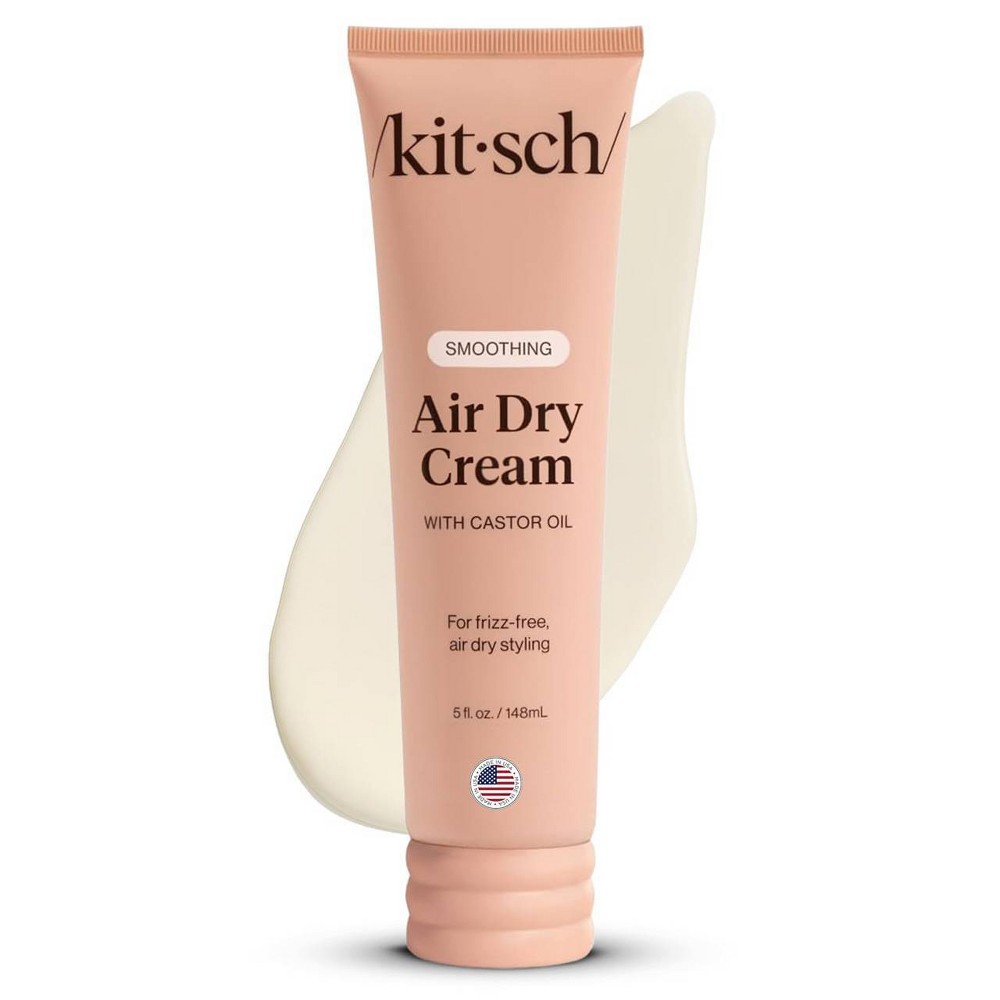


Kitsch Air Dry Cream 5 oz
Analysis updated August 2026 · How Scout scores
At a glance
Summary
This product contains several beneficial ingredients such as coconut oil, castor seed oil, shea butter, and squalane, which are known for their moisturizing and nourishing properties. However, the presence of phenoxyethanol and fragrance, which can cause skin irritation and allergic reactions, lowers its overall safety profile. The product is moderately processed, which also impacts its rating.
Key ingredients 30
Cocos Nucifera (Coconut) OilVery Good
Coconut Oil is a natural oil known for its moisturizing and nourishing properties. It is rich in fatty acids that help to hydrate the skin.
Risks
It may clog pores in acne-prone skin.
Benefits
It deeply moisturizes and nourishes the skin, improving its overall health.
Ricinus Communis (Castor) Seed OilVery Good
Castor Oil is a natural oil known for its moisturizing and conditioning properties. It is rich in ricinoleic acid, which helps to hydrate the skin.
Risks
It may cause allergic reactions in some individuals.
Benefits
It deeply moisturizes and conditions the skin, enhancing its softness and suppleness.
Butyrospermum Parkii (Shea) ButterVery Good
Shea Butter is a natural butter known for its moisturizing and nourishing properties. It is rich in vitamins and fatty acids that help to hydrate and protect the skin.
Risks
It may cause allergic reactions in individuals with nut allergies.
Benefits
It deeply moisturizes and nourishes the skin, improving its elasticity and softness.
PanthenolVery Good
Panthenol is a provitamin of B5 known for its moisturizing and soothing properties. It helps to improve skin hydration and reduce inflammation.
Risks
There are minimal risks associated with panthenol, though it may cause irritation in very sensitive skin.
Benefits
It helps to hydrate and soothe the skin, improving its overall health.
SqualaneVery Good
Squalane is a lightweight oil that mimics the skin's natural sebum. It is known for its moisturizing and anti-aging properties.
Risks
There are minimal risks associated with squalane, though it may cause irritation in very sensitive skin.
Benefits
It helps to moisturize and protect the skin, improving its elasticity and reducing signs of aging.
Hydrolyzed Jojoba EstersVery Good
Hydrolyzed Jojoba Esters are derived from jojoba oil and are known for their moisturizing and conditioning properties. They help to improve skin hydration and texture.
Risks
There are minimal risks associated with jojoba esters, though they may cause irritation in very sensitive skin.
Benefits
They help to moisturize and condition the skin, improving its softness and suppleness.
GlycerinGood
Glycerin is a humectant that attracts moisture to the skin, helping to keep it hydrated. It is widely used in skincare for its moisturizing properties.
Risks
There are minimal risks associated with glycerin, though it may cause irritation in very sensitive skin.
Benefits
Glycerin helps to maintain skin hydration and improve skin barrier function.
Glyceryl Stearate SEGood
Glyceryl Stearate SE is an emulsifier that helps to blend water and oils in formulations. It also provides a smooth texture to the product.
Risks
It may cause mild irritation in sensitive individuals.
Benefits
It helps to stabilize emulsions and improve the texture of the product.
Aqua/Water/EauNeutral
Water is a common solvent used in cosmetics to dissolve other ingredients. It does not provide direct benefits or risks in this context.
Risks
There are no significant risks associated with water in cosmetics.
Benefits
Water helps to hydrate and dissolve other beneficial ingredients.
Euphorbia Cerifera (Candelilla) WaxNeutral
Candelilla Wax is used as a thickening agent and to provide structure to cosmetic products. It is a plant-based alternative to beeswax.
Risks
There are minimal risks associated with its use in cosmetics.
Benefits
It provides a smooth application and helps to form a protective barrier on the skin.
Cetearyl AlcoholNeutral
Cetearyl Alcohol is a fatty alcohol used as an emollient and thickener in cosmetics. It is not drying like other alcohols.
Risks
It may cause irritation in very sensitive skin types.
Benefits
It helps to soften the skin and improve the texture of the product.
Oryza Sativa (Rice) Bran WaxNeutral
Rice Bran Wax is used as a thickening agent and to provide structure to cosmetic products. It is derived from rice bran oil.
Risks
There are minimal risks associated with its use in cosmetics.
Benefits
It helps to stabilize formulations and improve the texture of the product.
PullulanNeutral
Pullulan is a polysaccharide used as a film-forming agent in cosmetics. It provides a smooth texture and helps to improve the appearance of the skin.
Risks
There are minimal risks associated with its use in cosmetics.
Benefits
It helps to improve the texture and appearance of the skin.
Guar Hydroxypropyltrimonium ChlorideNeutral
This ingredient is a conditioning agent derived from guar gum. It helps to improve the texture and manageability of hair.
Risks
There are minimal risks associated with its use in cosmetics.
Benefits
It helps to condition and detangle hair, improving its manageability.
EthylhexylglycerinNeutral
Ethylhexylglycerin is used as a preservative and skin conditioning agent in cosmetics. It enhances the efficacy of other preservatives.
Risks
It may cause irritation in sensitive skin.
Benefits
It helps to preserve the product and condition the skin.
Amyl CinnamalNeutral
Amyl Cinnamal is a fragrance ingredient used to impart a floral scent to cosmetic products. It is commonly used in perfumes and scented products.
Risks
It may cause allergic reactions in sensitive individuals.
Benefits
It provides a floral scent to the product.
TerpineolNeutral
Terpineol is a fragrance ingredient used to impart a pleasant scent to cosmetic products. It is found in many essential oils.
Risks
It may cause allergic reactions in sensitive individuals.
Benefits
It provides a pleasant scent to the product.
Citric AcidNeutral
Citric Acid is used to adjust the pH of cosmetic products. It is also used as a preservative and exfoliant.
Risks
It may cause irritation in sensitive skin or eyes.
Benefits
It helps to maintain the stability and efficacy of the product.
GeraniolNeutral
Geraniol is a fragrance ingredient used to impart a floral scent to cosmetic products. It is found in many essential oils.
Risks
It may cause allergic reactions in sensitive individuals.
Benefits
It provides a floral scent to the product.
HydroxycitronellalNeutral
Hydroxycitronellal is a fragrance ingredient used to impart a floral scent to cosmetic products. It is commonly used in perfumes and scented products.
Risks
It may cause allergic reactions in sensitive individuals.
Benefits
It provides a floral scent to the product.
CitronellolNeutral
Citronellol is a fragrance ingredient used to impart a floral scent to cosmetic products. It is found in many essential oils.
Risks
It may cause allergic reactions in sensitive individuals.
Benefits
It provides a floral scent to the product.
BenzaldehydeNeutral
Benzaldehyde is a fragrance ingredient used to impart an almond scent to cosmetic products. It is commonly used in perfumes and scented products.
Risks
It may cause allergic reactions in sensitive individuals.
Benefits
It provides an almond scent to the product.
Linalyl AcetateNeutral
Linalyl Acetate is a fragrance ingredient used to impart a floral scent to cosmetic products. It is found in many essential oils.
Risks
It may cause allergic reactions in sensitive individuals.
Benefits
It provides a floral scent to the product.
PhenoxyethanolBad
Phenoxyethanol is a preservative used to prevent microbial growth in cosmetics. It can cause skin irritation and allergic reactions in some individuals.
Risks
It may cause irritation and allergic reactions, especially in sensitive skin.
Benefits
It helps to preserve the product and extend its shelf life.
Cetrimonium ChlorideBad
Processed additive flagged under Scout's ingredient doctrine.
Risks
It may cause irritation in sensitive skin or eyes.
Benefits
It helps to condition the hair and reduce static.
Behentrimonium MethosulfateBad
Processed additive flagged under Scout's ingredient doctrine.
Risks
It may cause irritation in sensitive skin or eyes.
Benefits
It helps to condition and detangle hair, improving its softness.
LinaloolBad
Processed additive flagged under Scout's ingredient doctrine.
Risks
It may cause allergic reactions in sensitive individuals.
Benefits
It provides a pleasant scent to the product.
VanillinBad
Processed additive flagged under Scout's ingredient doctrine.
Risks
It may cause allergic reactions in sensitive individuals.
Benefits
It provides a vanilla scent to the product.
LimoneneBad
Processed additive flagged under Scout's ingredient doctrine.
Risks
It may cause allergic reactions in sensitive individuals.
Benefits
It provides a citrus scent to the product.
FragranceVery Bad
Fragrance is used to impart scent to cosmetic products. It can cause skin irritation and allergic reactions in sensitive individuals.
Risks
It may cause irritation and allergic reactions, especially in sensitive skin.
Benefits
It provides a pleasant scent to the product.
Processing
Processed Foods
Get the full breakdown in the Scout appTake Scout shopping
Scan any product to see lab results, healthy alternatives, and your personalized analysis.
Download on theApp Store GET IT ONGoogle PlayAmazon pricing & content
Amazon price as of . Product prices and availability are accurate as of the date/time indicated and are subject to change. Any price and availability information displayed on Amazon.com at the time of purchase will apply to the purchase of this product.
CERTAIN CONTENT THAT APPEARS ON THIS SITE COMES FROM AMAZON. THIS CONTENT IS PROVIDED “AS IS” AND IS SUBJECT TO CHANGE OR REMOVAL AT ANY TIME.