
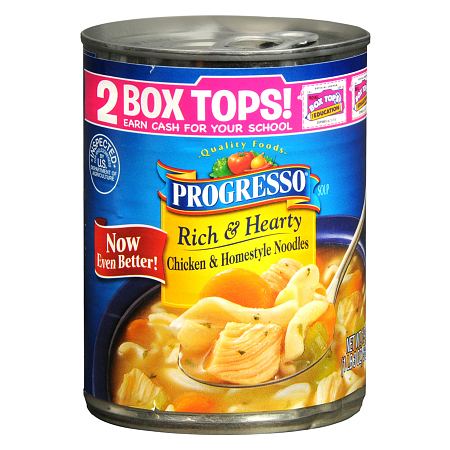


Progresso Rich & Hearty Chicken & Homestyle Noodles Soup
Summary
This soup contains beneficial ingredients like chicken broth, white meat chicken, and carrots, which provide essential nutrients. However, it is heavily processed and includes additives such as soy protein isolate and high levels of salt, which can contribute to health concerns like hypertension. The presence of these processed ingredients and the overall level of processing significantly impact its health rating.
At a glance
Key ingredients 11
Chicken brothGood
Chicken broth is a flavorful base that provides essential nutrients like collagen and amino acids. It is typically made by simmering chicken bones and meat, which can enhance the nutritional profile. The quality of the broth depends on the ingredients used, with homemade or organic options being preferable.
Benefits
Rich in collagen and amino acids that support joint health and digestion.
Cooked white meat chickenGood
Cooked white meat chicken is a high-quality protein source that provides essential amino acids. It is typically leaner than dark meat, making it a healthier option for those monitoring fat intake. The nutritional value is enhanced when sourced from organic or free-range chickens.
Benefits
Provides essential amino acids necessary for muscle repair and maintenance.
CarrotsGood
Carrots are a nutritious vegetable rich in beta-carotene, fiber, and antioxidants. They are typically consumed cooked or raw, retaining most of their nutritional benefits. Organic carrots are preferred to minimize pesticide exposure.
Benefits
High in beta-carotene, which is converted to vitamin A, supporting vision and immune health.
Egg noodleNeutral
Egg noodles are a common carbohydrate source made from wheat and eggs. They provide energy but lack significant nutritional benefits compared to whole grains. The quality can vary based on the type of wheat and eggs used.
Risks
May contribute to high carbohydrate intake if consumed in excess.
Benefits
Provides a source of carbohydrates for energy.
CeleryNeutral
Celery is a low-calorie vegetable often used for flavor and texture in soups. It contains some vitamins and minerals but in small amounts. Organic celery is preferred to reduce pesticide exposure.
Benefits
Adds flavor and texture with minimal calories.
Modified food starchNeutral
Modified food starch is used as a thickening agent in processed foods. It is derived from various starch sources and undergoes chemical modification to enhance its properties. While generally safe, it offers no nutritional benefits.
Benefits
Provides texture and consistency to the product.
Chicken fatNeutral
Chicken fat is used to enhance flavor and provide a source of fat. It is a natural fat source but should be consumed in moderation due to its saturated fat content. The quality of chicken fat can vary based on the chicken's diet and living conditions.
Risks
High intake of saturated fats may contribute to heart disease.
Benefits
Enhances flavor and provides a source of energy.
SaltNeutral
Salt is used to enhance flavor but can contribute to high sodium intake. Excessive sodium consumption is linked to hypertension and cardiovascular issues. It is important to monitor salt intake, especially in processed foods.
Risks
High sodium intake can lead to hypertension and increased risk of heart disease.
Benefits
Enhances flavor and acts as a preservative.
Corn starchNeutral
Corn starch is a common thickening agent derived from corn. It is used to improve texture and consistency in foods. While it is generally safe, it offers no significant nutritional benefits.
Benefits
Provides texture and consistency to the product.
Soy protein isolateBad
Soy protein isolate is a processed form of soy protein used to boost protein content. It is less preferred compared to animal-based proteins due to its processing and potential allergenicity. The extraction process can involve chemicals that may affect its nutritional quality.
Risks
May cause allergic reactions in sensitive individuals and is less bioavailable than animal proteins.
Benefits
Provides a plant-based protein source.
Sodium phosphateNeutral
Sodium phosphate is used as an emulsifier and preservative in processed foods. It helps maintain texture and extend shelf life. While generally recognized as safe, excessive consumption can affect kidney function.
Risks
Excessive intake may impact kidney health.
Benefits
Helps maintain texture and extend shelf life.
Processing
Ultra-Processed Foods
Get the full breakdown in the Scout app
Scan any product to see lab results, healthy alternatives, and your personalized analysis.
Download on theApp Store