
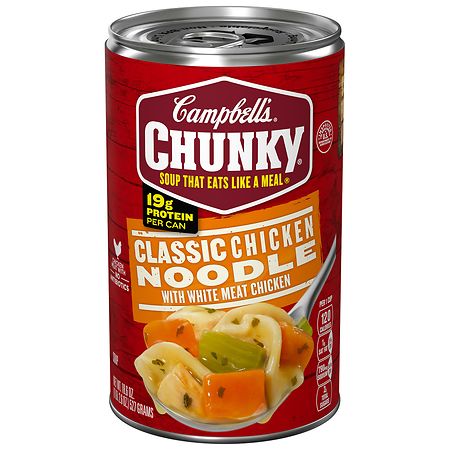


Campbell s Chunky Classic Chicken Noodle Soup 18.6 oz Can
Summary
This soup is heavily processed, containing multiple additives and preservatives such as sodium phosphate and disodium inosinate, which are common in ultra-processed foods. While it includes beneficial ingredients like chicken stock, the presence of processed components like soy protein concentrate and high sodium content detracts from its nutritional quality. The overall ingredient list and processing level limit its healthiness despite some positive aspects.
At a glance
Key ingredients 12
Chicken stockGood
Chicken stock is a flavorful base that provides essential nutrients and enhances the taste of soups. It is typically made by simmering chicken bones and vegetables, which can release beneficial minerals and collagen. This ingredient contributes to the overall nutritional profile of the soup.
Benefits
Provides essential nutrients such as minerals and collagen, which can support joint health and improve the flavor of dishes.
White meat chickenNeutral
White meat chicken is a source of lean protein that supports muscle maintenance and repair. It is generally considered a healthy protein option, though the quality can vary based on the chicken's diet and living conditions. In processed foods, the nutritional benefits may be reduced due to additives or preservatives.
Benefits
Provides lean protein that is essential for muscle maintenance and repair.
CarrotsNeutral
Carrots are a source of dietary fiber and essential vitamins such as vitamin A. They are typically included in soups for their flavor and nutritional benefits. However, in processed foods, the nutrient content may be diminished due to cooking and preservation methods.
Benefits
Rich in vitamin A and dietary fiber, supporting eye health and digestion.
Enriched egg noodlesNeutral
Enriched egg noodles provide carbohydrates and some protein, contributing to the energy content of the soup. They are made from wheat flour and eggs, with added nutrients like niacin and folic acid. While they offer some nutritional value, they are also a source of refined carbohydrates.
Risks
May contribute to increased blood sugar levels due to refined carbohydrates.
Benefits
Provides energy through carbohydrates and contains added nutrients like niacin and folic acid.
CeleryNeutral
Celery is a low-calorie vegetable that adds flavor and some nutrients to dishes. It contains dietary fiber and vitamins, though its nutritional impact in processed foods may be limited. Celery is often used in soups for its aromatic properties.
Benefits
Adds flavor and provides dietary fiber and vitamins.
Modified cornstarchNeutral
Modified cornstarch is used as a thickening agent in soups and sauces. It is derived from corn and processed to enhance its thickening properties. While it is generally safe, it provides little nutritional value.
Benefits
Used to improve texture and consistency in food products.
SaltNeutral
Salt is used to enhance flavor but can contribute to high sodium intake. Excessive consumption of sodium is linked to increased blood pressure and cardiovascular risks. In processed foods, salt is often used in higher quantities than necessary for preservation and taste.
Risks
High sodium intake can lead to increased blood pressure and cardiovascular issues.
Benefits
Enhances flavor and acts as a preservative.
Soy protein concentrateBad
Soy protein concentrate is a processed form of soy used to boost protein content. It lacks the complete amino acid profile found in animal proteins and may contain anti-nutrients that affect mineral absorption. Its use in processed foods is often criticized for being highly processed.
Risks
May contain anti-nutrients that affect mineral absorption and is highly processed.
Benefits
Provides a source of plant-based protein.
Sodium phosphateBad
Sodium phosphate is used as an emulsifier and preservative in processed foods. It can contribute to an imbalance in phosphate levels when consumed in excess, potentially affecting bone health. Its presence in foods is often associated with highly processed products.
Risks
Excessive intake may lead to imbalanced phosphate levels, affecting bone health.
Benefits
Acts as an emulsifier and preservative, improving texture and shelf life.
Disodium inosinateNeutral
Disodium inosinate is a flavor enhancer often used in conjunction with MSG. It is derived from meat or fish and is generally recognized as safe in small quantities. While it enhances flavor, it provides no nutritional benefits.
Benefits
Enhances flavor in food products.
Disodium guanylateNeutral
Disodium guanylate is a flavor enhancer used to intensify umami taste in foods. It is often used with MSG and is considered safe in small amounts. It does not contribute any nutritional value.
Benefits
Enhances umami flavor in processed foods.
Soy lecithinNeutral
Soy lecithin is an emulsifier that helps blend ingredients and improve texture. It is derived from soybeans and is widely used in food processing. While it is generally safe, it provides minimal nutritional benefits.
Benefits
Improves texture and consistency in food products.
Processing
Ultra-Processed Foods
Get the full breakdown in the Scout app
Scan any product to see lab results, healthy alternatives, and your personalized analysis.
Download on theApp Store