
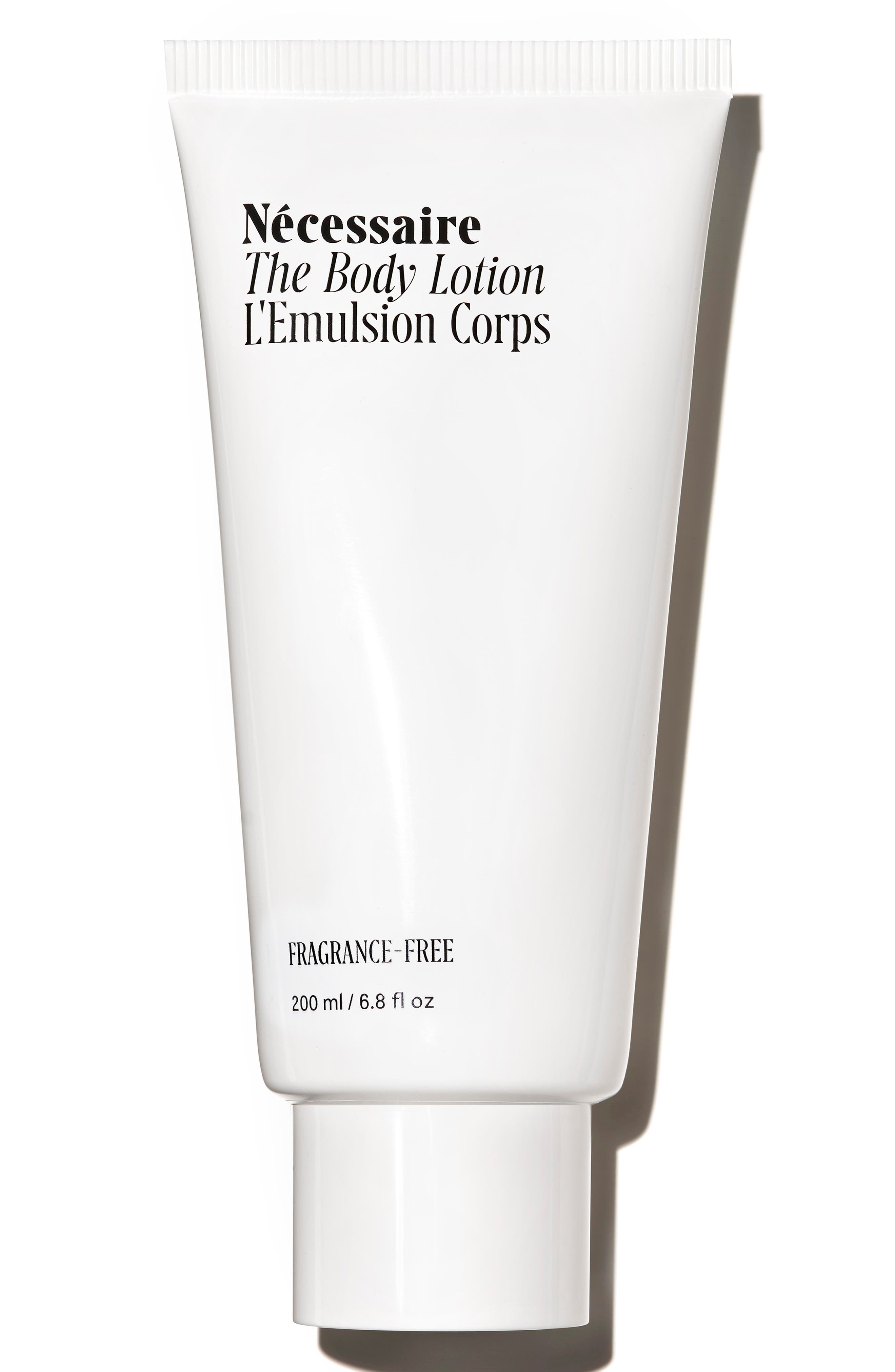


Necessaire The Body Lotion
Analysis updated August 2026 · How Scout scores
At a glance
Summary
This body lotion contains a range of beneficial ingredients such as shea butter, jojoba oil, and niacinamide, which are known for their moisturizing and skin-nourishing properties. The formulation is largely composed of natural oils and peptides, with minimal synthetic additives, contributing to a clean label. However, the presence of polyacrylate crosspolymer-6, a synthetic thickener, slightly impacts the overall ingredient safety.
Key ingredients 30
Shea Butter GlyceridesVery Good
Shea Butter Glycerides are derived from shea butter, known for its moisturizing and anti-inflammatory properties. It helps to nourish and protect the skin.
Risks
Rarely, it may cause allergic reactions in individuals with nut allergies.
Benefits
Deeply moisturizes and soothes the skin, providing long-lasting hydration.
Simmondsia Chinensis (Jojoba) Seed OilVery Good
Jojoba oil is a natural oil that closely resembles the skin's sebum. It is non-comedogenic and helps to balance oil production.
Risks
Generally safe with minimal risk of irritation.
Benefits
Moisturizes and balances the skin, making it suitable for all skin types.
Palmitoyl Dipeptide-5 Diaminobutyroyl HydroxythreonineVery Good
This peptide helps to improve skin elasticity and firmness. It supports the skin's natural repair processes.
Risks
Generally considered safe with minimal risk of irritation.
Benefits
Enhances skin firmness and elasticity, promoting a youthful appearance.
Palmitoyl Dipeptide-5 DiaminonhydroxybutyrateVery Good
This peptide supports skin structure and resilience. It helps to reduce the appearance of fine lines and wrinkles.
Risks
Generally considered safe with minimal risk of irritation.
Benefits
Improves skin texture and reduces signs of aging.
Palmitoyl Hexapeptide-12Very Good
This peptide is known for its anti-aging properties. It helps to stimulate collagen production and improve skin elasticity.
Risks
Generally considered safe with minimal risk of irritation.
Benefits
Promotes collagen synthesis and enhances skin firmness.
Palmitoyl Tetrapeptide-7Very Good
This peptide helps to reduce inflammation and improve skin elasticity. It supports the skin's natural repair processes.
Risks
Generally considered safe with minimal risk of irritation.
Benefits
Reduces inflammation and enhances skin resilience.
Palmitoyl Tripeptide-1Very Good
This peptide is known for its ability to stimulate collagen production. It helps to improve skin texture and reduce signs of aging.
Risks
Generally considered safe with minimal risk of irritation.
Benefits
Enhances collagen synthesis and improves skin texture.
Sclerocarya Birrea Seed OilVery Good
Also known as marula oil, it is rich in antioxidants and fatty acids. It helps to nourish and moisturize the skin.
Risks
Generally considered safe with minimal risk of irritation.
Benefits
Provides deep hydration and antioxidant protection.
Caryodendron Orinocense Seed OilVery Good
Also known as cacay oil, it is rich in vitamins and essential fatty acids. It helps to improve skin elasticity and hydration.
Risks
Generally considered safe with minimal risk of irritation.
Benefits
Enhances skin elasticity and provides deep hydration.
Limnanthes Alba (Meadowfoam) Seed OilVery Good
Meadowfoam seed oil is known for its moisturizing and rejuvenating properties. It helps to lock in moisture and protect the skin barrier.
Risks
Generally considered safe with minimal risk of irritation.
Benefits
Provides long-lasting hydration and protects the skin barrier.
TocopherolVery Good
Tocopherol, or Vitamin E, is a powerful antioxidant that protects the skin from free radical damage. It also helps to moisturize and soothe the skin.
Risks
Generally considered safe with minimal risk of irritation.
Benefits
Provides antioxidant protection and enhances skin hydration.
Linoleic AcidVery Good
Linoleic acid is an essential fatty acid that helps to maintain the skin's barrier function. It is beneficial for acne-prone and sensitive skin.
Risks
Generally considered safe with minimal risk of irritation.
Benefits
Supports skin barrier function and reduces inflammation.
Linolenic AcidVery Good
Linolenic acid is an omega-3 fatty acid that helps to reduce inflammation and improve skin hydration. It is beneficial for dry and sensitive skin.
Risks
Generally considered safe with minimal risk of irritation.
Benefits
Reduces inflammation and enhances skin hydration.
GlycerinGood
Glycerin is a well-known humectant that attracts moisture to the skin. It helps maintain skin hydration and improves skin barrier function.
Risks
Generally considered safe with minimal risk of irritation.
Benefits
Enhances skin hydration and barrier function, making it a beneficial ingredient for dry skin.
Caprylic/Capric TriglycerideGood
This ingredient is an emollient derived from coconut oil and glycerin. It helps to smooth and soften the skin.
Risks
Rarely, it may cause mild irritation in sensitive individuals.
Benefits
Provides a lightweight, non-greasy moisturizing effect.
Dicaprylyl CarbonateGood
Dicaprylyl Carbonate is an emollient that provides a silky, smooth feel to the skin. It enhances the spreadability of the product.
Risks
Generally considered safe with low risk of irritation.
Benefits
Improves skin texture and product application.
NiacinamideGood
Niacinamide is a form of Vitamin B3 that improves skin elasticity, enhances barrier function, and evens skin tone. It is well-tolerated by most skin types.
Risks
Rarely, it may cause mild irritation in sensitive skin.
Benefits
Reduces inflammation, improves skin texture, and brightens the complexion.
Cetearyl OlivateGood
Cetearyl Olivate is an emulsifier derived from olive oil. It helps to blend oil and water components in formulations.
Risks
Generally considered safe with low risk of irritation.
Benefits
Improves product stability and texture, enhancing the moisturizing effect.
Sorbitan OlivateGood
Sorbitan Olivate is an emulsifier derived from olive oil. It helps to blend oil and water components in formulations.
Risks
Generally considered safe with low risk of irritation.
Benefits
Enhances product stability and texture, contributing to a smooth application.
Oleic AcidGood
Oleic acid is a fatty acid that helps to moisturize and nourish the skin. It is beneficial for dry and mature skin types.
Risks
Generally considered safe with minimal risk of irritation.
Benefits
Provides deep hydration and enhances skin softness.
Aqua/Water/EauNeutral
Water is a common solvent used in cosmetic formulations. It acts as a base for the product, helping to dissolve other ingredients. It does not provide direct benefits or risks.
Benefits
Essential for dissolving and distributing other ingredients in the formulation.
Cetearyl AlcoholNeutral
Standard formulation ingredient — neither beneficial nor harmful at typical use.
Risks
Generally safe with minimal risk of irritation.
Benefits
Provides a creamy texture and enhances the moisturizing properties of the product.
Glyceryl StearateNeutral
Standard formulation ingredient — neither beneficial nor harmful at typical use.
Risks
Generally considered safe with low risk of irritation.
Benefits
Improves product consistency and provides a smooth application.
PropanediolNeutral
Propanediol is a solvent and humectant that helps to improve the texture and feel of the product. It is often used as an alternative to propylene glycol.
Risks
Generally considered safe with low risk of irritation.
Benefits
Improves product texture and enhances moisture retention.
Polyacrylate Crosspolymer-6Neutral
This ingredient is a thickening agent that helps to stabilize emulsions. It provides a smooth, gel-like texture to the product.
Risks
Generally considered safe with low risk of irritation.
Benefits
Enhances product stability and texture.
Caprylhydroxamic AcidNeutral
Caprylhydroxamic acid is a preservative that helps to prevent microbial growth in cosmetic formulations. It is often used in combination with other preservatives.
Risks
Generally considered safe with low risk of irritation.
Benefits
Provides effective preservation, extending product shelf life.
Caprylyl GlycolNeutral
Caprylyl glycol is a humectant and skin conditioning agent. It helps to improve the moisture content of the skin.
Risks
Generally considered safe with low risk of irritation.
Benefits
Enhances skin hydration and product preservation.
T-Butyl AlcoholNeutral
T-Butyl alcohol is used as a solvent and denaturant in cosmetic formulations. It helps to dissolve other ingredients and improve product texture.
Risks
Generally considered safe with low risk of irritation.
Benefits
Improves product texture and stability.
Palmitic AcidNeutral
Palmitic acid is a fatty acid that acts as an emollient and thickener in cosmetic formulations. It helps to improve the texture and feel of the product.
Risks
Generally considered safe with low risk of irritation.
Benefits
Enhances product texture and provides a smooth application.
Stearic AcidNeutral
Stearic acid is a fatty acid that acts as an emulsifier and thickener. It helps to stabilize formulations and improve texture.
Risks
Generally considered safe with low risk of irritation.
Benefits
Improves product stability and texture.
Get the full breakdown in the Scout appTake Scout shopping
Scan any product to see lab results, healthy alternatives, and your personalized analysis.
Download on theApp Store GET IT ONGoogle PlayAmazon pricing & content
Amazon price as of . Product prices and availability are accurate as of the date/time indicated and are subject to change. Any price and availability information displayed on Amazon.com at the time of purchase will apply to the purchase of this product.
CERTAIN CONTENT THAT APPEARS ON THIS SITE COMES FROM AMAZON. THIS CONTENT IS PROVIDED “AS IS” AND IS SUBJECT TO CHANGE OR REMOVAL AT ANY TIME.