
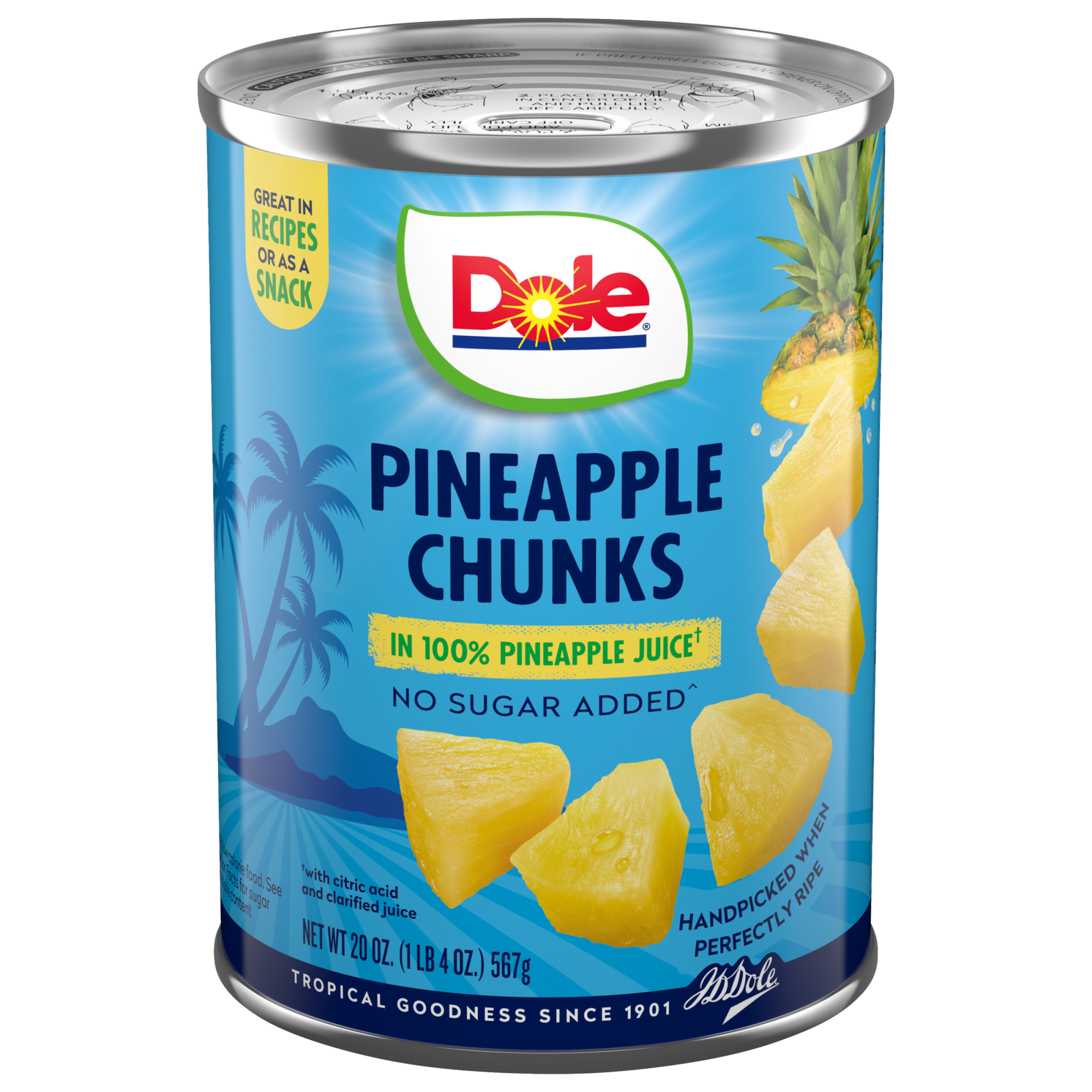


Pineapple Chunks
Analysis updated September 2026 · How Scout scores
At a glance
Summary
This product consists primarily of pineapple and pineapple juice, which are nutrient-rich and provide natural sugars and fiber. The addition of citric acid is minimal and serves as a preservative, which is common in processed foods. Despite being processed, the ingredient list is clean and free from harmful additives, allowing it to score well within its category.
Key ingredients 3
PineappleVery Good
Pineapple is a nutrient-rich fruit high in vitamin C and manganese. It contains bromelain, an enzyme that may aid digestion and reduce inflammation. As a whole food, it provides natural sugars and fiber, contributing to a balanced diet.
Benefits
Rich in vitamin C and antioxidants, supporting immune function and reducing oxidative stress. Contains bromelain, which may aid digestion and have anti-inflammatory effects.
Pineapple JuiceNeutral
Pineapple juice is derived from the fruit and retains some vitamins and minerals. However, it lacks the fiber found in whole pineapple, which can lead to quicker sugar absorption. It is a natural juice without added sugars, maintaining a neutral profile.
Risks
May contribute to increased sugar intake if consumed in large quantities due to lack of fiber.
Benefits
Provides vitamins and minerals such as vitamin C and manganese, similar to whole pineapple, but in a more concentrated form.
Citric AcidNeutral
Citric acid is a natural preservative and flavor enhancer commonly used in food products. It is generally recognized as safe and helps maintain the acidity and freshness of the product. While it is a processed additive, it is naturally occurring in citrus fruits.
Risks
Excessive consumption may lead to dental erosion or stomach upset in sensitive individuals.
Benefits
Helps preserve the freshness and flavor of food products, extending shelf life without significant health concerns.
Processing
Processed Foods
Get the full breakdown in the Scout appTake Scout shopping
Scan any product to see lab results, healthy alternatives, and your personalized analysis.
Download on theApp Store GET IT ONGoogle PlayAmazon pricing & content
Amazon price as of . Product prices and availability are accurate as of the date/time indicated and are subject to change. Any price and availability information displayed on Amazon.com at the time of purchase will apply to the purchase of this product.
CERTAIN CONTENT THAT APPEARS ON THIS SITE COMES FROM AMAZON. THIS CONTENT IS PROVIDED “AS IS” AND IS SUBJECT TO CHANGE OR REMOVAL AT ANY TIME.