
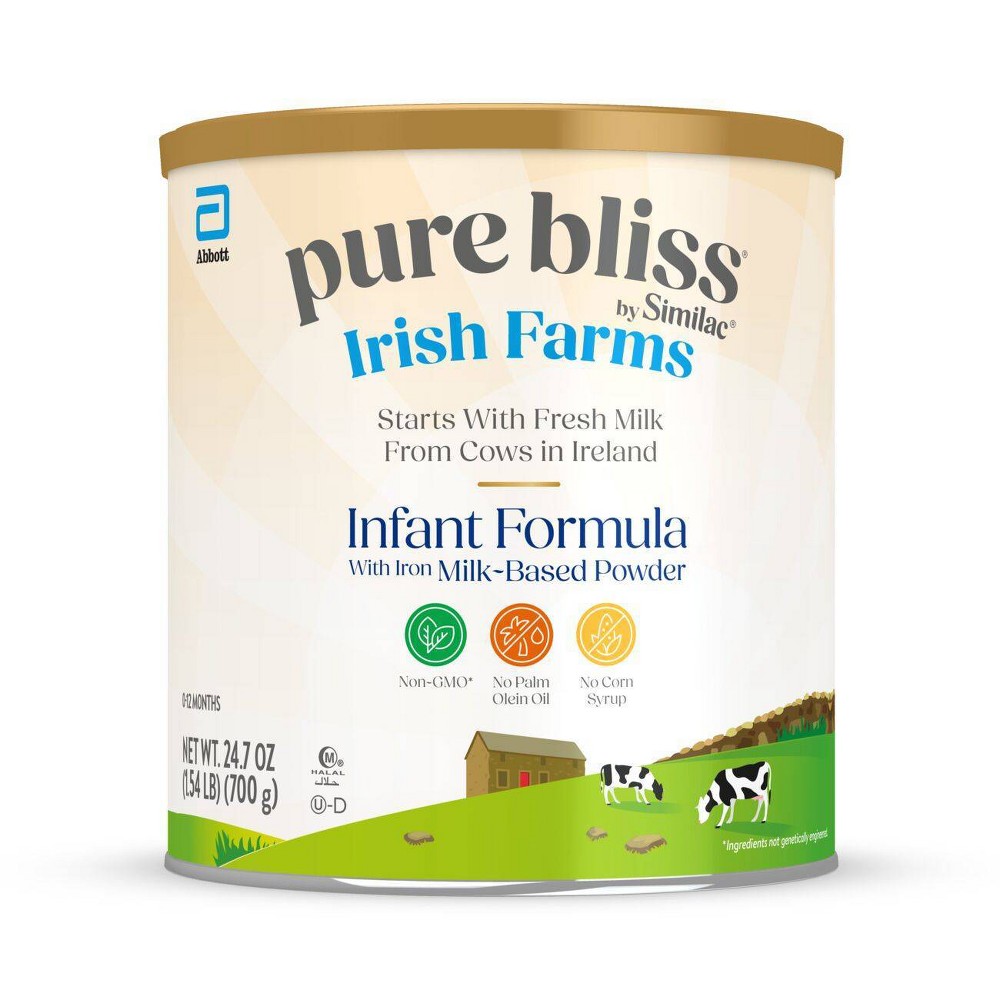



Similac Pure Bliss Irish Farms Powder Infant Formula - 24.7oz
Summary
This infant formula is ultra-processed and contains several additives, which limits its score. While it includes beneficial ingredients like nonfat milk and whey protein concentrate, it also contains high oleic sunflower oil and soy oil, which are processed seed oils that may contribute to inflammation. The presence of soy lecithin as an emulsifier adds to the processing concerns, impacting the overall healthiness of the product.
At a glance
Key ingredients 12
Nonfat milkGood
Nonfat milk is a source of essential nutrients like calcium and protein. It provides a base for infant formula, supporting growth and development. The removal of fat makes it suitable for infants who require specific dietary fat content.
Benefits
Provides essential nutrients such as calcium and protein necessary for infant growth and development.
LactoseGood
Lactose is a natural sugar found in milk that provides energy. It is crucial for infants as it aids in calcium absorption and supports gut health. Lactose is the primary carbohydrate in breast milk, making it suitable for infant formulas.
Benefits
Supports energy needs and aids in calcium absorption, mimicking the carbohydrate profile of breast milk.
High oleic sunflower oilVery Bad
High oleic sunflower oil is a seed oil high in monounsaturated fats but still considered a seed oil. It is heavily processed and may contribute to an imbalanced omega-6 to omega-3 ratio. Despite its high oleic content, it is not recommended due to potential inflammatory effects.
Risks
High omega-6 content may promote inflammation when consumed in excess.
Benefits
Contains monounsaturated fats that are generally considered heart-healthy.
Whey protein concentrateGood
Whey protein concentrate is a high-quality protein source with a rich amino acid profile. It supports muscle development and growth in infants. Derived from milk, it is easily digestible and beneficial for infant nutrition.
Benefits
Provides a rich amino acid profile that supports muscle development and growth.
Soy oilVery Bad
Soy oil is a seed oil that is highly processed and rich in omega-6 fatty acids. It can contribute to inflammation and is not ideal for infant nutrition. The extraction process often involves chemicals, which may raise health concerns.
Risks
High omega-6 content may promote inflammation and imbalance in fatty acid intake.
Coconut oilNeutral
Coconut oil is a source of medium-chain triglycerides (MCTs) that are easily digestible. It provides a quick source of energy and is often used in infant formulas. However, it lacks essential fatty acids needed for infant development.
Benefits
Provides medium-chain triglycerides that are easily digestible and a quick energy source.
GalactooligosaccharidesNeutral
Galactooligosaccharides are prebiotics that support gut health by promoting beneficial bacteria growth. They mimic the function of oligosaccharides found in breast milk. While beneficial for gut health, they do not provide direct nutritional value.
Benefits
Supports gut health by promoting the growth of beneficial bacteria.
Schizochytrium sp. oilNeutral
Schizochytrium sp. oil is a source of DHA, an omega-3 fatty acid important for brain development. It is derived from microalgae and used in infant formulas to support cognitive development. While beneficial, it is not a direct nutrient source.
Benefits
Provides DHA, which is important for brain and cognitive development in infants.
M. alpina oilNeutral
M. alpina oil is a source of arachidonic acid (ARA), an omega-6 fatty acid important for infant development. It is derived from fungi and used in formulas to mimic breast milk composition. While beneficial for development, it must be balanced with omega-3 intake.
Benefits
Provides arachidonic acid, important for infant growth and development.
Beta-caroteneNeutral
Beta-carotene is a precursor to vitamin A, essential for vision and immune function. It is added to formulas to ensure adequate vitamin A intake. While beneficial, it is not a direct source of vitamin A.
Benefits
Supports vision and immune function as a precursor to vitamin A.
LuteinNeutral
Lutein is a carotenoid that supports eye health and development. It is naturally found in breast milk and added to formulas to support infant vision. While beneficial for eye health, it does not provide direct nutritional value.
Benefits
Supports eye health and development in infants.
Soy lecithinBad
Soy lecithin is an emulsifier used to stabilize formulas. It is derived from soybeans and may contain trace amounts of allergens. While it helps maintain product consistency, it is a processed ingredient with potential allergen concerns.
Risks
May contain trace amounts of soy allergens, posing a risk to sensitive individuals.
Processing
Ultra-Processed Foods
Get the full breakdown in the Scout app
Scan any product to see lab results, healthy alternatives, and your personalized analysis.
Download on theApp Store