
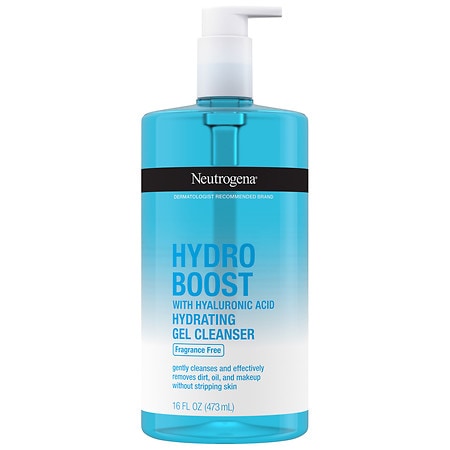



Neutrogena Hydro Boost Hydrating Facial Cleanser and Makeup Remover with with Hyaluronic Acid - Fragrance Free - 16 fl oz
Analysis updated August 2026 · How Scout scores
At a glance
Summary
This facial cleanser contains beneficial ingredients like glycerin and hydrolyzed hyaluronic acid, which provide hydration and skin plumping benefits. However, it also includes synthetic compounds such as phenoxyethanol and disodium EDTA, which are common preservatives but can be concerning for sensitive skin. The presence of these synthetic ingredients and the processed nature of the product influence its overall rating.
Key ingredients 17
Hydrolyzed Hyaluronic AcidVery Good
Hydrolyzed Hyaluronic Acid is a smaller molecule form of hyaluronic acid that penetrates the skin more easily. It provides intense hydration and helps to plump the skin. It is highly regarded for its moisturizing and anti-aging benefits.
Risks
There are minimal risks associated with this ingredient.
Benefits
It provides deep hydration and helps to improve skin elasticity and smoothness.
GlycerinGood
Glycerin is a humectant that attracts moisture to the skin, helping to keep it hydrated. It is widely used in skincare products for its moisturizing properties. It is generally well-tolerated by most skin types.
Risks
There are minimal risks associated with glycerin, though it may cause irritation in very sensitive individuals.
Benefits
Glycerin helps to maintain skin hydration and improve skin barrier function.
WaterNeutral
Water is a common solvent used in cosmetic formulations. It helps dissolve other ingredients and provides a base for the product. It is generally considered safe and non-irritating.
Risks
There are no significant risks associated with water in cosmetics.
Benefits
Water helps to hydrate the skin and improve the texture of the product.
Cocamidopropyl HydroxysultaineNeutral
Cocamidopropyl Hydroxysultaine is a surfactant and foam booster derived from coconut oil. It is used to help cleanse the skin by removing dirt and oil. It is considered milder than other surfactants.
Risks
It may cause mild irritation in some individuals, especially those with sensitive skin.
Benefits
It provides gentle cleansing and helps to create a rich lather.
Sodium Cocoyl IsethionateNeutral
Sodium Cocoyl Isethionate is a mild surfactant derived from coconut oil. It is used to cleanse the skin without stripping it of natural oils. It is often used in formulations for sensitive skin.
Risks
There is a low risk of irritation, but it is generally considered safe for most skin types.
Benefits
It provides gentle cleansing and helps maintain the skin's natural moisture balance.
Sodium Methyl Cocoyl TaurateNeutral
Sodium Methyl Cocoyl Taurate is a mild surfactant that helps to cleanse the skin. It is derived from coconut oil and is known for its gentle cleansing properties. It is suitable for sensitive skin.
Risks
It may cause mild irritation in some individuals, but is generally considered safe.
Benefits
It provides effective cleansing while being gentle on the skin.
Sodium ChlorideNeutral
Sodium Chloride, or table salt, is used to adjust the viscosity of cosmetic products. It helps to thicken formulations and stabilize emulsions. It is generally considered safe in cosmetic use.
Risks
In high concentrations, it may cause dryness or irritation.
Benefits
It helps to improve the texture and stability of the product.
Sodium Hydrolyzed Potato Starch DodecenylsuccinateNeutral
This ingredient is used as a thickening agent and stabilizer in cosmetic formulations. It helps to improve the texture and consistency of the product. It is derived from natural sources and is generally considered safe.
Risks
There are minimal risks associated with this ingredient.
Benefits
It enhances the texture and stability of the product.
Potassium Acrylates CopolymerNeutral
Potassium Acrylates Copolymer is used as a film-forming agent and thickener in cosmetics. It helps to improve the texture and spreadability of the product. It is generally considered safe for use in cosmetics.
Risks
There is a low risk of irritation, but it is generally well-tolerated.
Benefits
It enhances the texture and application of the product.
HydroxyacetophenoneNeutral
Hydroxyacetophenone is an antioxidant and preservative used in cosmetics. It helps to protect the product from degradation and extend its shelf life. It is considered safe for use in cosmetics.
Risks
There are minimal risks associated with this ingredient.
Benefits
It helps to stabilize the product and protect it from oxidative damage.
Linoleamidopropyl PG-Dimonium Chloride PhosphateNeutral
This ingredient is used as a conditioning agent in cosmetics. It helps to improve the feel and manageability of the skin. It is generally considered safe for use in cosmetics.
Risks
There are minimal risks associated with this ingredient.
Benefits
It enhances the conditioning properties of the product.
Polyquaternium-10Neutral
Polyquaternium-10 is a conditioning agent used in cosmetics to improve texture and manageability. It helps to reduce static and enhance the feel of the product. It is generally considered safe for use in cosmetics.
Risks
There are minimal risks associated with this ingredient.
Benefits
It improves the conditioning and texture of the product.
Sodium HydroxideNeutral
Sodium Hydroxide is used to adjust the pH of cosmetic formulations. It is a strong base that helps to neutralize acidic components. It is used in very low concentrations to ensure safety.
Risks
In high concentrations, it can be corrosive and cause irritation.
Benefits
It helps to maintain the desired pH balance of the product.
Citric AcidNeutral
Citric Acid is used to adjust the pH of cosmetic formulations and as a mild exfoliant. It helps to maintain the stability and effectiveness of the product. It is generally considered safe for use in cosmetics.
Risks
In high concentrations, it may cause irritation or sensitivity.
Benefits
It helps to balance the pH and improve the texture of the skin.
EthylhexylglycerinNeutral
Ethylhexylglycerin is used as a preservative and skin conditioning agent in cosmetics. It helps to enhance the efficacy of other preservatives and improve skin feel. It is generally considered safe for use in cosmetics.
Risks
There are minimal risks associated with this ingredient.
Benefits
It enhances the preservation and conditioning properties of the product.
PhenoxyethanolBad
Processed additive flagged under Scout's ingredient doctrine.
Risks
It may cause irritation in sensitive individuals, especially in high concentrations.
Benefits
It helps to preserve the product and prevent contamination.
Disodium EDTABad
Processed additive flagged under Scout's ingredient doctrine.
Risks
There are minimal risks associated with this ingredient.
Benefits
It enhances the stability and performance of the product.
Get the full breakdown in the Scout appTake Scout shopping
Scan any product to see lab results, healthy alternatives, and your personalized analysis.
Download on theApp Store GET IT ONGoogle PlayAmazon pricing & content
Amazon price as of . Product prices and availability are accurate as of the date/time indicated and are subject to change. Any price and availability information displayed on Amazon.com at the time of purchase will apply to the purchase of this product.
CERTAIN CONTENT THAT APPEARS ON THIS SITE COMES FROM AMAZON. THIS CONTENT IS PROVIDED “AS IS” AND IS SUBJECT TO CHANGE OR REMOVAL AT ANY TIME.