
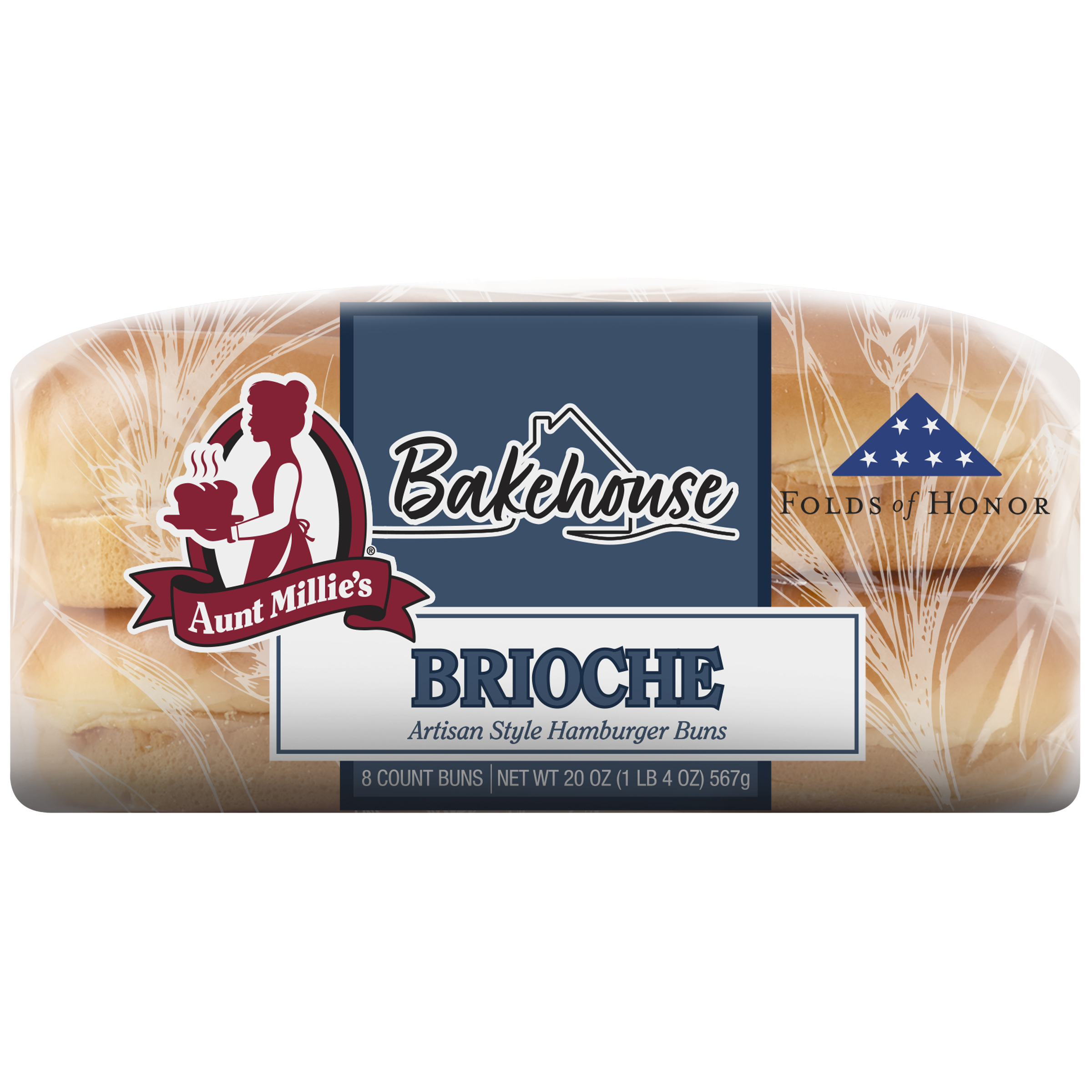


Aunt Milles Bakehouse Brioche Bun
Analysis updated August 2026 · How Scout scores
At a glance
Summary
The brioche bun is made with enriched flour, which is a refined ingredient, and contains added sugars, contributing to its processed nature. While it lacks harmful additives like high-fructose corn syrup or artificial dyes, the presence of refined flour and moderate sugar content limits its healthfulness. The processing level of this product restricts its potential score, as it is not a minimally processed food.
Key ingredients 7
Unbleached Wheat FlourNeutral
Unbleached wheat flour is minimally processed and retains more natural nutrients compared to bleached flour, making it a more wholesome choice.
See more about Unbleached Wheat Flour →Malted Barley FlourNeutral
Malted barley flour adds flavor and fermentation benefits, and is generally considered a neutral ingredient in terms of health impact.
See more about Malted Barley Flour →Reduced IronNeutral
Reduced iron is added to fortify the product and prevent iron deficiency, serving as a nutritional supplement.
See more about Reduced Iron →Thiamine Mononitrate (Vitamin B1)Neutral
This vitamin additive helps prevent deficiencies and supports energy metabolism, contributing to overall nutritional value.
See more about Thiamine Mononitrate (Vitamin B1) →Riboflavin (Vitamin B2)Neutral
Riboflavin is added to support energy production and overall health, enhancing the nutritional profile.
See more about Riboflavin (Vitamin B2) →Niacin (Vitamin B3)Neutral
Niacin is included to support metabolic functions and prevent deficiency, contributing positively to the product's nutritional content.
See more about Niacin (Vitamin B3) →Enriched FlourBad
Enriched flour is highly processed and stripped of natural nutrients, which can reduce its nutritional value and may contribute to health concerns when consumed in excess.
See more about Enriched Flour →Processing
Processed Foods
Get the full breakdown in the Scout appTake Scout shopping
Scan any product to see lab results, healthy alternatives, and your personalized analysis.
Download on theApp Store GET IT ONGoogle Play