
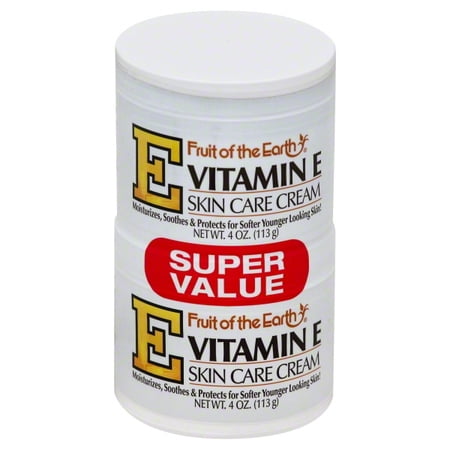

Fruit of the Earth Vitamin E Skin Care Cream Super Value 4 Oz. 2 pack
Analysis updated August 2026 · How Scout scores
At a glance
Summary
This moisturizer contains beneficial ingredients like glycerin, vitamin E, aloe vera, and sunflower seed oil, which are known for their moisturizing and nourishing properties. However, the presence of mineral oil, a petroleum-derived ingredient, raises concerns due to potential contamination risks. The product's formulation includes both natural and synthetic components, resulting in a moderate processing level.
Key ingredients 13
Vitamin EVery Good
Vitamin E is a powerful antioxidant that helps protect the skin from free radical damage. It is widely used in skincare for its anti-aging and moisturizing properties. It also helps to improve skin texture and tone.
Risks
Very low risk of irritation; generally well-tolerated.
Benefits
Protects the skin from environmental damage and supports skin health.
Aloe VeraVery Good
Aloe vera is a natural botanical known for its soothing and healing properties. It is commonly used in skincare for its ability to calm irritated skin and provide hydration. It is considered very safe and beneficial for most skin types.
Risks
Very low risk of irritation; generally well-tolerated.
Benefits
Soothes and hydrates the skin, reducing redness and irritation.
Sunflower Seed OilVery Good
Sunflower seed oil is a natural oil rich in essential fatty acids and vitamins. It is used in skincare for its moisturizing and nourishing properties. It is considered very safe and beneficial for most skin types.
Risks
Very low risk of irritation; generally well-tolerated.
Benefits
Moisturizes and nourishes the skin, improving its texture and appearance.
GlycerinGood
Glycerin is a humectant that attracts moisture to the skin, helping to keep it hydrated. It is a natural compound found in lipids and is considered very safe and effective. It is widely used in skincare for its moisturizing properties.
Risks
Very low risk of irritation; generally well-tolerated.
Benefits
Helps maintain skin hydration and improves skin barrier function.
Wheat GermGood
Wheat germ is rich in vitamins and minerals, particularly vitamin E, which is beneficial for skin health. It is used in cosmetics for its nourishing and moisturizing properties. It is generally considered safe for topical use.
Risks
May cause allergic reactions in individuals with wheat allergies.
Benefits
Nourishes the skin and provides antioxidant protection.
CollagenGood
Collagen is a protein that helps maintain skin elasticity and firmness. It is used in skincare to improve skin texture and reduce the appearance of fine lines. It is generally considered safe for topical use.
Risks
Minimal risk of irritation; generally safe for most skin types.
Benefits
Supports skin elasticity and reduces signs of aging.
ElastinGood
Elastin is a protein that helps maintain skin elasticity and resilience. It is used in skincare to improve skin texture and firmness. It is generally considered safe for topical use.
Risks
Minimal risk of irritation; generally safe for most skin types.
Benefits
Enhances skin elasticity and firmness, reducing the appearance of wrinkles.
AquaNeutral
Aqua, or water, is a common solvent used in cosmetic formulations. It helps dissolve other ingredients and provides a base for the cream. It is generally considered safe and non-irritating.
Risks
There are no significant risks associated with water in cosmetics.
Benefits
Water helps to hydrate the skin and improve the texture of the product.
Glyceryl StearateNeutral
Glyceryl stearate is an emulsifier that helps blend water and oils in formulations. It is derived from glycerin and stearic acid and is generally considered safe. It also acts as a lubricant on the skin's surface.
Risks
Rarely, it may cause irritation in sensitive individuals.
Benefits
Improves the texture and spreadability of the cream.
Cetyl AlcoholNeutral
Cetyl alcohol is a fatty alcohol used as an emollient and thickener in cosmetics. It is derived from natural oils and is considered safe and non-irritating. It helps to soften and smooth the skin.
Risks
Generally low risk, but may cause mild irritation in very sensitive skin.
Benefits
Enhances the cream's texture and provides a moisturizing effect.
Stearic AcidNeutral
Stearic acid is a fatty acid used as an emulsifier and thickener in cosmetics. It helps stabilize formulations and is considered safe for use. It also acts as a surfactant, helping to cleanse the skin.
Risks
Minimal risk of irritation; generally safe for most skin types.
Benefits
Contributes to the cream's stability and texture.
Stearyl AlcoholNeutral
Stearyl alcohol is a fatty alcohol used as an emollient and thickener in cosmetics. It is derived from natural oils and is considered safe and non-irritating. It helps to soften and smooth the skin.
Risks
Generally low risk, but may cause mild irritation in very sensitive skin.
Benefits
Enhances the cream's texture and provides a moisturizing effect.
Mineral OilBad
Processed additive flagged under Scout's ingredient doctrine.
Risks
May cause breakouts in acne-prone skin due to its occlusive nature.
Benefits
Effectively locks in moisture, making it beneficial for dry skin.
Get the full breakdown in the Scout appTake Scout shopping
Scan any product to see lab results, healthy alternatives, and your personalized analysis.
Download on theApp Store GET IT ONGoogle PlayAmazon pricing & content
Amazon price as of . Product prices and availability are accurate as of the date/time indicated and are subject to change. Any price and availability information displayed on Amazon.com at the time of purchase will apply to the purchase of this product.
CERTAIN CONTENT THAT APPEARS ON THIS SITE COMES FROM AMAZON. THIS CONTENT IS PROVIDED “AS IS” AND IS SUBJECT TO CHANGE OR REMOVAL AT ANY TIME.