
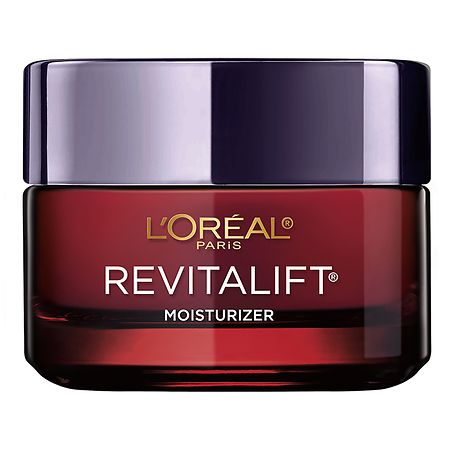

L'Oreal Paris Revitalift Triple Power Deep-Acting Face Moisturizer - 1.7oz: Paraben-Free, Contains Hyaluronic Acid, Anti-Aging
Analysis updated August 2026 · How Scout scores
At a glance
Summary
This moisturizer contains beneficial ingredients like niacinamide, sodium hyaluronate, and retinyl palmitate, which offer hydration and anti-aging benefits. However, the presence of polyacrylamide, a controversial thickener due to potential carcinogenic concerns, and fragrance, which can cause irritation, negatively impact its safety profile. The inclusion of benzyl alcohol, a potential irritant, further affects the overall ingredient safety, resulting in a mixed evaluation.
Key ingredients 13
GlycerinGood
Glycerin is a humectant that attracts moisture to the skin, helping to keep it hydrated. It is widely used in skincare for its moisturizing properties. It is generally well-tolerated and beneficial for most skin types.
Risks
Rarely, it may cause irritation in sensitive individuals.
Benefits
Helps to maintain skin hydration and improve skin barrier function.
NiacinamideGood
Niacinamide is a form of Vitamin B3 that has multiple skin benefits, including improving skin tone and texture. It is known for its anti-inflammatory properties and ability to reduce the appearance of pores. It is well-tolerated by most skin types.
Risks
Rarely, it may cause mild irritation in sensitive skin.
Benefits
Improves skin tone, reduces inflammation, and enhances skin barrier function.
Sodium HyaluronateGood
Sodium Hyaluronate is a form of hyaluronic acid that helps to retain moisture in the skin. It is known for its excellent hydrating properties and ability to improve skin elasticity. It is well-tolerated by most skin types.
Benefits
Provides deep hydration and improves skin elasticity.
Retinyl PalmitateGood
Retinyl Palmitate is a derivative of Vitamin A that is used for its anti-aging benefits. It helps to improve skin texture and reduce the appearance of fine lines. It is generally well-tolerated but can cause irritation in sensitive skin.
Risks
May cause irritation and sensitivity, especially in sun-exposed skin.
Benefits
Improves skin texture and reduces the appearance of fine lines.
Aqua / Water / EauNeutral
Water is a common solvent used in cosmetics to dissolve other ingredients. It helps in the application and absorption of the product. It does not have any direct benefits or risks.
Benefits
Acts as a solvent and helps in the application of the product.
IsohexadecaneNeutral
Isohexadecane is an emollient that provides a silky feel to the skin. It is used to improve the texture and spreadability of products. It is generally considered safe for use in cosmetics.
Benefits
Improves product texture and provides a smooth application.
Synthetic FluorphlogopiteNeutral
Synthetic Fluorphlogopite is a synthetic mica used to add shimmer and improve the texture of cosmetics. It is considered safe for use in cosmetics. It does not have any direct skin benefits or risks.
Benefits
Adds shimmer and improves product texture.
CaffeineNeutral
Standard formulation ingredient — neither beneficial nor harmful at typical use.
Risks
May cause irritation in very sensitive skin.
Benefits
Reduces puffiness and dark circles, and provides antioxidant benefits.
DimethiconeBad
Occlusive silicone film-former — flagged under clean-beauty doctrine.
Risks
May cause breakouts in acne-prone skin due to its occlusive nature.
Benefits
Provides a smooth application and helps to lock in moisture.
PhenoxyethanolBad
Processed additive flagged under Scout's ingredient doctrine.
Risks
Potential for skin irritation, especially in sensitive individuals.
Benefits
Prevents microbial growth and extends product shelf life.
Benzyl AlcoholBad
Benzyl Alcohol is used as a preservative and solvent in cosmetics but can cause skin irritation and allergic reactions. It is considered a potential irritant, especially in leave-on products. It is generally used in low concentrations to minimize risks.
Risks
Potential for skin irritation and allergic reactions.
Benefits
Acts as a preservative and solvent in the formulation.
Parfum / FragranceVery Bad
Fragrance is used to add scent to cosmetics but can be a common cause of skin irritation and allergic reactions. It is often a mixture of various chemicals, some of which may be sensitizing. It is generally considered a potential irritant in skincare products.
Risks
Potential for skin irritation and allergic reactions.
Benefits
Adds a pleasant scent to the product.
PolyacrylamideVery Bad
Polyacrylamide is used as a thickener and stabilizer in cosmetics but can break down into acrylamide, a potential carcinogen. Its use is controversial due to safety concerns. It is generally considered a high-risk ingredient in cosmetics.
Risks
Potential to break down into acrylamide, a possible carcinogen.
Benefits
Improves product texture and stability.
Get the full breakdown in the Scout appTake Scout shopping
Scan any product to see lab results, healthy alternatives, and your personalized analysis.
Download on theApp Store GET IT ONGoogle PlayAmazon pricing & content
Amazon price as of . Product prices and availability are accurate as of the date/time indicated and are subject to change. Any price and availability information displayed on Amazon.com at the time of purchase will apply to the purchase of this product.
CERTAIN CONTENT THAT APPEARS ON THIS SITE COMES FROM AMAZON. THIS CONTENT IS PROVIDED “AS IS” AND IS SUBJECT TO CHANGE OR REMOVAL AT ANY TIME.