
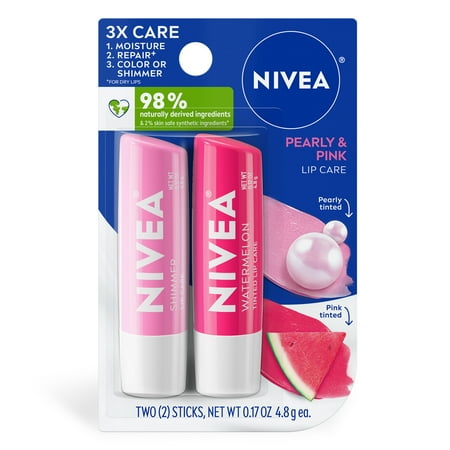

NIVEA Pearly and Pink Lip Care Tinted Lip Balm Set 0.17 oz Stick Pack of 2
Analysis updated August 2026 · How Scout scores
At a glance
Summary
This lip balm contains several beneficial natural ingredients such as castor seed oil, beeswax, shea butter, and jojoba oil, which are known for their moisturizing and skin-soothing properties. However, the presence of BHT, a synthetic antioxidant with potential health concerns, and undisclosed 'flavor' compounds, which can cause irritation, slightly detract from its overall safety profile. The product is moderately processed, which also influences its rating.
Key ingredients 23
Ricinus Communis (Castor) Seed OilVery Good
Castor seed oil is a natural oil known for its moisturizing properties. It is rich in ricinoleic acid, which helps to lock in moisture and soothe dry skin. It is widely used in lip care products for its emollient benefits.
Risks
There are minimal risks, though some individuals may experience allergic reactions.
Benefits
It deeply moisturizes and nourishes the lips, providing a protective barrier against environmental damage.
BeeswaxVery Good
Beeswax is a natural wax produced by honeybees and is used as a thickening agent and emollient in cosmetics. It forms a protective barrier on the skin's surface, helping to lock in moisture. It is highly valued for its skin-conditioning properties.
Risks
Beeswax is generally safe, but it may cause allergic reactions in individuals sensitive to bee products.
Benefits
It provides a natural barrier that helps retain moisture and protect the lips from environmental stressors.
Butyrospermum Parkii (Shea) ButterVery Good
Shea butter is a natural fat extracted from the nuts of the shea tree, known for its moisturizing and anti-inflammatory properties. It is rich in vitamins A and E, which help to nourish and protect the skin. It is widely used in lip care products for its emollient benefits.
Risks
Shea butter is generally safe, but it may cause allergic reactions in individuals with nut allergies.
Benefits
It deeply moisturizes and soothes the lips, providing long-lasting hydration and protection.
Simmondsia Chinensis (Jojoba) Seed OilVery Good
Jojoba oil is a natural oil extracted from the seeds of the jojoba plant, known for its moisturizing and skin-conditioning properties. It closely resembles the natural oils produced by the skin, making it an excellent emollient. It is widely used in lip care products for its nourishing benefits.
Risks
Jojoba oil is generally safe, but it may cause allergic reactions in some individuals.
Benefits
It deeply moisturizes and conditions the lips, providing a protective barrier against environmental damage.
Persea Gratissima (Avocado) OilVery Good
Avocado oil is a natural oil extracted from the fruit of the avocado, known for its moisturizing and nourishing properties. It is rich in vitamins A, D, and E, which help to nourish and protect the skin. It is widely used in lip care products for its emollient benefits.
Risks
Avocado oil is generally safe, but it may cause allergic reactions in individuals with latex allergies.
Benefits
It deeply moisturizes and nourishes the lips, providing long-lasting hydration and protection.
TocopherolVery Good
Tocopherol, also known as vitamin E, is a powerful antioxidant used in cosmetics to protect the skin from free radical damage. It helps to moisturize and nourish the skin, improving its overall appearance. It is widely used in lip care products for its protective benefits.
Risks
Tocopherol is generally safe, but it may cause allergic reactions in some individuals.
Benefits
It provides antioxidant protection and helps to moisturize and condition the lips.
CocoglyceridesGood
Cocoglycerides are derived from coconut oil and glycerin, used as emollients in skincare products. They help to improve the texture and spreadability of formulations. They are considered safe and non-irritating.
Risks
There are minimal risks associated with cocoglycerides, though they may cause mild irritation in very sensitive skin.
Benefits
They provide moisturizing benefits and enhance the smooth application of the product.
Helianthus Annuus Seed WaxGood
Sunflower seed wax is a natural wax derived from sunflower seeds, used as a thickening agent and emollient in cosmetics. It helps to improve the texture and stability of formulations. It is considered safe and non-irritating.
Risks
There are minimal risks associated with sunflower seed wax, though it may cause mild irritation in very sensitive skin.
Benefits
It provides a smooth application and helps to lock in moisture, protecting the lips from dryness.
Ascorbyl PalmitateGood
Ascorbyl palmitate is a stable form of vitamin C used as an antioxidant in cosmetics. It helps to protect the skin from free radical damage and improve the appearance of aging skin. It is considered safe and non-irritating.
Risks
There are minimal risks associated with ascorbyl palmitate, though it may cause mild irritation in very sensitive skin.
Benefits
It provides antioxidant benefits, helping to protect the lips from environmental damage.
BisabololGood
Bisabolol is a natural compound derived from chamomile, known for its soothing and anti-inflammatory properties. It helps to calm and soothe irritated skin, making it ideal for sensitive skin types. It is considered safe and non-irritating.
Risks
There are minimal risks associated with bisabolol, though it may cause mild irritation in very sensitive skin.
Benefits
It provides soothing benefits, helping to calm and protect the lips from irritation.
MicaGood
Beneficial ingredient — whole-food or functional value in this product class.
Risks
Mica may cause irritation or allergic reactions in sensitive individuals.
Benefits
It provides a shimmering effect and enhances the appearance of the product.
OctyldodecanolNeutral
Octyldodecanol is a fatty alcohol used as an emollient and thickening agent in cosmetics. It is generally considered safe and non-irritating for most skin types. It helps improve the texture and spreadability of the product.
Risks
There are minimal risks associated with Octyldodecanol, though it may cause irritation in very sensitive individuals.
Benefits
It provides a smooth application and helps to soften and condition the skin.
Bis-Diglyceryl Polyacyladipate-2Neutral
This ingredient is a synthetic ester used as an emollient and thickening agent in cosmetics. It helps to improve the texture and feel of the product. It is generally considered safe for use in cosmetics.
Risks
There are minimal risks, though it may cause irritation in sensitive individuals.
Benefits
It enhances the texture and provides a smooth, creamy feel to the product.
Hydrogenated Castor OilNeutral
Hydrogenated castor oil is a derivative of castor oil used as an emollient and thickening agent in cosmetics. It helps to improve the texture and stability of formulations. It is generally considered safe for use in cosmetics.
Risks
There are minimal risks, though it may cause irritation in sensitive individuals.
Benefits
It provides a smooth application and helps to condition the skin.
WaterNeutral
Water is a common solvent used in cosmetics to dissolve other ingredients and improve the texture of formulations. It is generally considered safe and non-irritating. It is a basic component in many cosmetic products.
Risks
There are minimal risks associated with water in cosmetics.
Benefits
It acts as a solvent and helps to hydrate the skin.
Citric AcidNeutral
Citric acid is a natural acid derived from citrus fruits, used as a pH adjuster and preservative in cosmetics. It helps to maintain the stability and effectiveness of formulations. It is generally considered safe for use in cosmetics.
Risks
Citric acid may cause irritation or allergic reactions in sensitive individuals.
Benefits
It helps to maintain the stability and effectiveness of the product.
Trideceth-9Neutral
Trideceth-9 is a synthetic compound used as an emulsifier and surfactant in cosmetics. It helps to blend oil and water-based ingredients, improving the texture and stability of formulations. It is generally considered safe for use in cosmetics.
Risks
Trideceth-9 may cause irritation or allergic reactions in sensitive individuals.
Benefits
It helps to improve the texture and stability of the product.
Titanium DioxideNeutral
Titanium dioxide is a natural mineral used as a colorant and UV filter in cosmetics. It provides opacity and sun protection, improving the appearance and functionality of the product. It is generally considered safe for use in cosmetics.
Risks
Titanium dioxide may cause irritation or allergic reactions in sensitive individuals.
Benefits
It provides sun protection and improves the appearance of the product.
Yellow 6 LakeNeutral
Yellow 6 Lake is a synthetic colorant used to impart color to cosmetics. It is approved for use in cosmetics by regulatory agencies, though its safety is sometimes debated. It is generally considered safe for use in cosmetics.
Risks
Yellow 6 Lake may cause allergic reactions or irritation in sensitive individuals.
Benefits
It provides vibrant color to the product, enhancing its appearance.
Red 7 LakeNeutral
Red 7 Lake is a synthetic colorant used to impart color to cosmetics. It is approved for use in cosmetics by regulatory agencies, though its safety is sometimes debated. It is generally considered safe for use in cosmetics.
Risks
Red 7 Lake may cause allergic reactions or irritation in sensitive individuals.
Benefits
It provides vibrant color to the product, enhancing its appearance.
FlavorBad
Flavor is a generic term for a mixture of aromatic compounds used to impart taste or scent to cosmetics. It can contain a variety of synthetic and natural ingredients, some of which may cause irritation or allergic reactions. The lack of specific ingredient disclosure makes it difficult to assess safety.
Risks
Flavor can cause allergic reactions or irritation, especially in sensitive individuals.
Benefits
It enhances the sensory experience of the product, making it more pleasant to use.
Propylene GlycolBad
Processed additive flagged under Scout's ingredient doctrine.
Risks
Propylene glycol may cause irritation or allergic reactions in sensitive individuals.
Benefits
It helps to retain moisture, keeping the lips hydrated and smooth.
BHTBad
BHT (butylated hydroxytoluene) is a synthetic antioxidant used to preserve the freshness of cosmetics. It has been associated with potential health risks, including skin irritation and endocrine disruption. Its safety in cosmetics is debated, leading to its negative sentiment.
Risks
BHT may cause skin irritation and has been linked to potential endocrine disruption.
Benefits
It helps to preserve the freshness and stability of the product.
Processing
Processed Foods
Get the full breakdown in the Scout appTake Scout shopping
Scan any product to see lab results, healthy alternatives, and your personalized analysis.
Download on theApp Store GET IT ONGoogle PlayAmazon pricing & content
Amazon price as of . Product prices and availability are accurate as of the date/time indicated and are subject to change. Any price and availability information displayed on Amazon.com at the time of purchase will apply to the purchase of this product.
CERTAIN CONTENT THAT APPEARS ON THIS SITE COMES FROM AMAZON. THIS CONTENT IS PROVIDED “AS IS” AND IS SUBJECT TO CHANGE OR REMOVAL AT ANY TIME.