
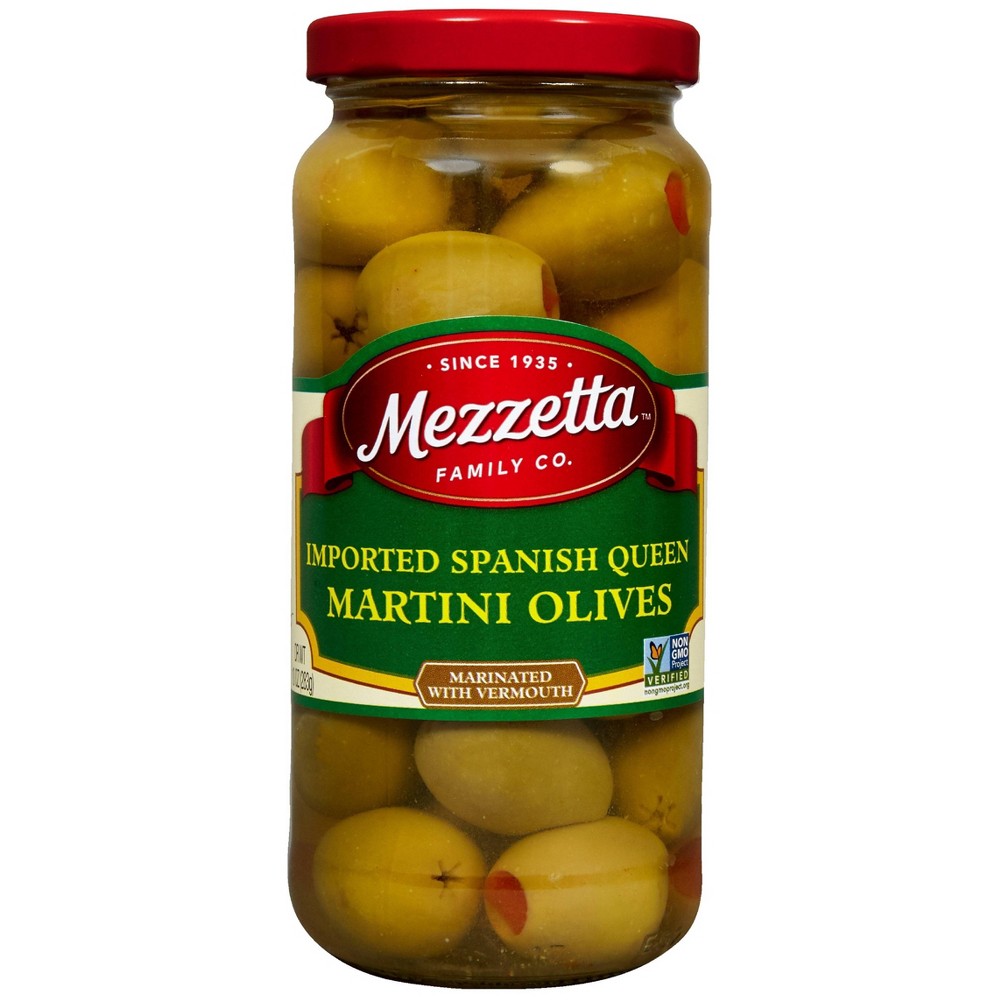


Mezzetta IMPORTED SPANISH QUEEN MARTINI OLIVES
Analysis updated September 2026 · How Scout scores
At a glance
Summary
This product is ultra-processed, which limits its potential health score. While it contains beneficial ingredients like olives and sea salt, which provide healthy fats and minerals, the presence of additives such as guar gum and calcium chloride, which are used to enhance texture and firmness, detracts from its overall nutritional quality. The processing level and use of these additives prevent it from achieving a higher rating.
Key ingredients 9
OlivesGood
Olives are a source of healthy monounsaturated fats and antioxidants. They are minimally processed and retain beneficial nutrients. Their consumption is associated with heart health benefits.
Benefits
Rich in monounsaturated fats that support heart health and provide anti-inflammatory properties. Contains antioxidants like vitamin E and polyphenols that may reduce oxidative stress.
Sea saltGood
Sea salt is a minimally processed source of sodium and trace minerals. It enhances flavor without the additives found in refined salt. Its natural mineral content can be beneficial in moderation.
Risks
Excessive sodium intake can lead to hypertension and cardiovascular issues.
Benefits
Provides essential sodium and trace minerals that are important for bodily functions.
WaterNeutral
Water is used as a solvent and carrier in food products. It is a neutral ingredient with no direct nutritional impact. Its presence helps maintain the texture and moisture of the product.
See more about Water →Minced pimentoNeutral
Minced pimento adds flavor and color to the olives. It is a natural ingredient with minimal processing. Its nutritional impact is negligible in small quantities.
Benefits
Provides a mild flavor enhancement and visual appeal to the product.
VermouthNeutral
Vermouth is used for flavoring and is a fortified wine with added botanicals. Its alcohol content is minimal in the final product. It contributes to the unique taste profile of the olives.
Benefits
Adds a distinctive flavor that enhances the culinary experience of the olives.
Lactic acidNeutral
Lactic acid is a natural preservative and acidity regulator. It is produced through fermentation and is generally recognized as safe. It helps maintain the product's shelf life and flavor stability.
Benefits
Helps preserve the product and maintain its acidity balance, contributing to food safety.
Sodium alginateNeutral
Sodium alginate is a natural thickening and gelling agent derived from seaweed. It is used to improve texture and stability in food products. Its use is common in processed foods for consistency.
Benefits
Improves texture and stability, enhancing the overall quality of the product.
Guar gumNeutral
Standard formulation ingredient — neither beneficial nor harmful at typical use.
Risks
May cause digestive discomfort such as bloating or gas in some individuals.
Benefits
Provides thickening properties that improve the texture of the product.
Calcium chlorideNeutral
Standard formulation ingredient — neither beneficial nor harmful at typical use.
Risks
Excessive consumption may lead to gastrointestinal irritation.
Benefits
Helps maintain the firmness and texture of the olives, contributing to product quality.
Processing
Ultra-Processed Foods
Get the full breakdown in the Scout appTake Scout shopping
Scan any product to see lab results, healthy alternatives, and your personalized analysis.
Download on theApp Store GET IT ONGoogle PlayAmazon pricing & content
Amazon price as of . Product prices and availability are accurate as of the date/time indicated and are subject to change. Any price and availability information displayed on Amazon.com at the time of purchase will apply to the purchase of this product.
CERTAIN CONTENT THAT APPEARS ON THIS SITE COMES FROM AMAZON. THIS CONTENT IS PROVIDED “AS IS” AND IS SUBJECT TO CHANGE OR REMOVAL AT ANY TIME.