
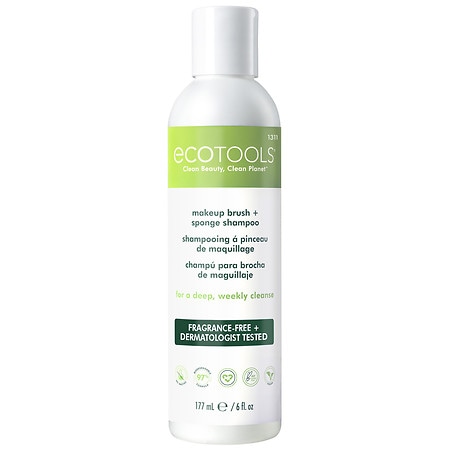

EcoTools Makeup Brush and Sponge Cleansing Shampoo - 6 fl oz
Summary
This makeup brush and sponge cleansing shampoo contains beneficial ingredients like Decyl Glucoside and Lauryl Glucoside, which are gentle surfactants derived from natural sources. However, the presence of phenoxyethanol, a preservative that can cause skin irritation, slightly detracts from its overall safety profile. The product is processed, which limits its maximum potential score despite the generally clean ingredient list.
At a glance
Key ingredients 9
WaterNeutral
Water is a universal solvent and is used as a base in many cosmetic products. It helps to dissolve other ingredients and provides a medium for them to be applied. It is generally considered safe and non-irritating.
Risks
There are no significant risks associated with water in cosmetic formulations.
Benefits
Water hydrates and helps in the even distribution of other ingredients.
Decyl GlucosideVery Good
Decyl Glucoside is a mild, non-ionic surfactant derived from glucose and coconut oil. It is known for being gentle on the skin and hair, making it suitable for sensitive skin. It effectively cleanses without stripping natural oils.
Risks
There are minimal risks associated with Decyl Glucoside, though some individuals may experience mild irritation.
Benefits
It is biodegradable and eco-friendly, providing a gentle cleansing action.
Sodium Lauryl SulfoacetateNeutral
Sodium Lauryl Sulfoacetate is a surfactant used for its foaming and cleansing properties. It is often confused with harsher sulfates but is considered milder. It helps in removing dirt and oil from surfaces.
Risks
It may cause mild irritation in some individuals, especially with prolonged use.
Benefits
Provides effective cleansing with a rich lather, suitable for sensitive skin.
Lauryl GlucosideVery Good
Lauryl Glucoside is a non-ionic surfactant derived from natural sources like coconut oil and glucose. It is known for its mildness and is often used in formulations for sensitive skin. It helps to stabilize and thicken formulations.
Risks
There are minimal risks, though it may cause mild irritation in rare cases.
Benefits
It is biodegradable and enhances the cleansing ability of products without being harsh.
GlycerinGood
Glycerin is a humectant that attracts moisture to the skin and hair. It is widely used in cosmetics for its hydrating properties. It helps to maintain moisture balance and improve skin barrier function.
Risks
There are minimal risks associated with glycerin, though it may cause stickiness in high concentrations.
Benefits
It provides hydration and improves the texture of skin and hair.
PhenoxyethanolBad
Phenoxyethanol is a preservative used to prevent microbial growth in cosmetic products. It is effective in low concentrations but has raised concerns due to potential skin irritation. It is often used as an alternative to parabens.
Risks
It can cause skin irritation and allergic reactions in some individuals.
Benefits
Provides effective preservation, extending the shelf life of products.
Sodium PhytateNeutral
Sodium Phytate is a chelating agent derived from rice bran. It helps to stabilize formulations by binding metal ions. It is considered safe and non-irritating.
Risks
There are no significant risks associated with sodium phytate in cosmetic formulations.
Benefits
Enhances the stability and efficacy of cosmetic products.
Citric AcidNeutral
Citric Acid is used to adjust the pH of cosmetic products. It is naturally found in citrus fruits and is considered safe in low concentrations. It can also act as a mild exfoliant.
Risks
In high concentrations, it may cause skin irritation or sensitivity.
Benefits
Helps maintain the stability and effectiveness of formulations.
PotassiumNeutral
Potassium is an essential mineral that can be used in various forms in cosmetics. It helps in maintaining the electrolyte balance in formulations. It is generally considered safe and non-irritating.
Risks
There are no significant risks associated with potassium in cosmetic formulations.
Benefits
Contributes to the stability and performance of cosmetic products.
Processing
Processed Foods
Get the full breakdown in the Scout app
Scan any product to see lab results, healthy alternatives, and your personalized analysis.
Download on theApp Store