
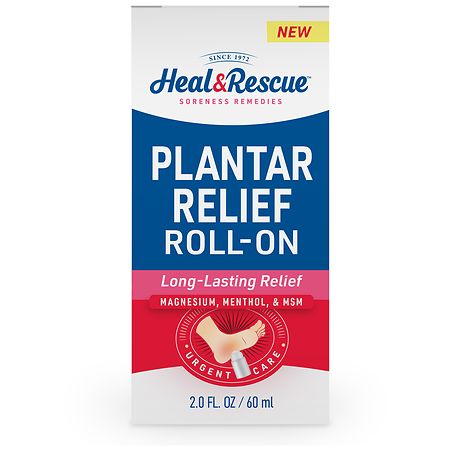

Heal & Rescue Plantar Roll On Relief - 2.0 fl oz
Analysis updated August 2026 · How Scout scores
At a glance
Summary
This product contains beneficial ingredients like methylsulfonylmethane, glycerin, aloe vera, and menthol, which provide anti-inflammatory, hydrating, and soothing properties. However, the presence of ethanol, which can be drying and irritating to the skin, slightly lowers the score. The overall formulation is relatively clean with a short ingredient list, but the ethanol content prevents it from achieving a higher rating.
Key ingredients 10
Aloe Barbadensis Leaf JuiceVery Good
Aloe Vera is renowned for its soothing and moisturizing properties. It is used to calm irritated skin and provide hydration. Aloe Vera is rich in antioxidants and vitamins.
Risks
There are minimal risks, though some individuals may experience allergic reactions.
Benefits
Aloe Vera helps soothe and hydrate the skin, promoting healing and reducing inflammation.
MethylsulfonylmethaneGood
Methylsulfonylmethane (MSM) is known for its anti-inflammatory properties. It is often used to support skin health and reduce irritation. MSM can enhance the skin's natural barrier function.
Risks
There are minimal risks associated with MSM, though some individuals may experience mild irritation.
Benefits
MSM can improve skin elasticity and reduce inflammation, promoting healthier skin.
GlycerinGood
Glycerin is a humectant that attracts moisture to the skin. It is widely used in skincare for its hydrating properties. Glycerin helps maintain the skin's moisture balance.
Risks
There are no significant risks associated with glycerin in cosmetic products.
Benefits
Glycerin provides deep hydration and helps improve skin barrier function.
Water (Aqua, Eau)Neutral
Water is a common solvent used in cosmetic formulations. It helps dissolve other ingredients and provides a base for the product. It is generally considered safe and non-reactive.
Risks
There are no significant risks associated with water in cosmetic products.
Benefits
Water helps in hydrating the skin and acts as a carrier for other beneficial ingredients.
EthanolNeutral
Standard formulation ingredient — neither beneficial nor harmful at typical use.
Risks
Ethanol can cause dryness and irritation, particularly for sensitive skin types.
Benefits
It helps in the quick evaporation of the product, leaving a cooling sensation.
Cetyl AlcoholNeutral
Cetyl Alcohol is a fatty alcohol used as an emollient and thickening agent. It helps stabilize formulations and improve texture. It is generally considered safe and non-irritating.
Risks
There are minimal risks, though some individuals with sensitive skin may experience mild irritation.
Benefits
Cetyl Alcohol helps soften and smooth the skin, enhancing the product's feel.
Glyceryl StearateNeutral
Glyceryl Stearate is an emulsifier that helps blend oil and water components. It is commonly used to improve the texture and stability of cosmetic products. It is generally considered safe for use.
Risks
There are minimal risks associated with Glyceryl Stearate.
Benefits
It helps maintain product consistency and provides a smooth application.
Phenethyl AlcoholNeutral
Phenethyl Alcohol is used as a preservative and fragrance component. It helps prevent microbial growth in cosmetic products. It is generally considered safe in low concentrations.
Risks
High concentrations may cause irritation, but it is typically used in safe amounts.
Benefits
It helps preserve the product and provides a mild floral scent.
Magnesium SulfateNeutral
Magnesium Sulfate, also known as Epsom salt, is used for its soothing properties. It can help reduce inflammation and relax muscles. It is generally considered safe for topical use.
Risks
There are minimal risks associated with Magnesium Sulfate in topical applications.
Benefits
It can help soothe sore muscles and reduce inflammation.
MentholNeutral
Standard formulation ingredient — neither beneficial nor harmful at typical use.
Risks
Menthol can cause irritation in sensitive individuals or if used in high concentrations.
Benefits
It provides a cooling effect and can help alleviate discomfort and pain.
Processing
Processed Foods
Get the full breakdown in the Scout appTake Scout shopping
Scan any product to see lab results, healthy alternatives, and your personalized analysis.
Download on theApp Store GET IT ONGoogle Play