
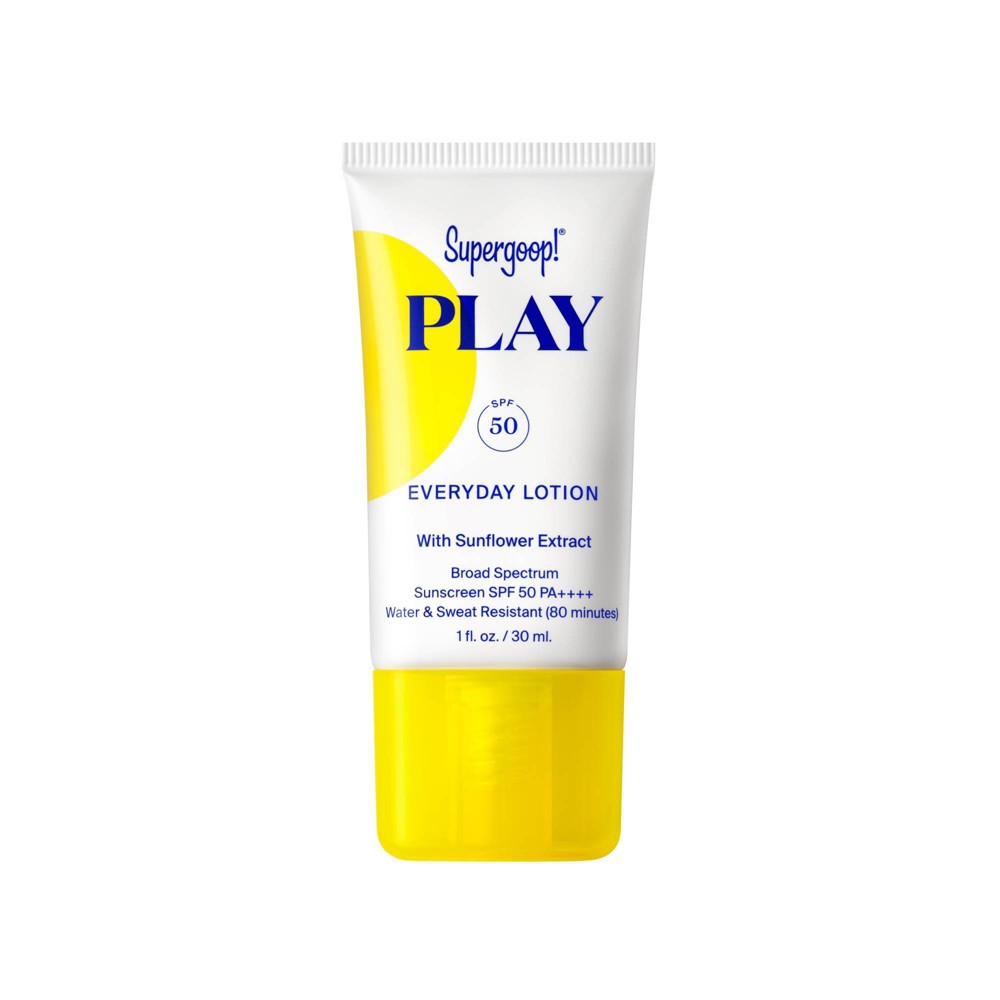
Supergoop! PLAY Everyday Hydrating Body & Face Sunscreen Lotion - SPF 50 - 1 fl oz
Analysis updated July 2026 · How Scout scores
At a glance
Summary
This sunscreen contains a mix of natural and synthetic ingredients. It includes beneficial components like glycerin, tocopherol, and various plant extracts, which are generally safe and nourishing for the skin. However, the presence of synthetic polymers and acrylates, which are more processed, slightly lowers the score due to potential environmental concerns and skin sensitivity issues.
Key ingredients 7
TocopherolVery Good
Tocopherol, or Vitamin E, is an antioxidant that helps protect the skin from free radical damage. It is beneficial for skin health and has moisturizing properties. It is widely used in skincare for its protective benefits.
Risks
There are minimal risks, though it can cause irritation in very sensitive skin.
Benefits
Tocopherol helps protect the skin from environmental stressors and supports skin repair.
PanthenolVery Good
Panthenol is a form of Vitamin B5 that acts as a moisturizer and skin conditioner. It helps to improve skin hydration and elasticity. It is well-tolerated and beneficial for most skin types.
Risks
There are minimal risks associated with panthenol.
Benefits
Panthenol enhances skin hydration and promotes healing.
GlycerinGood
Glycerin is a humectant that attracts moisture to the skin, helping to keep it hydrated. It is widely used in skincare for its moisturizing properties. It is considered safe and beneficial for most skin types.
Risks
There are minimal risks associated with glycerin, though it can be sticky.
Benefits
Glycerin helps maintain skin hydration and improves skin barrier function.
AllantoinGood
Allantoin is a skin-soothing agent that helps to calm irritated skin. It is used in cosmetics for its ability to promote skin healing and smoothness. It is generally considered safe and effective.
Risks
There are minimal risks associated with allantoin.
Benefits
Allantoin soothes the skin and supports skin regeneration.
WaterNeutral
Water is a common solvent used in cosmetics to dissolve other ingredients. It helps in the application and absorption of the product. It does not have any direct benefits or risks.
Risks
There are no significant risks associated with water in cosmetics.
Benefits
Water helps in the even distribution of the product on the skin.
Cetyl AlcoholNeutral
Standard formulation ingredient — neither beneficial nor harmful at typical use.
Risks
In rare cases, it may cause mild irritation in sensitive individuals.
Benefits
Cetyl Alcohol provides a smooth texture and helps to lock in moisture.
ChlorphenesinBad
Chlorphenesin is a preservative used to prevent microbial growth in cosmetics. It can cause skin irritation and allergic reactions in some individuals. It is considered less favorable compared to other preservatives.
Risks
Chlorphenesin may cause skin irritation and allergic reactions.
Benefits
It helps to maintain the product's shelf life by preventing microbial contamination.
Get the full breakdown in the Scout appTake Scout shopping
Scan any product to see lab results, healthy alternatives, and your personalized analysis.
Download on theApp Store GET IT ONGoogle PlayAmazon pricing & content
Amazon price as of . Product prices and availability are accurate as of the date/time indicated and are subject to change. Any price and availability information displayed on Amazon.com at the time of purchase will apply to the purchase of this product.
CERTAIN CONTENT THAT APPEARS ON THIS SITE COMES FROM AMAZON. THIS CONTENT IS PROVIDED “AS IS” AND IS SUBJECT TO CHANGE OR REMOVAL AT ANY TIME.